
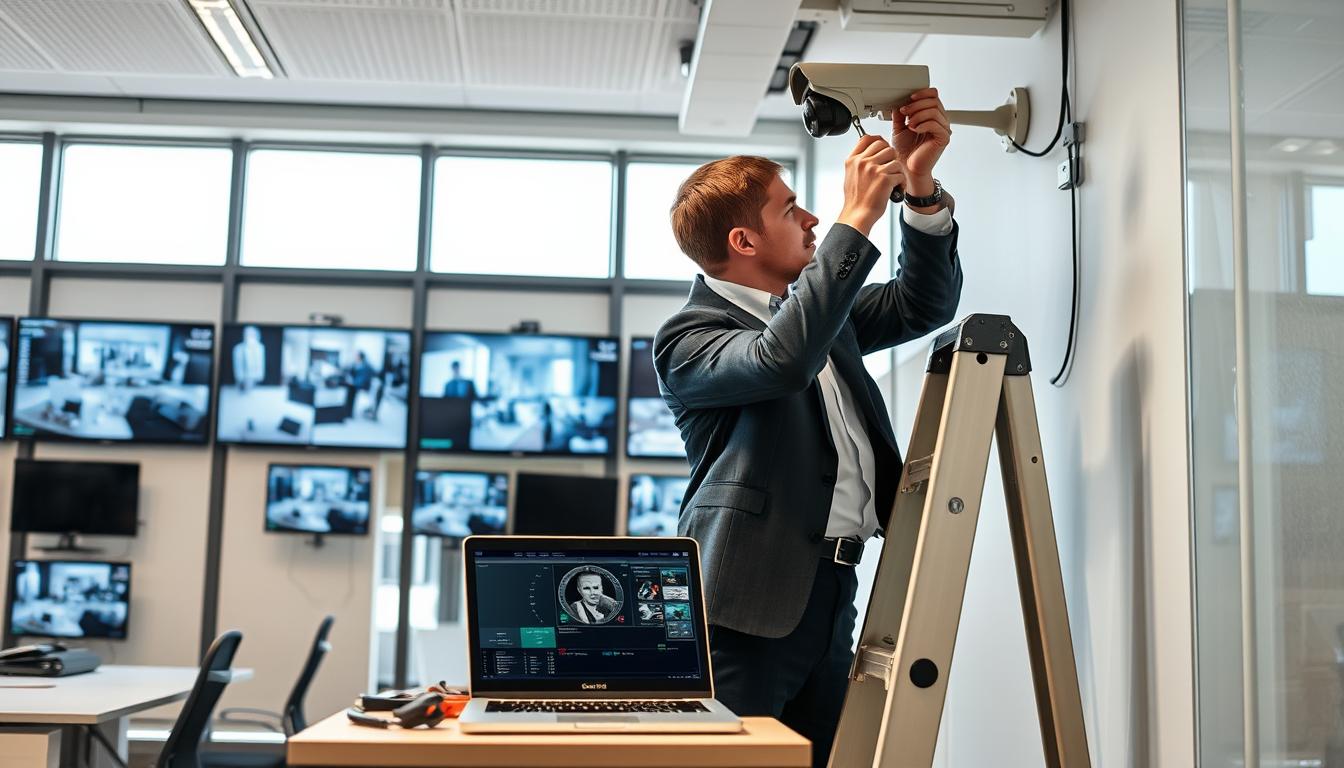
How Much is CCTV Maintenance? Costs Explained
If you’re managing a property in Singapore, you know a reliable surveillance setup is essential. The price for keeping it in top shape isn’t a single number. Costs for CCTV maintenance form a range, shaped by many different factors.
Getting a clear picture of these expenses is crucial for smart budgeting. It protects your security investment and ensures your cameras work when you need them most.
Think of this upkeep as a critical part of your overall security plan. It is not an optional extra. Regular check-ups stop small glitches from turning into major, expensive system failures.
Professional service can include everything from a basic visual inspection to a full, comprehensive package. Each type of visit has its own pricing structure.
This guide cuts through the confusion. We’ll provide the clarity you need on surveillance upkeep expenses in Singapore. Below, we break down average price ranges, key cost factors, what’s included in a service, and how to pick the right plan for your needs.
Key Takeaways
- Maintenance costs for surveillance systems in Singapore vary widely.
- Understanding these expenses is key for effective financial planning.
- Regular upkeep is a necessary investment, not an optional cost.
- It prevents minor technical issues from becoming critical failures.
- Services range from simple inspections to full system packages.
- Choosing the right service plan depends on your specific setup and needs.
Why CCTV Maintenance is Non-Negotiable for Security
Viewing upkeep as optional puts your entire security posture at serious risk. Your cameras and recorders must work perfectly during critical moments. Scheduled care ensures they do.
Regular system checks directly boost reliability. They prevent costly downtime that leaves properties vulnerable. This proactive approach stops small issues from becoming big failures.
Research reveals a stark connection between neglect and system breakdowns. Studies link approximately 30% of security failures to inadequate servicing. This data highlights the tangible danger of skipping routine care.
Proactive maintenance can reduce equipment failures by up to 30% and extend equipment lifespan by up to 50%.
Professional servicing acts as an essential preventive measure. Technicians identify and resolve minor problems early. Faulty wiring or software glitches get fixed before they cause total blackouts.
Clear video quality is another crucial benefit. Clean lenses and properly calibrated cameras provide evidential-grade footage. This sharp imagery serves as a stronger crime deterrent.
Well-maintained setups are more likely to meet local regulatory standards. In Singapore, compliance avoids potential legal complications. Your recorded evidence holds up when it matters most.
Think of scheduled upkeep as a long-term cost-saving strategy. It prevents emergency repair bills that can be 200-300% more expensive than planned service. Protecting your investment requires this disciplined approach.
Ultimately, consistent care transforms your security infrastructure from a passive device into an active shield. It guarantees performance when you need it. Never treat this service as optional.
How Much is CCTV Maintenance? The Singapore Price Range
Understanding the financial commitment for surveillance upkeep in Singapore begins with clear price benchmarks. These figures help property owners budget effectively for their security infrastructure.
Typical expenses fall into two main categories. You have annual contract pricing and individual service call fees.
Average Annual Maintenance Cost Spectrum
Yearly surveillance care costs in Singapore show considerable variation. Total annual investment typically ranges from SGD 300 to SGD 2,500.
This wide spectrum depends heavily on your setup’s scale and chosen support agreement. A basic residential installation costs less than a large commercial network.
Most providers offer tiered annual packages. These structured plans provide predictable budgeting.
- Basic Packages (SGD 300 – SGD 600/year): Often include scheduled visual inspections, lens cleaning, and basic system diagnostics. This tier suits smaller residential or office setups with standard cameras.
- Comprehensive Full-Service Plans (SGD 600 – SGD 1,500/year): Cover everything in basic plans plus software updates, recording integrity checks, firmware upgrades, and sometimes remote monitoring support. Ideal for complex or business-critical surveillance systems.
The higher end of the annual range (above SGD 1,500) usually applies to extensive commercial installations. These involve dozens of cameras, specialized equipment, or 24/7 monitoring requirements.
Cost per Service Visit or Call-Out
For those preferring pay-per-service models, individual visit pricing applies. A single professional technician call-out in Singapore typically costs between SGD 100 and SGD 300.
Some providers may offer entry-level inspection visits starting around SGD 75. Commercial service calls usually occupy the higher end of this per-visit range.
This fee generally covers the technician’s travel, initial assessment, and up to one hour of labor. Additional parts or extended repair work incurs extra charges.
Annual contracts almost always offer better value than multiple ad-hoc calls. Two or three reactive service visits can quickly exceed the price of a basic annual package.
Contract pricing provides cost predictability and priority scheduling. It transforms upkeep from an unexpected expense into a planned operational cost.
Use these Singapore price ranges as a practical benchmark when evaluating quotes. They empower you to identify fair market rates for surveillance system servicing.
Remember that the cheapest option isn’t always the most cost-effective over time. Reliable, comprehensive care protects your security investment best.
Breaking Down the Core Components of a CCTV System
A comprehensive security network is more than just cameras—it’s an ecosystem of specialized components. Each piece plays a distinct role in capturing, processing, and storing visual data. Understanding these elements reveals why professional care involves multiple technical tasks.
Different parts have unique upkeep requirements. Physical cleaning, software updates, and hardware diagnostics all form part of routine service. This knowledge helps you appreciate the value of a thorough maintenance plan.
Cameras: From Dome to PTZ
Surveillance cameras come in several designs, each suited to specific situations. The type installed directly affects the frequency and nature of required attention.
Dome cameras feature a discreet, hemispherical casing. They are typically mounted on ceilings for indoor monitoring. Their vandal-resistant design makes them popular for retail spaces and offices.
These units need regular internal checks for condensation. Their fixed lenses require periodic cleaning to ensure clear images.
Bullet cameras have a cylindrical, noticeable shape. They provide long-range coverage for outdoor areas like parking lots and building perimeters. Their weatherproof housing demands inspection for seal integrity.
Exterior lenses on bullet models accumulate dust and debris faster. Technicians focus on thorough cleaning during site visits.
IP cameras connect directly to a network. They deliver high-resolution video and enable remote viewing via smartphones or computers. This advanced technology relies on stable network connections and current firmware.
Servicing these units includes checking network settings and applying software patches. This prevents security vulnerabilities and ensures optimal performance.
PTZ (Pan-Tilt-Zoom) cameras offer remote control of movement and zoom. Operators can track activity across wide areas. Their mechanical parts, like motors and gears, need lubrication and functional testing.
Complex movement features require calibration during professional inspections. This guarantees smooth operation when monitoring active scenes.
Recorders, Storage, and Monitoring Software
The recording backbone is just as critical as the cameras themselves. This hardware and software manages data capture, retention, and access.
Digital Video Recorders (DVRs) process footage from analog cameras. They convert video signals into digital formats for storage. Regular checks verify recording continuity and hard drive health.
Network Video Recorders (NVRs) work with IP cameras. They record video streams sent over a local network. Maintenance involves ensuring network stability and managing storage allocation.
Storage capacity determines how much historical footage you retain. Hard disk drives (HDDs) inside recorders have finite lifespans. Technicians monitor drive health indicators to predict failures before they cause data loss.
Video Management Software (VMS) serves as the system’s control center. It allows live viewing, playback, and configuration of all devices. Keeping this software updated is essential for security and functionality.
Updates patch vulnerabilities and add new features. They are a standard part of any comprehensive service agreement.
Peripheral components also demand attention during routine visits. Power supplies, cables, and mounting brackets are checked for wear or damage. Loose connections or frayed wires can disrupt the entire setup.
Recognizing these core parts clarifies why professional care is multifaceted. It combines physical upkeep with digital management. This holistic approach keeps your entire security infrastructure operating reliably.
Key Factors That Determine Your CCTV Maintenance Bill
Your final surveillance upkeep invoice isn’t random—it’s calculated from specific, measurable factors. Each variable adds or subtracts from the total service price. Understanding these elements helps you decode any quote you receive.
Four primary dimensions typically shape your expenses. They cover physical scale, technological sophistication, environmental challenges, and service agreement details.
System Scale and Camera Count
The number of cameras is the most straightforward cost driver. More units mean more time spent per service visit. Each device requires individual attention.
Technicians must inspect, clean, and test every camera. This linear relationship makes budgeting relatively predictable. A site with eight cameras generally costs twice as much to service as one with four.
Larger installations also involve more supporting equipment. Additional recorders, switches, and power supplies need checking. This expands the scope of each maintenance session.
Technology and Camera Type Complexity
Not all surveillance cameras are created equal. Advanced models demand more sophisticated care. Their upkeep requires specialized knowledge and tools.
Basic analog cameras have minimal requirements. Simple lens cleaning and connection checks often suffice. Their diagnostics are straightforward.
Modern IP and high-definition cameras are different. They need software support, network configuration checks, and firmware updates. These tasks require IT skills.
PTZ (Pan-Tilt-Zoom) units add mechanical complexity. Their moving parts need lubrication and calibration. Technicians verify motor function and preset positions.
Advanced features like thermal imaging or analytics software increase technical demands. Specialized equipment often means pricier replacement parts too.
Installation Environment and Accessibility
Where your cameras are mounted significantly impacts labor time. Difficult access translates directly into higher service costs. Technicians must work safely and efficiently.
High exterior mounts on building facades require special equipment. Scaffolding or elevated work platforms may be necessary. This setup time adds to the bill.
Harsh industrial environments present unique challenges. Dust, moisture, or extreme temperatures accelerate wear. Cameras in these locations need more frequent, thorough inspections.
Concealed or discreet installations can be tricky to service. Technicians might need to remove ceiling panels or access narrow spaces. These situations extend the duration of a visit.
Chosen Service Level and Provider
Your selected support package creates major price differences. Basic inspection plans cover minimal checks. Comprehensive agreements include extensive testing and updates.
Premium providers with strong reputations often charge more. You pay for their experience, certified technicians, and reliable response times. Local operators might offer lower rates.
Contract structure also affects pricing. Long-term agreements usually provide better value per visit. Pay-per-service models offer flexibility but higher per-incident costs.
Emergency support and after-hours availability come at a premium. These features ensure help is available during critical moments. They add to the overall service expense.
Consider a large commercial warehouse. It might have twenty IP cameras with PTZ capabilities. They’re mounted on high ceilings in a dusty environment.
This installation will command a premium maintenance price. Compare it to a suburban home with four indoor dome cameras. The cost difference reflects the variation in all these factors.
Your specific situation determines your final investment. Analyze your setup against these four dimensions. This approach moves you from generic pricing to accurate, personalized estimates.
What Does a Professional Maintenance Service Actually Include?
A professional service visit is a detailed, multi-point operation designed to validate every aspect of your surveillance setup. It moves beyond vague promises to deliver concrete, actionable care.
This systematic approach combines hands-on work with technical diagnostics. Each task serves a specific purpose in preserving your security investment.
Understanding these steps helps you evaluate service proposals effectively. You will know precisely what you are paying for.
Routine Inspection and Physical Cleaning
The process begins with a thorough visual assessment. Technicians examine all hardware for signs of wear, corrosion, or physical damage.
Every camera lens and housing receives a careful cleaning. This removes dust, spider webs, and water spots that degrade image quality.
Loose cable connections are secured, and mounts are checked for stability. Enclosures are inspected to ensure they remain weatherproof and tamper-resistant.
This physical care is fundamental. It ensures your cameras can capture clear, usable footage under all conditions.
Software, Firmware, and Security Updates
Digital upkeep is equally critical for a modern security system. Outdated software creates vulnerabilities and can cause stability issues.
Technicians apply the latest firmware updates to each camera and recorder. These patches fix bugs and often add new features.
The Video Management Software (VMS) is also updated to its most current version. This strengthens cyber defenses and ensures compatibility with all system components.
Neglecting software updates is one of the most common, yet preventable, causes of security failures and performance drops in surveillance networks.
This proactive step is a cornerstone of professional maintenance services. It keeps your entire digital infrastructure robust and secure.
Performance and Recording Integrity Checks
Verifying operational performance is the final, crucial phase. Each camera’s field of view, focus, and night vision capabilities are tested.
The technician confirms the recorder is capturing footage correctly on every channel. Storage health is analyzed to predict potential hard drive failures.
Remote viewing access on mobile devices or computers is also validated. This ensures you can monitor your property from anywhere.
Ancillary equipment like Uninterruptible Power Supplies (UPS) is inspected. This guarantees the system survives brief power outages without interruption.
Collectively, these checks catch problems early. They validate that your entire surveillance operation is fully functional and effective.
Comparing Residential vs. Commercial Maintenance Needs and Costs
Security system servicing splits into two clear categories based on property type and operational requirements. Home setups and business installations have fundamentally different objectives. Their upkeep reflects these distinct purposes.
Understanding this division helps you budget accurately. It also ensures your surveillance receives appropriate care. The wrong service plan wastes money or leaves gaps in protection.
Residential surveillance care focuses on reliability and peace of mind. Most homes use between four and eight cameras. These are often standard dome or bullet models.
Technology tends to be simpler in domestic settings. Basic digital recorders and straightforward apps are common. This reduces technical complexity during routine checks.
Lower usage demands mean less frequent service visits. Many homeowners schedule professional care every six to twelve months. This preventive approach keeps everything running smoothly.
Per-visit pricing for residential upkeep typically ranges from SGD 100 to SGD 150. This covers essential inspection, cleaning, and basic diagnostics. Annual contracts offer even better value for money.
Commercial and industrial systems operate on a different scale entirely. Businesses often deploy dozens or even hundreds of cameras. These networks mix various technologies for complete coverage.
IP cameras, PTZ units, and advanced analytics software are standard. Multiple recorders and complex network setups are common. This sophistication demands more skilled attention.
For companies, surveillance is mission-critical. It protects assets, reduces liability, and ensures regulatory compliance. Continuous operation is non-negotiable.
This critical role justifies more frequent maintenance. Monthly or bi-monthly service visits are standard. Regular checks prevent costly downtime that could impact operations.
Commercial per-visit costs reflect this intensive care. Expect to pay between SGD 200 and SGD 300 for each technician call-out. Larger or more complex sites command higher fees.
The core tasks performed during a visit are similar for both property types. Cleaning lenses, checking connections, and updating software occur everywhere. The scope and depth of these activities differ greatly.
Business contracts usually include stringent Service Level Agreements (SLAs). These guarantee specific response times for emergencies. Detailed reporting provides accountability and documentation.
Homeowners prioritize clear footage for family safety and evidence collection. Their main concern is system reliability during unusual events. The financial investment is generally smaller.
Business owners must ensure 24/7 coverage for multiple objectives:
- Asset protection against theft or damage
- Workplace safety monitoring and incident documentation
- Compliance with insurance requirements or industry regulations
- Operational efficiency through traffic or queue analytics
This comprehensive business need justifies higher upkeep expenses. The potential cost of system failure far exceeds regular service fees.
While both property types benefit from professional care, commercial maintenance represents a more substantial operational expense. The scale, frequency, and criticality create this difference. Smart budgeting acknowledges these distinct realities.
Choose your service plan based on your actual property type and security requirements. A residential package for a business leaves you vulnerable. An industrial plan for a home wastes financial resources.
Understanding the Different Types of Maintenance Services
Providers offer distinct models for keeping your equipment functional. Each service type follows a different philosophy with unique advantages and trade-offs.
Knowing these options helps you match a plan to your specific security needs. The right choice balances protection with budget considerations.
Preventive Maintenance: The Proactive Approach
Planned Preventative Maintenance (PPM) involves scheduled inspections and care. Technicians perform routine checks, cleaning, and updates before any failures occur.
This model aims to catch minor issues early. It stops them from developing into major system disruptions.
Regular maintenance maximizes equipment uptime significantly. It extends the operational lifespan of cameras and recorders.
Budgeting becomes predictable with PPM. You pay a fixed fee for scheduled service visits throughout the year.
“An ounce of prevention is worth a pound of cure. This old adage holds especially true for critical security infrastructure where failure is not an option.”
For any serious surveillance setup, this proactive model is strongly recommended. It transforms upkeep from a reactive expense into a strategic investment.
Reactive or Corrective Maintenance: Fixing Failures
This “break-fix” model waits for components to fail before calling a technician. It addresses problems only after they disrupt your security coverage.
While there’s no upfront contract cost, this approach has significant drawbacks. Security gaps appear during system downtime, leaving properties vulnerable.
Expenses become unpredictable and often higher. Emergency call-out fees can double or triple the cost of a standard service visit.
Urgent repairs might require premium-priced replacement parts. The total bill for reactive fixes frequently exceeds preventive plan costs.
This model suits only the most basic, non-critical setups. For most properties, relying solely on corrective action is a risky strategy.
Remote Diagnostics and Support
Modern technology enables a third service option. Many providers can now access systems securely over the internet.
Technicians perform initial diagnostics without a site visit. They can often push software updates, reboot devices, or adjust settings remotely.
This approach resolves many common issues quickly and cost-effectively. It saves both time and money compared to dispatching a service vehicle.
Remote support works best for software-related problems and configuration tweaks. Physical hardware failures still require on-site attention.
The most robust security strategy combines scheduled preventive maintenance with available remote support. Add emergency reactive services for comprehensive peace of mind.
Investing in a preventive plan is almost always more economical and secure. It protects your surveillance investment better than relying solely on reactive fixes.
Contract Choices: Long-Term Agreements vs. Short-Term Flexibility
Locking in a service plan requires weighing the benefits of commitment against the need for adaptability. Your contract framework dictates budget predictability and how quickly you can adjust your security support.
Two primary models dominate the market. Long-term agreements offer stability and savings. Short-term or pay-per-service plans provide greater freedom to change.
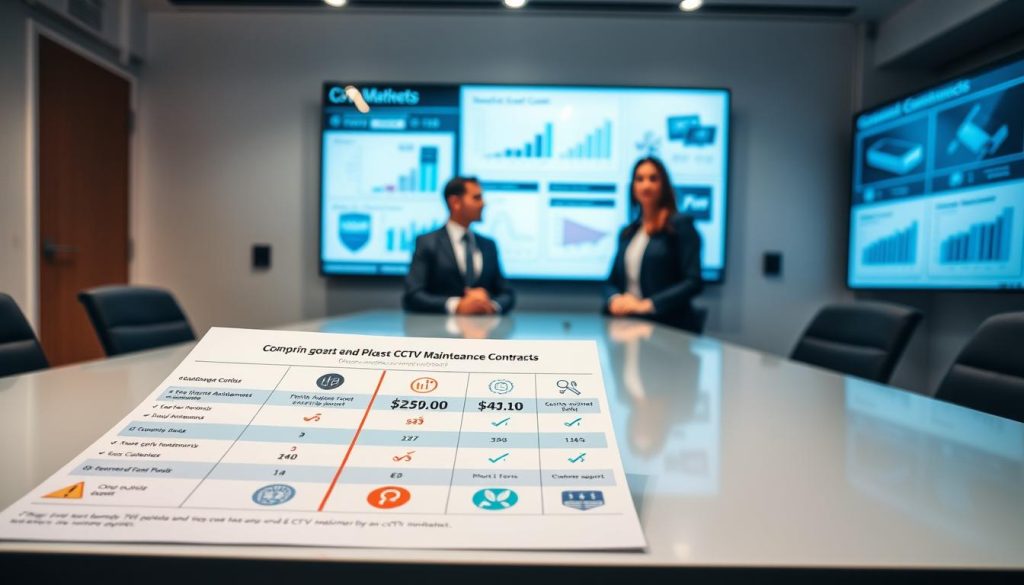
Choosing correctly depends on your operational stability and financial planning style. A stable business with a fixed setup often benefits from long-term value. A startup or temporary site might prioritize short-term flexibility.
Cost Savings and Predictability of Long-Term Contracts
Committing to a multi-year agreement is a strategic financial decision. These plans, typically spanning one to three years, lock in favorable pricing and ensure service continuity.
A key advantage is direct cost reduction. Providers often offer discounts of 8% to 12% off standard rates for long-term commitments. This translates to significant annual savings on your surveillance upkeep.
Budgeting becomes straightforward with a fixed annual fee. You eliminate surprise invoices from reactive repairs. This predictability is crucial for businesses managing operational expenses.
Long-term contracts usually include premium benefits beyond just lower costs.
- Priority Scheduling: Your site gets faster response times for scheduled and emergency visits.
- Reduced Service Gaps: Automated renewals prevent lapses in critical security coverage.
- Value-Added Services: Many bundles include discounted repair parts, extended equipment warranties, or free firmware updates.
This model is ideal for established businesses with stable surveillance needs. It transforms maintenance from a variable cost into a predictable, managed investment.
Adaptability of Short-Term or Pay-Per-Service Plans
Not every property owner is ready for a long-term commitment. Short-term agreements, often lasting a year or less, offer a different set of advantages. The pay-per-service model takes this flexibility further.
The core appeal is the ability to adapt quickly. You can adjust service frequency, change providers, or scale your plan as your needs evolve. This suits projects with uncertain timelines or fluctuating security requirements.
It is also an excellent way to test a provider’s quality before signing a longer contract. You can evaluate their technician’s skills and customer service firsthand.
This flexibility comes with notable financial trade-offs, however.
- Higher Per-Visit Costs: Individual service calls are priced at a premium, often 20-40% more than contract rates.
- Potential for Delays: Without a standing agreement, you may wait longer for an available technician during peak periods.
- No Incentive for Discounts: Providers have little reason to offer you their best pricing on repairs or parts.
For a temporary construction site or a retail pop-up, a short-term agreement provides essential coverage without long-term liability. It’s a practical solution for non-permanent security needs.
Some providers offer hybrid models for the best of both worlds. A base level of care is covered under a modest annual contract. Additional ad-hoc services are then available as needed.
This approach can provide a cost-effective middle ground. It ensures core system checks are performed regularly while allowing for project-based expansions.
Your final choice should align with your risk tolerance and operational forecast. For guaranteed performance and maximized value, a long-term agreement with a reputable provider like professional surveillance upkeep services is often the most prudent path.
A Guide to Common CCTV Maintenance Packages in Singapore
Understanding standard offerings helps you compare providers effectively. Most companies structure their surveillance care into clear tiers. Each level addresses different risk profiles and operational requirements.
Knowing what’s typically included prevents surprises. You can match a package to your actual security demands.
Basic Inspection and Cleaning Packages
Entry-level plans focus on essential preventative care. They typically cost between SGD 300 and SGD 600 annually in Singapore.
These affordable options suit smaller, low-risk setups. A standard residential property often fits this category perfectly.
Basic packages usually include two scheduled visits per year. Technicians perform a set of fundamental tasks during each appointment.
- Visual inspections of all cameras and recorders
- Thorough lens and housing cleaning
- Verification of power and data connections
- Basic recording functionality checks
- Simple firmware updates when available
The goal is to catch obvious problems early. These plans maintain baseline performance for straightforward systems.
They represent a cost-effective solution for standard surveillance needs. Critical commercial installations usually require more comprehensive support.
Comprehensive Full-Service Plans
Premium packages deliver complete surveillance infrastructure management. Annual investment ranges from SGD 600 to SGD 1,500 locally.
This tier is designed for business-critical or complex security networks. It includes everything in basic plans plus advanced technical support.
Comprehensive care goes beyond simple inspections. Technicians perform in-depth diagnostics and proactive optimization.
- Full system health diagnostics and performance reporting
- Advanced software upgrades and security patch management
- Storage optimization and hard drive health monitoring
- Detailed inspection reports with actionable recommendations
- Discounted or prioritized emergency call-out services
- Remote support availability for quick troubleshooting
For operations where surveillance downtime means financial loss or security breaches, a comprehensive plan isn’t a luxury—it’s essential operational insurance.
These plans often include predictive analytics on equipment lifespan. Providers alert you to potential failures before they occur.
The higher cost reflects the greater value and risk mitigation offered. It transforms reactive upkeep into strategic asset management.
What to Look for in Package Inclusions
Scrutinize the fine print before committing to any agreement. A clear checklist helps you evaluate proposals accurately.
Focus on these critical elements when comparing surveillance care contracts:
- Number of Scheduled Visits: How many on-site appointments per year? Is the frequency sufficient for your environment?
- Emergency Response Time: What is the guaranteed window for urgent service calls? Is after-hours support included?
- Parts and Labor Coverage: Are replacement parts discounted or included? Is labor for repairs covered or extra?
- Software Update Policy: Does the plan cover all necessary firmware and security patches?
- Remote Support Availability: Can technicians diagnose issues online to avoid unnecessary site visits?
- Scope Definition: What specific tasks are listed? What constitutes “extra” work with additional charges?
Always request a detailed service-level agreement (SLA). This document should outline every deliverable clearly.
Match the package scope to your setup’s complexity. A basic option for an advanced IP network is a false economy. Conversely, a comprehensive plan for a simple home system wastes resources.
Your chosen package should align with your actual security priorities and risk tolerance. This careful matching ensures optimal value from your surveillance investment.
Emergency and After-Hours CCTV Repair Services
When your surveillance network fails at 2 AM, having reliable emergency support becomes your most critical security asset. Total blackouts don’t follow business hours. Professional providers understand this urgent reality.
What qualifies as a genuine surveillance emergency? Several scenarios demand immediate technical response.
A complete system failure tops the list. All cameras and recorders going offline creates a dangerous security gap. Critical camera downtime over sensitive areas also qualifies.
Loss of recording during or after an incident is another serious problem. Any fault that severely compromises your property’s protection needs fast attention.
In Singapore, reputable companies offer 24/7 emergency services. This support operates 365 days a year. Providers like ClearView maintain high first-time fix rates for urgent cases.
Guaranteed response times provide peace of mind. Many companies promise technician dispatch within four hours for critical failures. Next-business-day responses cover less urgent after-hours issues.
The typical emergency process follows clear steps. You call a dedicated hotline to report the problem. Trained staff help diagnose the situation remotely when possible.
Remote diagnostics can resolve many software-related issues quickly. If an on-site fix is needed, a technician gets dispatched immediately. This streamlined approach minimizes your security exposure.
Emergency after-hours or public holiday services command premium rates. Separate call-out fees and higher hourly labor charges apply. Understanding these costs before a crisis prevents stressful surprises.
Transparency about pricing is essential. Emergency call-outs typically cost significantly more than scheduled visits. Weekend and public holiday rates are highest.
This cost structure highlights the value of preventive maintenance. A well-serviced system faces far fewer urgent repairs. Regular care acts as insurance against high-stress, high-cost emergencies.
Always confirm emergency terms with your provider before signing any contract. Verify availability windows and exact pricing structures. Know what constitutes “after-hours” in your agreement.
Ask about included remote support capabilities. Understand any limitations on emergency services. This preparation ensures smooth resolution during actual crises.
Your surveillance infrastructure must work when you need it most. Reliable 24/7 support provides that final layer of operational confidence. It transforms your security investment into a truly resilient asset.
Beyond the Service Fee: Budgeting for Parts and Repairs
Write the[Your
>.
How to Choose the Right CCTV Maintenance Provider in Singapore
Not all surveillance upkeep providers are created equal. Choosing wisely safeguards your operational continuity and protects your security investment.
This final guide offers a practical checklist. It helps you select a competent, reliable partner for your property in Singapore.
Evaluating Reputation, Experience, and Reviews
Start your search by vetting a company’s track record. A strong history indicates stability and accumulated expertise.
Check how many years they have been in business. Look for relevant accreditations, like the CaseTrust mark in Singapore.
Genuine customer feedback is invaluable. Read Google reviews and testimonials on their website. Pay attention to comments about technician professionalism and problem resolution.
Don’t hesitate to ask for references. A confident provider will connect you with past clients who have similar security setups.
Inquire about technician certifications. Are they trained for specific camera brands like Hikvision or Dahua? Certified professionals often resolve issues faster.
Ensuring Compliance with Local Regulations
In Singapore, data protection laws are strict. Your provider must understand the Personal Data Protection Act (PDPA).
This knowledge is non-negotiable. It relates directly to how surveillance footage is stored, accessed, and handled.
A qualified provider ensures your system setup and data practices are compliant. This protects your businesses from potential legal risk and penalties.
Partnering with a provider ignorant of PDPA requirements can expose you to significant liability, regardless of your security system’s technical quality.
Ask prospective companies about their compliance protocols. Their answer reveals their professionalism and understanding of the local regulatory landscape.
Comparing Quotes and Understanding Contract Terms
Never compare pricing alone. Scrutinize the details behind each quote to ensure you’re comparing like-for-like services.
A detailed quote should list all included tasks, visit frequency, and parts coverage. Vague proposals often lead to surprise charges later.
The contract’s fine print is where critical details live. You must understand the terms before signing.
- Service Level Agreements (SLAs): What is the guaranteed response time for emergencies?
- Termination Clauses: How can you exit the agreement, and are there penalties?
- Price Escalation: Can rates increase during the contract term?
- Scope Definition: What exactly is covered, and what constitutes “extra” work?
Ask specific questions. What is their average on-site response time? Do they offer a client portal for accessing digital service reports?
This due diligence prevents misunderstandings. It ensures the plan you buy matches your security needs.
Remember, the cheapest quote is rarely the best value for your security infrastructure. Reliability, proven expertise, and clear communication are paramount.
Investing time in selecting the right partner pays long-term dividends. It ensures your surveillance system receives the quality upkeep it deserves.
Securing Your Investment: The Final Word on CCTV Maintenance
Making the decision to invest in regular surveillance care is fundamentally a choice about risk management and asset protection. Professional upkeep is not a discretionary cost but a necessary investment in your property’s safety.
As detailed throughout this guide, costs are predictable and manageable with the right service plan. Proactive attention prevents expensive downtime and emergency repairs. It ensures your setup delivers the security performance you require.
Data shows regular maintenance can reduce equipment failure rates by 30-55%. It significantly extends the operational life of cameras and recorders. This maintains optimal video quality for identification and evidence collection.
The relatively small, planned expense of upkeep safeguards against large, unpredictable system failures. By implementing a tailored maintenance plan with reputable providers, you secure your property and protect your people. Your surveillance investment will pay dividends for years to come.
FAQ
What is the typical price range for annual CCTV maintenance in Singapore?
In Singapore, annual maintenance costs for a standard system often range from S0 to SWhat is the typical price range for annual CCTV maintenance in Singapore?In Singapore, annual maintenance costs for a standard system often range from S0 to S
,500+. The final price depends heavily on your camera count, system complexity, and the service level you select. A basic residential setup will be at the lower end, while a large commercial surveillance system with many cameras will cost more.What are the main factors that increase my maintenance bill?Several key factors influence your bill. A higher number of cameras means more labor for cleaning and checks. Advanced camera types like PTZ models require more intricate inspections. Difficult installation environments, like high ceilings, add time. Finally, opting for a comprehensive plan with software updates and emergency support will cost more than a basic package.What does a professional maintenance visit actually involve?A professional service includes several critical tasks. Technicians perform physical cleaning of camera housings and lenses. They run performance checks on video feed quality, storage device health, and recording functions. Crucially, they apply essential software and firmware updates to patch security flaws and ensure system stability, preventing many common issues.Is a long-term maintenance contract better than paying per service?Each option has benefits. A long-term contract offers cost predictability, often includes priority emergency repairs, and ensures regular upkeep. Pay-per-service plans provide greater flexibility for smaller setups. For most businesses, a contract ensures consistent performance and helps avoid major, costly equipment failures.Are repairs and replacement parts included in a standard maintenance package?Typically, standard packages cover labor for inspections and minor adjustments but not the cost of replacement parts. Items like new cameras, lenses, or hard drives are usually billed separately. It’s vital to clarify pricing for parts and emergency repairs with your provider upfront to budget accurately for potential unexpected repairs.How do I choose a reliable maintenance provider in Singapore?Look for a provider with strong experience with your security system brand and type. Check their reputation through reviews and client testimonials. Ensure they understand local regulations for surveillance systems. Always compare detailed quotes and contract terms to confirm the scope of services, response times for problems, and pricing structure.,500+. The final price depends heavily on your camera count, system complexity, and the service level you select. A basic residential setup will be at the lower end, while a large commercial surveillance system with many cameras will cost more.
FAQ
What is the typical price range for annual CCTV maintenance in Singapore?
In Singapore, annual maintenance costs for a standard system often range from S0 to S
FAQ
What is the typical price range for annual CCTV maintenance in Singapore?
In Singapore, annual maintenance costs for a standard system often range from S$300 to S$1,500+. The final price depends heavily on your camera count, system complexity, and the service level you select. A basic residential setup will be at the lower end, while a large commercial surveillance system with many cameras will cost more.
What are the main factors that increase my maintenance bill?
Several key factors influence your bill. A higher number of cameras means more labor for cleaning and checks. Advanced camera types like PTZ models require more intricate inspections. Difficult installation environments, like high ceilings, add time. Finally, opting for a comprehensive plan with software updates and emergency support will cost more than a basic package.
What does a professional maintenance visit actually involve?
A professional service includes several critical tasks. Technicians perform physical cleaning of camera housings and lenses. They run performance checks on video feed quality, storage device health, and recording functions. Crucially, they apply essential software and firmware updates to patch security flaws and ensure system stability, preventing many common issues.
Is a long-term maintenance contract better than paying per service?
Each option has benefits. A long-term contract offers cost predictability, often includes priority emergency repairs, and ensures regular upkeep. Pay-per-service plans provide greater flexibility for smaller setups. For most businesses, a contract ensures consistent performance and helps avoid major, costly equipment failures.
Are repairs and replacement parts included in a standard maintenance package?
Typically, standard packages cover labor for inspections and minor adjustments but not the cost of replacement parts. Items like new cameras, lenses, or hard drives are usually billed separately. It’s vital to clarify pricing for parts and emergency repairs with your provider upfront to budget accurately for potential unexpected repairs.
How do I choose a reliable maintenance provider in Singapore?
Look for a provider with strong experience with your security system brand and type. Check their reputation through reviews and client testimonials. Ensure they understand local regulations for surveillance systems. Always compare detailed quotes and contract terms to confirm the scope of services, response times for problems, and pricing structure.
,500+. The final price depends heavily on your camera count, system complexity, and the service level you select. A basic residential setup will be at the lower end, while a large commercial surveillance system with many cameras will cost more.
What are the main factors that increase my maintenance bill?
Several key factors influence your bill. A higher number of cameras means more labor for cleaning and checks. Advanced camera types like PTZ models require more intricate inspections. Difficult installation environments, like high ceilings, add time. Finally, opting for a comprehensive plan with software updates and emergency support will cost more than a basic package.
What does a professional maintenance visit actually involve?
A professional service includes several critical tasks. Technicians perform physical cleaning of camera housings and lenses. They run performance checks on video feed quality, storage device health, and recording functions. Crucially, they apply essential software and firmware updates to patch security flaws and ensure system stability, preventing many common issues.
Is a long-term maintenance contract better than paying per service?
Each option has benefits. A long-term contract offers cost predictability, often includes priority emergency repairs, and ensures regular upkeep. Pay-per-service plans provide greater flexibility for smaller setups. For most businesses, a contract ensures consistent performance and helps avoid major, costly equipment failures.
Are repairs and replacement parts included in a standard maintenance package?
Typically, standard packages cover labor for inspections and minor adjustments but not the cost of replacement parts. Items like new cameras, lenses, or hard drives are usually billed separately. It’s vital to clarify pricing for parts and emergency repairs with your provider upfront to budget accurately for potential unexpected repairs.
How do I choose a reliable maintenance provider in Singapore?
Look for a provider with strong experience with your security system brand and type. Check their reputation through reviews and client testimonials. Ensure they understand local regulations for surveillance systems. Always compare detailed quotes and contract terms to confirm the scope of services, response times for problems, and pricing structure.
What are the main factors that increase my maintenance bill?
Several key factors influence your bill. A higher number of cameras means more labor for cleaning and checks. Advanced camera types like PTZ models require more intricate inspections. Difficult installation environments, like high ceilings, add time. Finally, opting for a comprehensive plan with software updates and emergency support will cost more than a basic package.
What does a professional maintenance visit actually involve?
A professional service includes several critical tasks. Technicians perform physical cleaning of camera housings and lenses. They run performance checks on video feed quality, storage device health, and recording functions. Crucially, they apply essential software and firmware updates to patch security flaws and ensure system stability, preventing many common issues.
Is a long-term maintenance contract better than paying per service?
Each option has benefits. A long-term contract offers cost predictability, often includes priority emergency repairs, and ensures regular upkeep. Pay-per-service plans provide greater flexibility for smaller setups. For most businesses, a contract ensures consistent performance and helps avoid major, costly equipment failures.
Are repairs and replacement parts included in a standard maintenance package?
Typically, standard packages cover labor for inspections and minor adjustments but not the cost of replacement parts. Items like new cameras, lenses, or hard drives are usually billed separately. It’s vital to clarify pricing for parts and emergency repairs with your provider upfront to budget accurately for potential unexpected repairs.
How do I choose a reliable maintenance provider in Singapore?
Look for a provider with strong experience with your security system brand and type. Check their reputation through reviews and client testimonials. Ensure they understand local regulations for surveillance systems. Always compare detailed quotes and contract terms to confirm the scope of services, response times for problems, and pricing structure.


