
Can rain damage CCTV camera? Prevention Guide
Outdoor surveillance equipment faces constant battle with the elements. In Singapore’s tropical climate, this challenge becomes particularly intense.
Frequent heavy downpours and persistent high humidity create a harsh environment for security systems. These conditions threaten the longevity and reliability of your monitoring setup.
Understanding this relationship between weather exposure and system performance is crucial. Proper safeguards ensure your investment continues to deliver clear visuals and dependable operation.
This guide explores practical solutions for homeowners and businesses. We focus on selection, strategic placement, and regular care of your equipment.
Key Takeaways
- Singapore’s climate poses unique threats to outdoor surveillance from heavy rainfall and high humidity.
- Water ingress can cause immediate failure or gradual deterioration of internal components.
- Selecting devices with appropriate IP ratings (IP67 or higher) is essential for water resistance.
- Regular maintenance checks prevent issues like condensation buildup on lenses.
- Strategic installation under eaves or with protective housing extends equipment lifespan.
- Proactive protection preserves image quality and system reliability year-round.
Reliable outdoor monitoring systems must withstand Singapore’s demanding atmospheric conditions. The tropical environment creates a perfect storm of threats that can compromise visual security. Understanding these specific challenges is the first step toward effective protection.
Understanding the Threat: Rain and Your CCTV Security
Environmental factors directly impact surveillance reliability. Singapore’s location near the equator creates consistent weather patterns that test electronic equipment. These conditions require specialized planning for any outdoor installation.
Why Singapore’s Climate Poses a Unique Challenge
Singapore experiences two distinct monsoon seasons each year. Heavy downpours are frequent and intense during these periods. The constant high humidity levels rarely drop below 70% throughout the year.
This combination creates persistent moisture exposure for all outdoor electronics. Temperature swings between daytime heat and cooler nights are common. These fluctuations trigger condensation inside improperly sealed units.
Blocked drainage around mounting points can lead to water accumulation. Pooling liquid around the base of your equipment accelerates wear. The tropical heat further stresses materials and electronic components.
From Heavy Showers to Persistent Humidity: The Moisture Spectrum
Water exposure comes in various forms that threaten surveillance gear. Direct rainfall tests the waterproof seals of any outdoor housing. Even brief, intense showers can overwhelm basic protective features.
Ambient humidity presents a more insidious challenge. Moist air gradually penetrates microscopic openings in seals. This slow infiltration causes internal fogging on lenses during temperature changes.
Condensation forms when warm, humid air meets cooler surfaces inside the housing. This phenomenon frequently occurs during early morning hours. The resulting fog obscures the lens and creates blurry images.
Persistent moisture leads to corrosion of sensitive electrical contacts. Metal components begin to oxidize when exposed to humid conditions. This degradation happens gradually but inevitably affects performance.
Different moisture threats demand specific prevention strategies. Waterproof ratings address direct liquid exposure from storms. Desiccant packs help control humidity inside sealed compartments.
Recognizing your specific environmental exposure helps create targeted protection plans. Assess your installation site for potential water accumulation points. Consider both immediate rainfall and long-term humidity effects.
Can Rain Damage CCTV Camera? The Direct Answer
Liquid exposure represents one of the most significant threats to electronic monitoring devices in tropical regions. The answer to whether precipitation affects your security setup is unequivocally yes. Water intrusion ranks among the top causes of surveillance failure in Singapore’s climate.
Once moisture penetrates a unit’s protective barriers, restoration becomes exceptionally difficult. This often results in permanently blurred visuals and compromised visibility. Understanding this risk is the foundation for implementing effective safeguards.
Real-world data reveals concerning patterns for security equipment in wet environments. Some brands show failure rates approaching 50% in areas with heavy rainfall. These statistics highlight the critical need for proper protective measures.
Immediate Failure vs. Gradual Deterioration
Water compromises surveillance gear through two distinct pathways. Sudden catastrophic failure happens when liquid creates electrical shorts. These events can render devices completely inoperative within seconds of exposure.
Internal circuits experience rapid malfunction when moisture bridges connections. Power surges often follow, destroying sensitive imaging sensors and processors. This type of problem typically requires complete unit replacement.
Gradual degradation presents a more insidious challenge. Slow moisture infiltration occurs through microscopic seal imperfections. Humid air condenses on cooler internal surfaces during temperature fluctuations.
This process leads to persistent fogging on optical components. Metal contacts and circuit boards gradually develop oxidation. Performance declines steadily over weeks or months before complete failure.
The condensation cycle repeats daily in Singapore’s climate. Warm, moist air enters housings during daytime heating. Evening cooling causes this vapor to transform into liquid droplets inside the unit.
Real-World Consequences of Water Ingress
Practical examples demonstrate how moisture undermines security effectiveness. Residential installations without proper safeguards frequently experience monsoon-season failures. Commercial systems face similar vulnerabilities during critical monitoring periods.
Blurred footage becomes useless for identification purposes. Evidentiary quality deteriorates when lenses develop permanent condensation marks. System reliability drops precisely when surveillance needs peak during storm events.
Financial impacts extend beyond simple equipment replacement costs. Security gaps created during downtime expose properties to increased risk. Liability concerns arise when compromised footage cannot document incidents.
Different models exhibit varying resistance to environmental challenges. Construction quality and material selection determine long-term durability. Protective features must match Singapore’s specific atmospheric conditions.
Understanding these damage patterns enables better prevention planning. Proactive measures address both sudden and gradual moisture threats. Effective strategies combine proper equipment selection with regular maintenance routines.
The Three Main Ways Water Compromises Camera Function
Understanding how moisture affects surveillance gear reveals three primary failure points. Each threat operates through different mechanisms but shares a common origin. Environmental exposure initiates a chain reaction that undermines system integrity.
These problems manifest at various rates depending on installation conditions. Some issues appear immediately during heavy storms. Others develop slowly over months of constant humidity exposure.
Statistics highlight the prevalence of these challenges. Approximately half of certain surveillance models develop condensation problems in wet climates. This data underscores the importance of targeted protection strategies.
1. Condensation and Internal Fogging
Internal fogging represents the most frequent moisture-related issue for outdoor units. Temperature differences between interior and exterior surfaces trigger this phenomenon. Warm, humid air enters the housing through microscopic openings.
This moisture-laden air contacts cooler internal components. Water vapor transforms into liquid droplets on lenses and sensors. The resulting fog creates blurred or completely obscured surveillance footage.
Singapore’s climate creates ideal conditions for this cycle. Daytime heating draws moist air into equipment housings. Evening cooling then causes condensation formation overnight.
Late summer and autumn months present the highest risk. Temperature fluctuations become more pronounced during these periods. Regular monitoring helps identify early signs of this problem.
2. Corrosion of Electrical Components
Moisture infiltration gradually degrades electronic connections and circuits. This insidious process often goes unnoticed until failures occur. Metal contacts and boards begin oxidizing when exposed to humid conditions.
Corrosion affects various system elements simultaneously. Power supply connections develop resistance issues first. Data transmission circuits experience intermittent signal loss as oxidation spreads.
The degradation happens slowly but persistently. Each exposure cycle adds microscopic damage to sensitive components. Eventually, these cumulative effects compromise entire system functionality.
Different materials exhibit varying resistance to this threat. Copper connections corrode faster than gold-plated alternatives. Proper material selection during purchase prevents future reliability issues.
3. Physical Seals and Lens Damage
Protective barriers deteriorate over time due to environmental stress. Rubber gaskets and silicone seals lose elasticity with constant temperature changes. This degradation creates pathways for liquid penetration.
Direct precipitation impact presents another physical threat. Heavy downpours can scratch or crack external lens surfaces. Wind-driven debris compounds this mechanical damage during storms.
Supposedly waterproof housings fail when seals compromise. Water enters through degraded gaskets around mounting points. Cable entry locations represent common vulnerability points.
Each damage type requires specific prevention approaches. Anti-fog treatments address condensation challenges. Corrosion-resistant materials protect electronic components.
Reinforced seals and protective coatings safeguard physical integrity. Understanding these mechanisms helps prioritize security measures. Effective strategies combine multiple protection layers for comprehensive coverage.
Decoding IP Ratings: Your First Line of Defense
International standards provide clear benchmarks for evaluating environmental protection in surveillance technology. The Ingress Protection (IP) code offers a universal language for comparing device resilience. This standardized system helps you make informed decisions about security investments.
Each IP rating consists of two numerical digits with specific meanings. The first number indicates protection against solid particles like dust. The second digit defines liquid intrusion resistance levels.
Understanding this coding system prevents costly mistakes. Proper interpretation matches device capabilities to real-world conditions. This knowledge forms the foundation of effective surveillance planning.
What IP65, IP66, and IP67 Really Mean for You
Different ratings correspond to distinct environmental challenges. IP65-rated units withstand low-pressure water jets from any direction. This basic weather resistance suits areas with occasional light precipitation.
Equipment with IP66 certification handles powerful liquid streams. These models survive direct exposure to heavy downpours and storms. The enhanced sealing prevents moisture penetration during intense weather events.
IP67-rated devices offer temporary immersion protection. They can survive submersion in one meter of water for thirty minutes. This rating provides security against flooding and extreme conditions.
The dust protection component deserves equal attention. Singapore’s urban environment contains abundant particulate matter. Proper sealing maintains lens clarity and sensor performance over time.
The Minimum Rating for Reliable Singapore Outdoor Use
Singapore’s climate demands specific protective standards. The region experiences intense rainfall during monsoon seasons. High humidity levels create persistent moisture challenges year-round.
IP66 represents the minimum practical rating for reliable operation. This certification ensures protection against powerful water jets common during storms. Systems with lower ratings risk premature failure in local conditions.
IP67 provides valuable additional security for vulnerable locations. Installation spots prone to water accumulation benefit from this higher standard. Temporary flooding protection becomes relevant during extreme weather events.
Consider these practical factors when evaluating specifications:
- Verify both dust and water protection ratings match your needs
- Check manufacturer testing standards and certification authenticity
- Assess your specific installation site’s exposure risks
- Consider long-term maintenance requirements for different ratings
Proper IP rating selection directly impacts system longevity. Higher-rated equipment typically offers better construction quality. This investment pays dividends through reduced maintenance and replacement costs.
Match device specifications to your property’s unique characteristics. Elevated locations might require different protection than ground-level installations. Each environment presents distinct challenges for surveillance gear.
This knowledge empowers you to interpret technical specifications accurately. You can identify products with genuinely adequate protection features. Your security setup gains resilience against Singapore’s demanding climate.
Choosing a Weather-Resistant CCTV Camera: Key Features
Material science plays a crucial role in determining how well electronic security devices withstand tropical conditions. The right selection combines technical specifications with physical durability for long-term reliability.
Your investment should deliver clear visuals and consistent operation through monsoon seasons. This requires careful evaluation beyond basic waterproof ratings.
Beyond the IP Rating: Build Quality and Materials
An IP certification represents just the starting point for environmental resilience. The actual construction determines how a unit performs over years of exposure.
Superior surveillance gear uses corrosion-resistant materials throughout its design. Marine-grade aluminum offers excellent strength without oxidation risks.
Stainless steel components provide additional protection in coastal areas. Salt spray accelerates metal degradation in standard assemblies.
UV-stabilized polycarbonate housings maintain integrity under constant sunlight. This plastic resists yellowing and brittleness caused by solar radiation.
Reinforced cable entry points prevent moisture ingress at connection junctions. Double-sealed gaskets create redundant barriers against liquid penetration.
Anti-corrosive coatings protect all external metal surfaces. These specialized treatments add microscopic protection layers.
Internal design features contribute significantly to longevity. Proper ventilation prevents heat buildup while maintaining seal integrity.
Drainage channels in housing designs redirect accumulated liquid away from critical components. This simple feature prevents water pooling during heavy storms.
Wide operating temperature ranges accommodate Singapore’s climate variations. Look for specifications covering -10°C to 60°C for reliable year-round performance.
Recommended Models and Brands for Tropical Climates
Several manufacturers produce surveillance technology specifically tested for humid environments. These models incorporate specialized features addressing local challenges.
Hikvision offers the DS-2CD2385FWD-I with robust construction and high-resolution imaging. This model features enhanced sealing and anti-fog technology for clear footage.
The Reolink Argus Series provides wireless convenience with weatherproof housing. These units include sunshields to reduce thermal cycling effects on internal components.
i-PRO’s WV-S1550L delivers high-definition video with strong environmental resistance. Its design includes built-in heaters for dew prevention during temperature drops.
Additional reliable options include Ring and Blink systems with tropical climate adaptations. These brands focus on residential applications with simplified installation.
Consider these essential features when comparing options:
- Thermal imaging capabilities for low-visibility conditions
- Anti-fog coatings on internal lenses
- Wide dynamic range for challenging lighting
- PoE (Power over Ethernet) for reduced cable vulnerability
- Integrated cooling systems for temperature management
Different scenarios demand specific equipment choices. Residential eaves installations might prioritize discreet designs with reliable basic protection.
Fully exposed commercial locations require industrial-grade construction with maximum resilience. These applications justify investment in higher-grade surveillance equipment.
Balance initial cost against long-term maintenance requirements when selecting. Superior materials and construction reduce service needs over the product lifespan.
Your final choice should match both environmental challenges and monitoring objectives. Proper selection ensures your security system provides dependable protection through Singapore’s demanding seasons.
Strategic Installation: Location is Everything
The physical positioning of your monitoring equipment determines its resilience against environmental challenges. Where you place your security gear creates the first line of defense against moisture intrusion.
This approach costs nothing extra but delivers significant protection benefits. Smart placement works alongside technical specifications to safeguard your investment.
Singapore’s architecture offers numerous natural shields against precipitation. Understanding how to use these features maximizes surveillance reliability.
Utilizing Eaves, Overhangs, and Natural Cover
Existing structures provide excellent shelter for outdoor surveillance units. Roof extensions and building projections create dry zones during storms.
Soffits beneath roof edges offer particularly effective mounting spots. These areas remain shielded from direct downpours while maintaining visibility.
Porch ceilings and covered walkways serve similar protective functions. Garage entrances with overhead coverage represent another ideal location.
The goal is maintaining a clear field of view while minimizing liquid exposure. Even partial coverage dramatically reduces water contact during heavy weather.
Measure the protective coverage carefully during planning. Ensure at least 30 centimeters of overhang extends beyond the unit’s position.
This buffer prevents wind-driven droplets from reaching sensitive components. Consider seasonal sun angles that might affect protective shadows.
Angling Your Camera to Shed Water Effectively
Proper orientation prevents liquid accumulation on critical surfaces. A slight downward tilt encourages runoff instead of pooling.
Aim for a 10 to 15-degree angle relative to horizontal positioning. This gentle slope allows droplets to roll away naturally.
Avoid creating flat surfaces where water might collect. Lens domes particularly benefit from this angled approach.
The mounting bracket should direct precipitation away from seal points. Check that drainage channels remain unobstructed after installation.
Adjust the viewing angle to accommodate this protective tilt. Modern wide-angle lenses compensate for minor positioning adjustments.
Test the runoff pattern using a garden hose during setup. Observe how liquid moves across the housing surfaces.
Places You Should Avoid Mounting Your Camera
Certain locations create unnecessary risks for surveillance gear. Identifying these spots prevents future reliability issues.
Avoid positions directly beneath roof drainage points. Gutters and downspouts concentrate water flow during heavy precipitation.
Low-lying areas prone to flooding present obvious dangers. Even temporary pooling can submerge lower-mounted units.
Fully exposed walls facing prevailing weather patterns risk maximum impact. Wind-driven showers penetrate supposedly protected zones.
Spots receiving reflected splash from nearby surfaces deserve caution. Paved areas and water features generate secondary moisture exposure.
Locations with minimal air circulation encourage condensation buildup. Stagnant humid conditions accelerate internal fogging.
Corners where two walls meet often create water-trapping geometries. These junctions frequently experience concentrated runoff.
Careful site assessment identifies these problematic positions before installation. A small adjustment during setup prevents years of maintenance headaches.
Investing in Protective Housings and Accessories
Beyond the core unit itself, specialized add-ons deliver crucial environmental safeguards for electronic monitoring. These supplementary components create multiple defense layers against Singapore’s persistent humidity and intense weather patterns.
Strategic accessory selection addresses specific vulnerabilities in your surveillance setup. The right combination enhances reliability without compromising visual clarity or system functionality.
When and Why to Use a Separate Waterproof Enclosure
External protective casings add an essential barrier for units installed in exposed locations. They become particularly valuable for gear with lower IP ratings or older equipment lacking modern sealing features.
Weatherproof enclosures secure your investment against extreme elements. These external shells provide secondary protection when primary seals eventually degrade over time.
Consider separate housing under these specific conditions:
- Installation spots receive direct wind-driven precipitation
- Existing equipment shows signs of seal wear or minor leakage
- Budget constraints prevent immediate upgrade to higher-rated units
- Monitoring points experience exceptional splash or spray exposure
Third-party enclosures often include enhanced ventilation systems. These features manage internal climate better than standard manufacturer designs.
The cost-benefit analysis favors protective casings for long-term installations. They extend operational lifespan significantly compared to unprotected setups.
Essential Add-ons: Rain Hoods, Sunshields, and Heater Blowers
Specialized accessories target distinct environmental threats to surveillance performance. Each component addresses specific aspects of Singapore’s challenging climate.
Rain covers shield lens surfaces from direct downpour impact. These hoods deflect liquid away while maintaining clear sightlines for continuous monitoring.
Properly installed deflectors reduce maintenance frequency for external cleaning. They prevent water spotting and mineral deposits on optical elements.
Sunshields serve dual protective functions in tropical conditions. They minimize thermal cycling that contributes to internal fog formation.
These shields also block ultraviolet radiation that degrades plastic components. Reduced direct sunlight exposure prevents premature housing material failure.
Heater blowers maintain consistent internal temperatures to prevent dew formation. Many models incorporate silica gel packets for additional humidity control within sealed compartments.
Integrated climate control features represent advanced solutions for demanding environments. They automatically adjust based on external temperature and moisture levels.
Anti-corrosive mounting hardware prevents gradual deterioration from prolonged exposure. Stainless steel screws and brackets resist oxidation better than standard options.
Accessory compatibility ensures supplementary protection enhances rather than compromises functionality. Verify mounting specifications match your specific equipment model before purchase.
Professional installation techniques prevent creating new water entry points. Proper sealing around accessory attachments maintains overall housing integrity.
Both commercial solutions and effective DIY approaches exist for enhancing weather resistance. Simple modifications can significantly improve reliability in local conditions.
Proper Cable Management to Seal Out Moisture
The wiring connections of your surveillance setup often become the weakest link in weatherproofing defense. Liquid finds its way through tiny gaps around cables, bypassing even well-sealed housings.
This infiltration path represents a common failure mode in tropical installations. Proper management creates a continuous barrier against environmental threats.
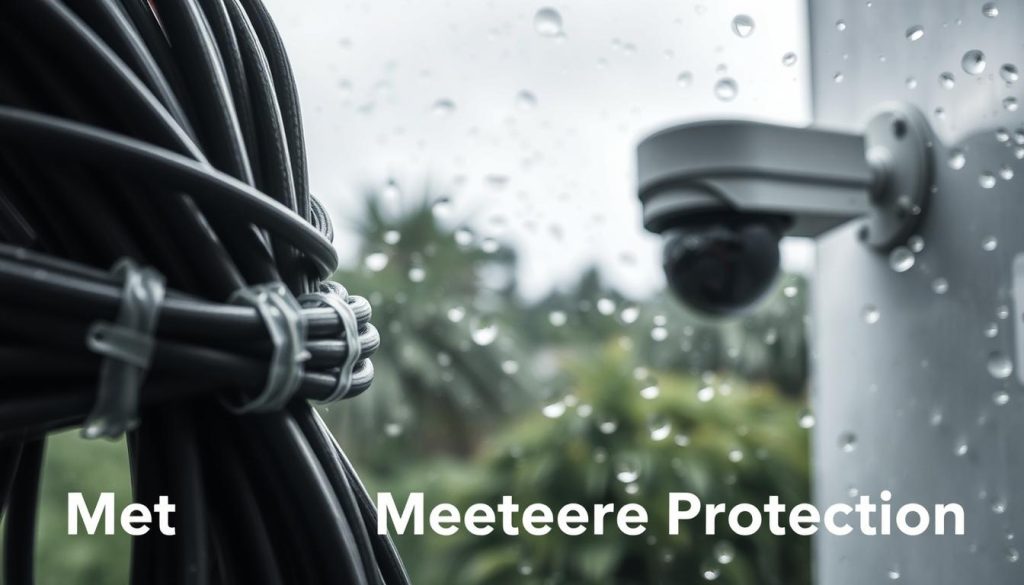
Effective strategies address both the cabling runs and connection junctions. Each component plays a role in maintaining system integrity during heavy weather.
Waterproof Conduits and Junction Boxes
Continuous protective tubing shields wiring from direct exposure to the elements. These conduits prevent moisture from tracking along wires into sensitive areas.
Rigid PVC piping offers excellent durability for permanent installations. Flexible corrugated options accommodate complex routing paths around structures.
All conduits should feature sealed joints and proper mounting brackets. This prevents sagging where liquid might accumulate over time.
Junction boxes provide protected spaces for electrical connections. They consolidate wiring points away from direct environmental exposure.
Select enclosures with IP66 or IP67 ratings for reliable performance. These withstand powerful water jets and temporary immersion scenarios.
Look for these essential features in quality components:
- Compression cable glands that tighten around wires to create seals
- Internal mounting points for organized connection management
- Transparent covers allowing visual inspection without opening
- Drainage ports with removable plugs for condensation release
Recommended products for Singapore include D-Line PVC trunking and Hager IP66 enclosures. These brands withstand local humidity and temperature fluctuations.
Sealing Cable Entry Points: A Critical Step
Every penetration through a housing or wall requires meticulous sealing. This prevents liquid from following wiring paths into protected spaces.
The process involves multiple layers of defense for maximum reliability. Proper technique ensures long-term performance despite constant environmental stress.
Follow these steps for creating watertight cable penetrations:
- Clean all surfaces with isopropyl alcohol to remove oils and debris
- Apply waterproof putty around the cable where it enters the gland
- Thread the compression gland onto the cable and tighten securely
- Seal the external junction with silicone-based waterproof tape
- Apply liquid electrical tape over the entire assembly for added protection
Specialized materials maintain flexibility through thermal cycling. They accommodate expansion and contraction without cracking or separating.
Self-amalgamating tape fuses into a solid rubber-like barrier. Butyl rubber sealant remains pliable for years in tropical conditions.
Regular inspection identifies early signs of seal degradation. Check for cracking, peeling, or discoloration during monthly maintenance.
Reapply sealants annually before the monsoon season begins. This proactive approach prevents failures during critical weather periods.
Proper routing directs moisture away from connection points. Create drip loops that break capillary action along wiring.
These simple techniques significantly enhance your surveillance reliability. They represent cost-effective investments in long-term system performance.
Internal Moisture Control: Silica Gel and Anti-Fog Tech
Internal environmental management separates reliable security systems from those prone to failure. While external seals block liquid entry, internal climate regulation prevents issues that develop inside protective housings.
Singapore’s high humidity creates persistent challenges for surveillance equipment. Advanced moisture control technologies provide essential defense against these invisible threats.
Two primary approaches address internal humidity concerns. Passive desiccant systems absorb existing moisture within sealed spaces. Active anti-fog technologies prevent condensation formation on critical optical surfaces.
How Silica Gel Packets Work Inside Camera Housings
Silica gel packets provide passive humidity control inside surveillance equipment housings. These desiccants absorb ambient moisture that could otherwise condense on interior surfaces.
The packets contain porous silicon dioxide beads with massive surface areas. This structure traps water molecules through physical adsorption without chemical reactions.
Each tiny bead contains microscopic channels that capture humidity. The material can absorb up to 40% of its weight in water vapor.
Proper placement ensures effective moisture management. Position packets away from direct airflow paths within the housing.
Mount them near potential condensation points like lens assemblies. Avoid contact with electrical components to prevent any conductivity issues.
Replacement schedules depend on local humidity levels and housing seal integrity. Most packets require changing every three to six months in Singapore’s climate.
Indicator varieties simplify maintenance by changing color when saturated. Blue silica beads turn pink as they absorb maximum moisture.
Regeneration offers a budget-friendly alternative to replacement. Baking saturated packets at low temperatures releases trapped water molecules.
Anti-Fog Coatings and Built-in Climate Control Features
Anti-fog treatments maintain visual clarity in challenging humidity conditions. These technologies alter surface tension to prevent water droplet formation.
Special coatings create hydrophilic surfaces on lens exteriors. Moisture spreads into thin, transparent films instead of obstructive beads.
Commercial sprays provide temporary protection lasting several weeks. Permanent treatments bond to glass or plastic surfaces during manufacturing.
Built-in climate control represents the most advanced solution. These integrated systems manage internal temperature and humidity levels automatically.
Peltier coolers use thermoelectric principles to reduce surface temperatures. Heating elements maintain warmth above dew point during cooling periods.
Active ventilation systems circulate air within sealed compartments. Small fans prevent stagnant humid conditions that encourage condensation.
Combined systems offer comprehensive protection for demanding installations. They pair desiccant technology with temperature regulation for optimal results.
Consider these factors when selecting moisture control solutions:
- Housing size determines how many gel packets you need
- Seal quality affects how quickly external humidity enters
- Temperature fluctuations influence condensation risk levels
- Maintenance access impacts how easily you can replace components
Budget-conscious approaches deliver effective protection with proper implementation. DIY solutions can match commercial products when applied correctly.
Professional installations often incorporate multiple moisture control layers. This redundancy ensures continued operation even if one system fails.
Regular inspection maintains long-term effectiveness of all humidity management technologies. Check silica packets monthly during Singapore’s wettest seasons.
Proper implementation extends surveillance equipment lifespan significantly. It maintains image quality between scheduled maintenance intervals.
Creating a Proactive CCTV Maintenance Schedule
A structured maintenance plan transforms reactive problem-solving into proactive system preservation. Regular care extends the lifespan of your surveillance investment significantly.
Singapore’s climate demands specific attention to seasonal patterns. Monsoon periods require intensified preparation to ensure continuous operation.
Documentation creates valuable historical data for troubleshooting. This record helps identify recurring issues before they escalate.
Weekly and Monthly Visual Inspection Checklist
Weekly checks focus on immediate visual indicators of potential problems. These quick inspections take just minutes but prevent major failures.
Look for new water stains around the housing and mounting bracket. Check for unusual condensation patterns inside the lens dome.
Note any changes in image quality during different times of day. Blurring or distortion often signals early moisture issues.
Monthly maintenance involves more thorough verification of system integrity. Schedule these tasks for consistent timing each month.
Verify all external seals remain pliable and intact. Gently clean optical surfaces with a microfiber cloth to remove dust.
Test functionality under various simulated conditions. Review footage from different weather scenarios to ensure consistent performance.
Your monthly checklist should include these critical items:
- Seal integrity examination around all housing edges and cable entries
- External surface cleaning to prevent dirt accumulation
- Mounting stability verification to ensure secure positioning
- Image clarity assessment across different lighting conditions
- Connection testing for all power and data cables
Pre-Monsoon Deep-Cleaning and Seal Checks
Singapore’s distinct monsoon seasons require specialized preparation. Complete deep-cleaning at least two weeks before expected heavy weather.
This process involves careful housing disassembly for thorough inspection. Replace any compromised gaskets or seals during this maintenance window.
Examine all internal components for early signs of corrosion. Check electrical contacts for oxidation that could affect signal transmission.
Comprehensive system testing follows reassembly. Verify all functions operate correctly before the storm season begins.
Follow these steps for effective pre-monsoon preparation:
- Disconnect power and carefully remove the housing unit
- Clean internal components with compressed air to remove dust
- Inspect and replace silica gel packets if present
- Apply fresh sealant to cable entry points if needed
- Reassemble and test all camera functions thoroughly
Professional service becomes necessary when internal components show advanced corrosion. Complex electrical issues also require expert intervention.
Understanding maintenance priorities helps allocate limited resources effectively. Focus on units in exposed locations first during preparation.
Seasonal adjustments account for Singapore’s changing weather patterns. Increase inspection frequency during high-humidity months.
Consistent maintenance practices directly impact long-term reliability. Proper care ensures your security system withstands tropical environmental challenges.
Recognizing the Early Signs of Water Damage
Your security equipment often sends distress signals long before a complete failure occurs. Learning to spot these early warnings is crucial for protecting your investment.
Timely intervention can prevent minor issues from escalating into major component failures. This proactive approach helps your entire surveillance setup last longer.
Visual Cues: Foggy Lenses and Corrosion
The most obvious symptoms appear on the physical unit itself. Regular visual checks can reveal problems brewing inside the housing.
Persistent fog or haze on the lens is a primary indicator. This occurs when humidity condenses on the cooler interior glass.
Look for these specific visual warnings:
- Foggy or hazy appearance that doesn’t clear after temperature stabilization.
- Visible water droplets or streaks on interior surfaces.
- White, green, or blue corrosion patterns on metal brackets and contacts.
- Water stains or mineral deposits around housing seams and cable entries.
- Discoloration or clouding of plastic components.
Corrosion on electrical parts signals serious exposure. This oxidation disrupts power and data signals, leading to performance drops.
Performance Cues: Intermittent Feed and Poor Image Quality
Your system’s behavior often changes before physical signs appear. Monitoring performance metrics provides early detection.
Fluctuating video quality is a major red flag. Images may become grainy, distorted, or lose color accuracy.
Watch for these operational symptoms:
- Intermittent video feed or signal loss during humid periods.
- Increased digital noise or “snow” in the footage, especially at night.
- Malfunctioning infrared (IR) cut filter, causing poor night vision.
- Unexpected system reboots or power cycling.
- Slow response times from pan-tilt-zoom (PTZ) functions.
These issues often stem from moisture affecting internal circuits. The problem tends to worsen with specific weather conditions.
Distinguishing temporary condensation from serious infiltration is vital. Morning fog that clears by midday is less concerning than persistent internal moisture.
Documenting these cues creates a valuable troubleshooting history. Note when symptoms appear and under what weather patterns.
Simple testing can confirm suspicions. Compare footage from different times and weather conditions. Check power supply consistency with a multimeter.
Recognizing these patterns allows you to prioritize repairs. Addressing early warnings preserves image quality and overall system reliability.
Steps to Take If Your CCTV Camera Gets Wet
When liquid infiltrates your monitoring equipment, a systematic response can mean the difference between restoration and replacement. Quick, correct actions preserve your security investment and maintain surveillance continuity.
Follow these structured protocols to address moisture exposure effectively. Each phase builds upon the previous one for optimal results.
Immediate Emergency Actions
Your first priority is preventing additional harm to the compromised unit and connected components. Safety always comes before attempting any restoration work.
Disconnect all power sources immediately. This prevents electrical shorts that could destroy internal circuits. Unplug the unit from its power supply and network connections.
Remove any visible liquid from exterior surfaces using a soft, absorbent cloth. Avoid shaking or tilting the housing, as this might spread moisture inside.
Isolate the affected equipment from other system elements. This containment prevents problems from spreading through connected wiring and components.
Document the incident details for future reference. Note the time, weather conditions, and visible symptoms before proceeding.
Cleaning and Drying a Compromised Unit
Proper drying techniques remove moisture without causing additional issues. Controlled environmental management is key to successful restoration.
Begin with external cleaning using specialized electronic-safe solutions. Isopropyl alcohol works well for removing contaminants from housing surfaces.
For internal drying, use desiccant application methods. Place multiple silica gel packets inside the housing to absorb trapped humidity.
Consider these effective drying approaches:
- Controlled environmental drying: Place the unit in a dry, warm area with good air circulation.
- Desiccant chambers: Use airtight containers with abundant silica gel for concentrated moisture removal.
- Careful disassembly: For advanced users, partial disassembly allows direct access to internal components.
Prioritize drying efforts for the most sensitive elements first. Imaging sensors and circuit boards require immediate attention to prevent permanent issues.
Recommended products include DampRid moisture absorbers and Electro-Wash precision cleaners. These solutions safely remove contaminants without harming delicate parts.
When to Call a Professional for Repair
Certain situations demand expert intervention to preserve repair feasibility. Recognizing these scenarios saves time and prevents further complications.
Contact a professional technician when moisture reaches internal circuit boards or imaging sensors. These components require specialized tools and cleanroom conditions for proper restoration.
Persistent performance issues after drying indicate deeper problems. Intermittent signals or distorted images often signal corrosion on internal connectors.
Consider professional help under these specific conditions:
- Visible corrosion on electrical contacts or circuit boards
- Complete submersion incidents with prolonged water exposure
- Multiple system components showing simultaneous malfunction
- High-value equipment where replacement costs exceed repair expenses
Professional technicians perform detailed inspections using specialized diagnostic equipment. They identify hidden issues that DIY approaches might miss.
Proper post-exposure handling significantly impacts restoration success rates. Expert intervention reduces long-term performance degradation and extends equipment lifespan.
Balance DIY efforts against professional costs based on your specific situation. Simple condensation issues often respond well to careful drying techniques.
Complex infiltration problems typically require technical expertise for complete resolution. Your security system deserves appropriate care to maintain reliable operation.
The Value of Professional Installation in Singapore
Professional installation delivers precision placement and sealing that DIY methods frequently miss in humid climates. Expert technicians understand how Singapore’s unique environment affects electronic monitoring gear. Their knowledge prevents common failures that compromise visual security systems.
Skilled setup services transform how your equipment withstands persistent atmospheric challenges. Proper implementation ensures every component receives optimal protection from moisture threats. This approach maximizes your investment in surveillance technology.
Expert Assessment of Site-Specific Risks
Certified professionals evaluate your property with specialized expertise. They identify micro-environments where humidity accumulates or water flows concentrate. This analysis reveals hidden vulnerabilities in your security plan.
Technicians consider Singapore’s seasonal monsoon patterns during placement decisions. They know which areas experience wind-driven precipitation during specific weather events. This foresight prevents liquid exposure before it becomes problematic.
Site-specific strategies address unique architectural features of local buildings. Professionals understand how different materials and designs affect equipment performance. They select mounting solutions that complement existing structures.
Expert installers bring proven solutions for tropical climate installations. Their experience covers common failure points in residential and commercial settings. This knowledge base prevents repeating others’ mistakes.
Comprehensive risk assessment includes these critical factors:
- Prevailing wind directions during storm seasons
- Sun exposure patterns that create thermal cycling
- Drainage flow paths around potential mounting locations
- Nearby vegetation that might channel moisture
- Architectural details that create water-trapping geometries
Long-Term Reliability vs. DIY Shortcuts
Professional services ensure correct implementation of protective measures. Technicians install seals with proper tension and alignment. They manage cables to prevent moisture tracking into sensitive areas.
Optimal positioning prevents liquid accumulation around housing units. Experts angle equipment to encourage natural runoff during heavy weather. This simple adjustment extends operational lifespan significantly.
The actual costs of professional setup compare favorably against DIY expenses. Consider these hidden costs of self-installation mistakes:
- Premature equipment replacement from improper protection
- Service calls to correct placement or sealing errors
- Security gaps during system downtime for repairs
- Reduced warranty coverage for self-installed components
- Time investment in troubleshooting preventable issues
Value-added services from qualified installers provide ongoing benefits. Many companies offer maintenance planning and regular inspection schedules. Documentation of your complete system simplifies future upgrades.
Singapore’s regulatory environment adds another layer of consideration. Professional installation often includes compliance with local building codes. This ensures your surveillance setup meets all safety requirements.
Selecting qualified professionals requires specific vetting criteria. Look for these essential qualifications:
- Proven experience with tropical climate security systems
- Certifications from recognized industry organizations
- Portfolio of completed installations in Singapore
- Understanding of local weather patterns and challenges
- Comprehensive warranty offerings on labor and materials
Post-installation support represents a major advantage of professional services. Many providers include regular maintenance scheduling in their packages. Rapid response teams address weather-related issues promptly.
Understanding when expert installation becomes essential helps allocate resources effectively. Complex multi-camera systems typically justify professional implementation. Critical security applications demand certified expertise for reliable operation.
For simpler setups, capable DIY approaches might suffice with proper research. Resources like this guide on preventing weather-related issues provide valuable self-installation insights. The key is honest assessment of your technical skills and available time.
The relationship between installation quality and long-term performance justifies expert investment. Properly implemented systems require less maintenance over their operational lifespan. They deliver consistent visual clarity through Singapore’s most challenging seasons.
Professional installation represents insurance against environmental threats to your surveillance investment. It ensures your security technology performs reliably when you need it most. This peace of mind justifies the initial implementation cost.
Securing Your Surveillance: A Summary of Best Practices
Ensuring year-round monitoring reliability demands proactive measures tailored to tropical climate challenges. Your visual security needs multiple defensive layers against persistent humidity and weather exposure.
Start with equipment featuring appropriate IP ratings for liquid and dust resistance. Strategic placement under eaves or protective housing extends operational lifespan significantly. These steps preserve image quality and system performance.
Regular maintenance routines prevent moisture-related issues before they compromise your setup. Check seals, replace silica gel packets, and clean lenses routinely. This care maintains clear images and prevents internal fogging.
Integrating these solutions creates comprehensive protection for your surveillance investment. Your security systems will deliver reliable coverage through Singapore’s demanding seasons.
FAQ
What is the minimum IP rating I should look for in Singapore?
For reliable performance in Singapore’s climate, choose a surveillance system with a rating of IP66 or higher. This ensures complete protection against powerful water jets and dust ingress, which is essential for handling heavy tropical downpours and high humidity.
How does humidity affect my security equipment?
Persistent high humidity can lead to internal condensation, even without direct rainfall. This moisture can fog up lenses, reducing image quality, and cause corrosion on sensitive electrical components over time, shortening the system’s lifespan.
Can I use silica gel packets with my outdoor cameras?
Yes. Placing silica gel packets inside a sealed camera housing is an effective, low-cost method to control internal humidity. These desiccant packs absorb excess moisture from the air, helping to prevent fogging and protect the electronics.
Where is the worst place to install an outdoor surveillance unit?
Avoid mounting equipment directly under a gutter or drainage point where water cascades. Also, steer clear of flat surfaces where water can pool. Optimal locations are under eaves or overhangs, which provide natural shelter.
What are the early warning signs of water damage?
Watch for a consistently foggy or hazy lens, which indicates internal condensation. You may also see a decline in performance, such as intermittent video feed, flickering, or distorted colors. Visible white/green corrosion on connectors is another clear sign.
Is professional installation worth it for weatherproofing?
Absolutely. A professional installer assesses site-specific risks, ensures proper sealing of all cable entry points, uses waterproof conduits, and confirms the correct angling of the housing to shed water. This expertise maximizes long-term reliability and protects your investment.


