
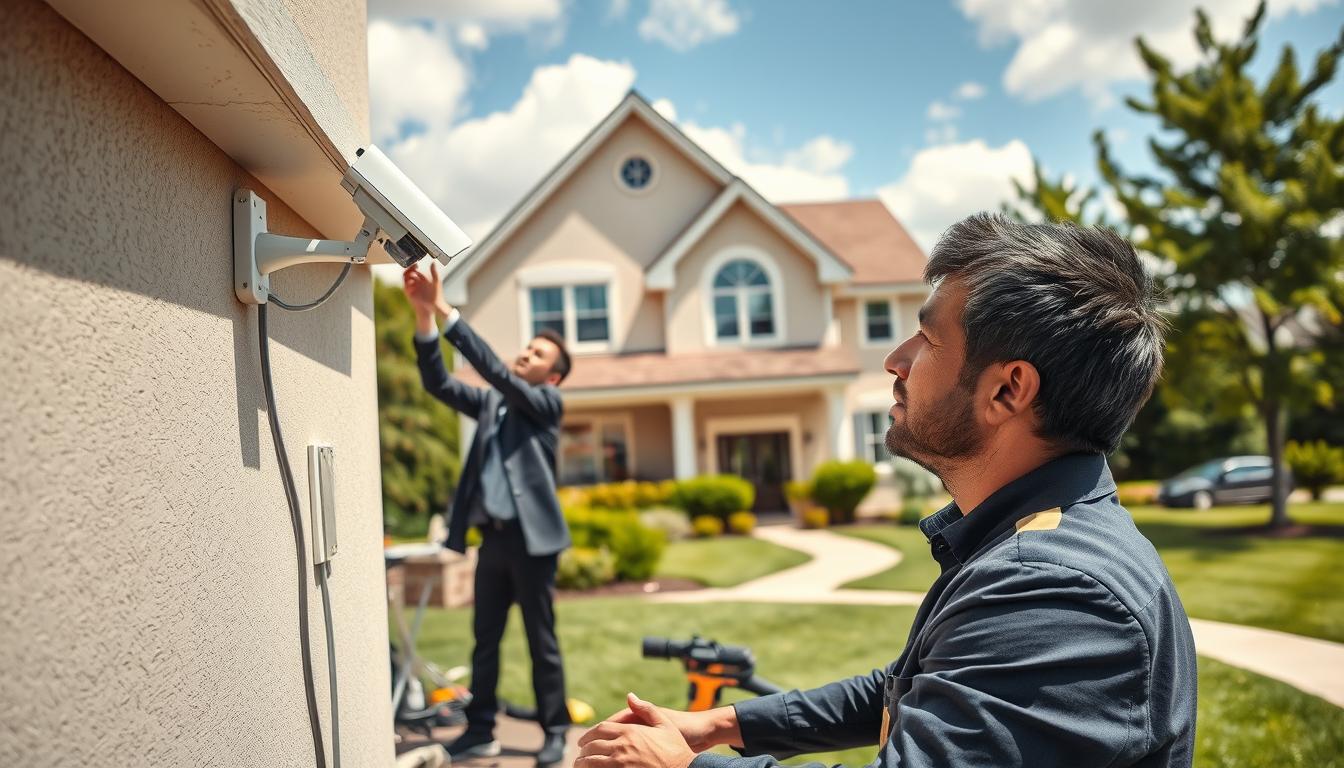
Guide: Is it legal to install CCTV outside my house?
Homeowners across Singapore often wonder about outdoor surveillance options. This comprehensive guide addresses the central question of CCTV legality for residential properties.
Recent regulatory changes have significantly altered installation requirements. Understanding these rules is crucial to avoid penalties while maintaining home security.
The guide covers all property types including HDB flats, condominiums, and landed properties. We explore Singapore’s nuanced legal landscape surrounding outdoor surveillance systems.
Privacy considerations under the Personal Data Protection Act matter greatly. Professional installation requirements versus DIY approaches will be thoroughly discussed.
This section sets the foundation for understanding why legal compliance matters. Readers will learn practical steps for obtaining necessary approvals from relevant authorities.
Key Takeaways
- Singapore has specific regulations governing outdoor surveillance camera placement
- HDB’s 2023 policy updates changed installation requirements significantly
- Different rules apply to HDB flats, condominiums, and landed properties
- Privacy laws including PDPA affect how you can use surveillance footage
- Proper authorization from relevant authorities is mandatory for installation
- Non-compliance can result in substantial penalties and legal issues
- Alternative security solutions exist that comply with Singaporean regulations
Understanding Singapore’s CCTV Legal Framework
Singapore’s approach to residential surveillance balances security with privacy through two main laws. The Personal Data Protection Act and Community Disputes Resolution Act create clear boundaries for homeowners.
These regulations ensure your security measures respect neighbors’ rights while providing effective protection. Understanding this framework helps homeowners make informed decisions about their property security.
Key Governing Laws: PDPA and CDRA
The Personal Data Protection Act regulates how personal data gets collected, used and disclosed. This legislation applies broadly but contains specific exemptions for residential purposes.
Household surveillance for personal use typically falls outside PDPA compliance requirements. The act focuses on commercial data handling rather than private security measures.
Meanwhile, the Community Disputes Resolution Act addresses neighbor conflicts arising from surveillance. It defines unreasonable monitoring and establishes mediation processes for resolution.
CDRA particularly concerns monitoring within 100 meters of neighboring properties. This distance reflects Singapore’s dense urban environment and close living arrangements.
Household Exemption vs. Commercial Rules
Residential surveillance enjoys significant exemptions under PDPA’s household exception clause. Homeowners can generally place cameras without formal registration if used privately.
The exemption applies when footage remains within household control and isn’t distributed commercially. Once footage gets shared beyond personal use, full PDPA compliance becomes necessary.
Commercial installations face completely different requirements under data protection regulations. Businesses must implement comprehensive data protection policies and obtain necessary consents.
This distinction ensures homeowners can address security needs without excessive bureaucracy. The framework provides peace mind while maintaining reasonable privacy standards.
Recent court decisions have further clarified reasonable versus intrusive surveillance practices. These rulings help homeowners understand where to position their security devices properly.
Is It Legal to Install CCTV Outside My House? The 2023 Update
Singapore’s residential surveillance landscape underwent dramatic changes last year. The Housing Development Board implemented crucial policy revisions affecting millions of residents.
These updates reflect growing concerns about privacy versus security in dense urban environments. Homeowners must understand how these changes impact their security options.
HDB’s New Stance on Corridor-Facing Cameras
The 2023 policy shift represents a fundamental change in approach. Previously, all corridor-facing devices required town council approval regardless of circumstances.
Current regulations now permit one device per household without formal permits. This exception applies specifically to police-reported security concerns.
This change reduced approval waiting periods from three weeks to immediate implementation. Homeowners appreciate the streamlined process for addressing genuine security needs.
However, the policy maintains strict prohibitions against indiscriminate monitoring of shared spaces. The balance between security and neighbor privacy remains carefully maintained.
Distinctions Between Indoor and Outdoor Installation
Outdoor systems face dramatically different regulations than indoor setups. Privacy implications increase significantly when cameras capture public areas.
Weatherproofing requirements represent another crucial distinction. Outdoor devices must withstand Singapore’s tropical climate conditions.
Landed property owners enjoy greater flexibility in camera placement compared to HDB residents. This reflects different privacy considerations for private versus shared spaces.
Recent high-profile theft cases have increased demand for perimeter monitoring solutions. A viral TikTok video showing a $594,000 theft particularly influenced this trend.
Surveillance equipment sales have increased 33% since these incidents. Homeowners increasingly seek robust security solutions that comply with local regulations.
Understanding these distinctions helps property owners choose appropriate surveillance systems. Proper camera selection and positioning ensure both security and legal compliance.
Navigating HDB Flat CCTV Regulations
HDB residents navigating surveillance options encounter distinct regulatory frameworks compared to private homeowners. These regulations balance individual security needs with community privacy rights in shared living environments.
Rules for Common Corridors and Shared Spaces
Common corridors present unique challenges for residential monitoring systems. The 2023 policy update specifically addresses devices facing shared walkways.
Residents may position one corridor-facing device without formal approval when security threats are documented. This exception requires filing an official police report for verification.
Camera angles must carefully avoid capturing neighbors’ private spaces. Doors, windows, and personal areas should remain outside the surveillance scope.
Private balconies and front door areas typically don’t require permits. This changes when devices monitor beyond individual property boundaries.
When Town Council Approval is Mandatory
Formal authorization becomes necessary under specific circumstances. The town council oversees all common area monitoring requests.
Approval is mandatory when surveillance covers shared facilities or extends beyond doorsteps. This ensures community privacy standards are maintained.
Ang Mo Kio Town Council exemplifies stringent policies for shared space monitoring. They grant six-month temporary permits for verified security incidents.
Residents must demonstrate repeated thefts or vandalism through police documentation. These temporary installations undergo regular compliance inspections.
Violations risk substantial penalties including $5,000 fines and device removal. Understanding these specific requirements prevents costly neighbor disputes.
Step-by-Step: Getting Town Council Approval
Securing proper authorization for surveillance systems requires following specific procedures. Each district maintains slightly different processing timelines and documentation needs.
Understanding these variations helps homeowners navigate the approval process efficiently. Complete applications typically receive faster responses than incomplete submissions.
Filing the Necessary Police Report
Documented security incidents form the foundation of successful applications. Authorities require official police reports with specific case reference numbers.
These reports must include exact incident dates and detailed descriptions. Proper documentation demonstrates genuine security concerns rather than casual monitoring.
Filing through official channels ensures records remain accessible for verification. This step cannot be skipped for corridor-facing device approvals.
Submitting Your Application and Required Documents
Complete application packages contain three essential components. Incident reports, placement diagrams, and consent forms must all be included.
Ang Mo Kio Town Council processes complete applications within 14 working days. Digital submission through the OneService portal has streamlined this process significantly.
Incomplete applications represent the most common reason for rejection. Missing neighbor consent forms or unclear placement diagrams cause delays.
Temporary Installation Limits and Renewals
Approved devices receive six-month validity periods under current regulations. These temporary installations require specific angle adjustments during renewal.
Only approximately 10% of installations qualify for renewal according to industry data. Necessary camera repositioning often prevents extended approvals.
Surprise inspections ensure ongoing compliance with approved parameters. Understanding these limitations helps homeowners plan their security strategies effectively.
CCTV Rules for Condominiums and Private Apartments
Condominium residents face unique surveillance regulations distinct from other property types. These properties operate under Management Corporation Strata Title frameworks rather than town council oversight.
The management corporation establishes specific monitoring rules for common areas and private units. Understanding these requirements helps maintain security while respecting community privacy standards.
Understanding MCST Bylaws and Restrictions
Management corporations enforce detailed surveillance device requirements through strata title bylaws. These rules typically prohibit recording in sensitive common areas without proper authorization.
Recreational facilities like pools and gyms receive special protection under most corporation strata regulations. Approximately 90% of condominium disputes involve cameras capturing these shared spaces.
The strata title framework grants management committees enforcement powers including device removal. Recent cases have established significant penalties for unauthorized monitoring in common areas.
The Approval Process for Common Areas
Securing approval for surveillance devices in condominiums requires specific documentation. Residents must submit detailed camera placement diagrams showing exact monitoring angles.
Management corporation boards typically review applications within 2-4 weeks. The process includes verification of camera positioning and notification signage plans.
All common area installations require clear signage announcing recording zones. This transparency measure helps maintain community trust while enhancing security.
MCST boards conduct surprise inspections to ensure ongoing compliance with approved parameters. The 2022 MCST Plan No. 3593 case resulted in a $5,000 fine for unauthorized lobby surveillance.
Understanding these corporation strata title requirements prevents violations and potential penalties. Proper installation following management corporation guidelines ensures both security and legal compliance.
Installing CCTV on Landed Property: Your Rights and Limits
Landed homeowners in Singapore possess distinct advantages regarding residential monitoring systems. These properties offer expanded surveillance opportunities compared to shared living arrangements.
Private compounds allow comprehensive perimeter monitoring without complex approval processes. Driveways, gardens, and exterior walls can all receive security coverage.
Advantages of Perimeter Monitoring
Private property owners enjoy significant flexibility in camera placement. This freedom enables complete exterior space protection through strategic device positioning.
Perimeter monitoring creates layered security for entire compounds. Multiple angles provide overlapping coverage that deters potential intruders effectively.
Comprehensive surveillance systems validate evidence through multiple camera angles. The 2021 Boon Lay case established legal precedent for such footage in court proceedings.
Technical requirements include weatherproof housing and infrared capabilities. These features ensure reliable performance in Singapore’s tropical climate conditions.
Navigating Boundary Regulations and Neighbor Considerations
The Community Disputes Resolution Act maintains relevance within 100 meters of neighboring properties. This regulation protects privacy even in private residential settings.
Fence-mounted devices must point inward toward the owner’s property. A 15-degree buffer zone near shared boundaries prevents accidental monitoring of adjacent spaces.
Land survey maps help clarify exact property lines for compliant camera positioning. These documents ensure surveillance remains within legal boundaries.
Most neighbor disputes reach resolution through the Community Mediation Centre. Understanding these protocols helps maintain positive community relationships while ensuring security.
Proper installation balances effective monitoring with respectful boundary observance. This approach prevents conflicts while delivering robust property protection.
Smart Doorbells and Peephole Cameras: Legal Status
Modern security technology offers innovative alternatives to traditional surveillance systems. Smart doorbells and digital peephole cameras provide enhanced protection with minimal intrusion.
These compact devices blend seamlessly with residential entryways while maintaining neighborhood aesthetics. Their discreet nature often receives different regulatory treatment than conventional setups.
HDB’s View on Less Intrusive Devices
Housing Development Board policies show greater flexibility toward non-intrusive security solutions. Digital door viewers typically face fewer restrictions than standard surveillance equipment.
Ang Mo Kio Town Council specifically differentiates these devices from traditional cameras. Their approval criteria focus on three key aspects: installation methods, viewing angles, and data handling.
Devices must avoid permanent modifications to HDB property structures. Mounting should use non-destructive methods that preserve building integrity.
Viewing angles must remain confined within private door frames. Monitoring common corridor activities violates current regulations.
The 2023 Teck Whye case demonstrated the evidentiary value of properly installed smart doorbell footage. This precedent established their legal standing in security incidents.
When These Devices Still Require Formal Approval
Advanced features trigger mandatory approval processes for seemingly simple devices. Recording capabilities represent the primary compliance threshold.
Basic live-viewing units typically don’t need formal authorization. The moment devices incorporate video or audio recording functionality, requirements change significantly.
Cloud storage features also necessitate town council approval. Local storage solutions sometimes receive more lenient treatment than cloud-based systems.
Technical specifications influence regulatory classification. Infrared sensor behavior and data encryption standards affect compliance status.
Audio recording creates additional legal complexities under Singapore’s privacy laws. Residents should disable this feature to simplify compliance.
Motion zone configuration helps limit recording range to private areas. Proper placement ensures devices capture only within designated boundaries.
Understanding these distinctions prevents unexpected compliance issues. Choosing appropriate features ensures both security and regulatory adherence.
Addressing Neighbor Privacy Concerns
Maintaining good neighbor relationships while ensuring home security requires careful consideration. Singapore’s legal framework provides clear guidance for balancing these important interests.
Recent court decisions have established practical boundaries for residential monitoring systems. Understanding these limits helps homeowners avoid conflicts while maintaining effective security.
Legal Thresholds for Reasonable Surveillance
The Community Disputes Resolution Act defines unreasonable monitoring clearly. Any recording that interferes with others’ property enjoyment within 100 meters violates this legislation.
Direct line of sight issues create the most common privacy concerns. Cameras capturing neighbors’ private spaces continuously cross legal boundaries.
The disputes resolution tribunal can impose significant penalties for violations. Fines reaching $20,000 demonstrate the seriousness of privacy breaches.
Technical solutions help maintain compliance while ensuring security. Privacy filters can blur specific zones while maintaining overall coverage.
Effective Conflict Prevention and Mediation Strategies
Proactive communication prevents most neighbor disputes about surveillance. Discussing camera coverage with adjacent residents builds understanding and trust.
Angle adjustments resolve approximately 78% of community disputes according to mediation data. A simple 10-degree inward tilt often addresses privacy concerns completely.
The Community Mediation Centre handles cases efficiently through structured sessions. Most resolutions occur within three meetings through professional guidance.
Physical barriers provide another effective solution for sightline control. Strategic landscaping or partitions maintain security functionality while respecting boundaries.
Audio recording features frequently trigger additional privacy concerns. Disabling this function simplifies compliance with data protection requirements.
Proper installation following these strategies ensures neighborhood harmony. Homeowners achieve security goals while maintaining positive community relationships.
Penalties for Non-Compliant CCTV Installation
Singapore authorities enforce strict consequences for surveillance system violations. Understanding these penalties helps homeowners maintain both security and legal compliance.
Multiple enforcement bodies oversee residential monitoring compliance. Each agency addresses different aspects of unauthorized surveillance practices.
Fines and Enforcement by Housing Authorities
The town council maintains primary enforcement power for common area violations. They can issue immediate $5,000 penalties for unapproved devices.
Ang Mo Kio documented 47 such cases during 2023. Repeat offenders face escalating fines that accumulate with each violation.
A Woodlands homeowner paid $15,000 after three separate incidents. Housing authorities typically allow 14-day correction periods for first-time offenders.
Confiscation procedures involve seven-day notice periods before device removal. Storage fees apply when reclaiming confiscated equipment.
Persistent violators face blacklisting from future security system applications. Insurance providers may void policies if unauthorized modifications cause property damage.
Criminal Liabilities Under Privacy Laws
The Personal Data Protection Act imposes severe consequences for deliberate breaches. Criminal charges can result in three-year imprisonment terms.
Homeowners must comply with PDPA requirements regarding data handling. The disputes resolution tribunal handles community privacy violation cases.
CDRA violations can yield $20,000 penalties for privacy breaches. Emotional distress claims significantly increase potential financial liabilities.
Proper installation follows all protection rules for surveillance devices. Understanding these penalties emphasizes the importance of compliant practices.
Security system installation requires careful attention to legal requirements. Following established rules ensures property protection without legal complications.
Business CCTV Installations: PDPA Compliance
Commercial establishments face completely different surveillance regulations than residential properties. The Personal Data Protection Act imposes strict requirements on business monitoring systems.
Companies must implement comprehensive data handling policies for all security devices. Failure to comply pdpa can result in significant penalties and legal consequences.
Consent, Notification, and Signage Obligations
Businesses must display conspicuous signage at all monitored premises. These notices serve as the primary method for obtaining implied consent from visitors.
The data protection act mandates specific signage content requirements:
- Clear purpose statement for data collection
- Contact details of the data protection officer
- Full disclosure of recording capabilities
- Information about footage retention periods
Silent recording violates PDPA requirements completely. All monitoring must be accompanied by clear, visible notifications.
Office buildings face additional documentation requirements. They must maintain access logs for surveillance systems for 12 months minimum.
Rules for Public vs. Non-Public Access Locations
Monitoring requirements differ significantly based on location accessibility. Public areas like shopping malls have the strictest rules.
Public access locations require additional signage at all entry points. Footage from these areas often needs redaction before any disclosure.
Non-public areas mandate explicit consent through multiple methods. Posted notices must be supplemented with detailed documentation for employees.
The reasonable purposes test limits recording to genuine security needs. Businesses cannot monitor areas without specific risk justification.
Separate policies are recommended for different monitoring zones. Lobby areas have different requirements than workstation monitoring spaces.
Networked surveillance systems require annual cybersecurity audits. This ensures personal data remains protected against digital threats.
Professional security providers understand these complex requirements. Many businesses choose to work with licensed installers for proper compliance.
Best Practices for CCTV Placement and Usage
Proper positioning of monitoring equipment significantly enhances property protection. Strategic placement ensures optimal coverage while maintaining regulatory compliance.
Following established guidelines prevents common installation errors. These practices maximize security effectiveness and minimize neighbor concerns.
Strategic Camera Positioning for Maximum Security
Mounting height dramatically affects surveillance performance. SafeTrolley recommends minimum 10-foot elevations for optimal results.
This height prevents tampering while ensuring clear facial recognition. Angled downward placements reduce glare and maintain focus.
A 45-degree downward tilt provides comprehensive coverage. This angle captures both identification details and monitoring areas effectively.
Lighting conditions influence camera selection decisions. Infrared models perform better in low-light environments.
Motion sensors conserve valuable storage space. They activate recording only when detecting movement.
Weatherproof housing is essential for Singapore’s climate. Tropical conditions demand durable protective casings.
The Importance of Signage and Transparency
Clear notices build community trust while meeting legal requirements. Visible signs should specify monitoring purposes clearly.
Transparency demonstrates responsible surveillance practices. Proper signage addresses privacy concerns proactively.
Signage becomes particularly important in semi-public spaces. Notices should indicate coverage areas and recording purposes.
Quarterly maintenance checks ensure proper alignment. Regular inspections prevent issues like lens condensation.
Professional installation prevents most compliance issues. Industry data shows 80% fewer problems with expert setup.
Choosing the Right CCTV Camera for Your Home
Selecting appropriate surveillance equipment requires understanding different environmental needs and technical specifications. Proper camera selection ensures optimal performance while meeting Singapore’s specific security requirements.
Indoor vs. Outdoor Camera Requirements
Outdoor models demand robust weatherproof housing with IP66+ ratings. These devices must withstand Singapore’s tropical climate and temperature variations.
Indoor units focus on discreet monitoring and aesthetic integration. They typically feature smaller profiles and simpler mounting options.
Dark Fighter technology provides superior low-light performance at 0.001 lux levels. This feature captures clear images in near-total darkness.
Essential Features: Resolution, Night Vision, and Storage
4K resolution enables license plate recognition beyond 25 feet. Higher megapixel counts deliver clearer identification details for security purposes.
Night vision should cover minimum 30-foot distances with infrared illumination. Proper infrared range ensures consistent monitoring around the clock.
Storage options balance accessibility with data control considerations:
- Cloud systems offer remote access but require subscriptions
- Local NVR systems provide complete data ownership
- Hybrid solutions combine both approaches for flexibility
Wireless models suit rental properties while integrated systems work best for smart homes. Professional consultations often reveal overlooked requirements like blind spot coverage.
Understanding these technical specifications ensures appropriate device selection for specific security needs. The right combination of features delivers optimal protection for any residential setting.
Professional Installation vs. DIY: What the Law Says
Singapore’s regulatory landscape distinguishes between professional and do-it-yourself security setups. Understanding these distinctions helps property owners make informed decisions about their monitoring systems.
The Police Licensing & Regulatory Department oversees all security service providers. They enforce strict certification standards through the Private Security Industry Act.
Licensing Requirements for Security Providers
Professional technicians must obtain PSIA certification before offering services. This process involves comprehensive training and thorough background checks.
Accredited programs require 160 hours of classroom and practical instruction. Courses cover technical installation, privacy laws, and ethical practices.
The Criminal Investigation Department conducts mandatory background screenings. These checks ensure technicians meet integrity standards for handling sensitive equipment.
Annual refresher courses keep professionals updated on regulatory changes. This ongoing education maintains high industry standards across Singapore.
Scenarios Where Professional Installation is Mandatory
Commercial properties face stricter requirements than residential installations. Businesses with eight or more devices must use licensed security service providers.
This rule applies to all commercial monitoring systems regardless of size. The threshold ensures proper handling of complex multi-camera setups.
Residential systems monitoring common areas also require professional expertise. Shared spaces demand precise angle calculations to avoid privacy violations.
Complex wiring projects often benefit from certified technician involvement. Proper installation prevents electrical hazards and ensures reliable operation.
Industry data shows professional installers prevent 80% of common compliance issues. Their expertise helps homeowners avoid costly neighbor disputes.
Insurance providers may void claims involving unapproved DIY work. Licensed installations provide documentation for insurance validation.
Warranty protection typically requires professional setup for security devices. Manufacturer guarantees often exclude self-installed equipment.
Understanding these rules helps property owners choose appropriate installation methods. The right approach ensures both security and regulatory compliance.
Using CCTV Footage as Legal Evidence
Surveillance recordings have become powerful tools in Singapore’s justice system. Properly handled footage can make or break criminal cases.
Understanding evidence requirements ensures your security system serves its full purpose. The legal system demands specific handling protocols for digital evidence.
Meeting Singapore’s Court Standards for Digital Evidence
Singapore’s Evidence Act Section 35 establishes clear rules for digital submissions. Courts require an unbroken chain of custody from recording to presentation.
This means documenting every person who handles the footage. Proper documentation prevents challenges to evidence authenticity.
Minimum 30-day storage is typically mandated by courts. Verified timestamps and location data must accompany all submissions.
Military-grade AES-256 encryption protects evidentiary integrity. This standard prevents tampering and ensures admissibility.
Blockchain timestamps provide additional verification layers. These are particularly valuable for condominium surveillance systems.
Responsible Footage Management and Redaction
Proper data handling respects privacy while maintaining evidence value. The Personal Data Protection Act governs how footage gets used.
Unauthorized sharing violates Singapore’s privacy laws. Only relevant authorities should receive unredacted material.
Redaction tools must obscure non-relevant individuals. This protects innocent people’s privacy rights.
Maintain detailed access logs for all surveillance systems. Store original files with write-protection enabled.
Over 60% of evidence disputes involve improper documentation. Following protocols ensures both legal admissibility and privacy protection.
“Proper evidence handling turns security footage into powerful legal tools while respecting privacy boundaries.”
Surveillance footage helped solve 4,095 criminal cases in 2020. This demonstrates its growing importance in Singapore’s justice system.
Responsible management balances security needs with data protection requirements. Always obtain proper consent when sharing recordings.
Following these guidelines ensures your security system serves its intended purpose. Proper evidence handling protects both property and rights.
Alternatives to Traditional Outdoor CCTV Cameras
Singaporean homeowners now enjoy diverse security options beyond conventional surveillance setups. Modern technology offers innovative solutions that balance protection with privacy considerations.
These alternatives provide effective monitoring without complex installation processes. They integrate seamlessly with smart home ecosystems for comprehensive coverage.
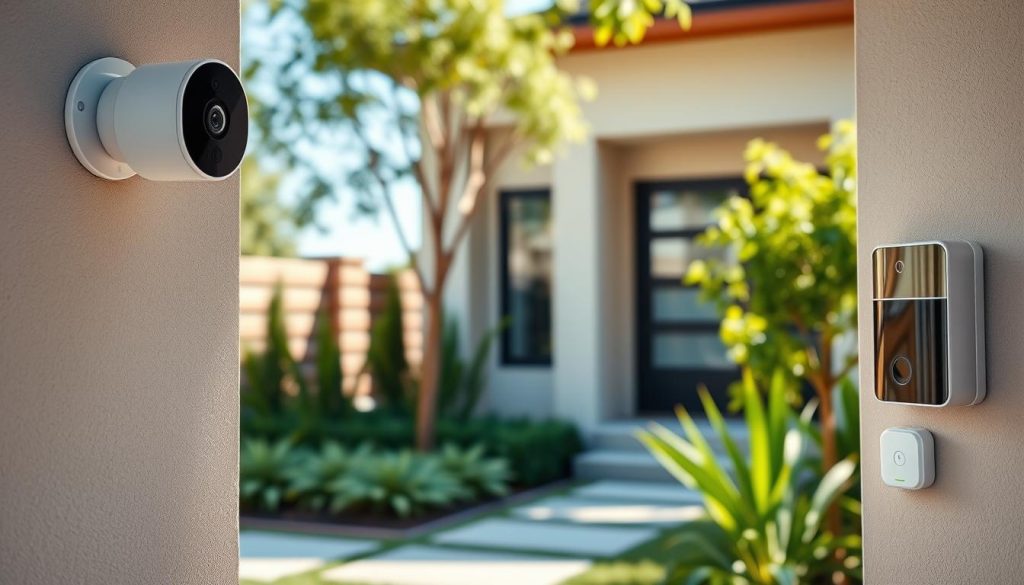
Exploring Smart Doorbell and Intercom Systems
Smart doorbells represent the fastest-growing segment in home security. These compact devices combine video monitoring with communication features.
Leading brands like Ring and Xiaomi dominate Singapore’s market. Their products offer motion-activated recording and cloud storage options.
Intercom systems add another layer of convenience and protection. Visitors can communicate directly with residents through integrated audio features.
These systems typically require minimal installation compared to traditional setups. Wireless models offer particular flexibility for rental properties.
Other Modern Security Solutions
Several innovative approaches complement traditional surveillance methods. Each option addresses specific security needs while respecting privacy boundaries.
Motion-activated lighting provides excellent deterrent value. Bright lights triggered by movement often prevent potential security incidents.
Automated privacy filters represent another technological advancement. These features automatically blur non-relevant areas in recorded footage.
Popular modern security solutions include:
- Wireless motion sensors with instant alert capabilities
- Smart locks with remote access control features
- Integrated home security systems with professional monitoring
- Solar-powered security devices for eco-friendly operation
Approximately 40% of Singaporean households now use smart security devices. This trend reflects growing acceptance of technology-enhanced protection.
These alternatives typically involve less complex installation than traditional systems. They maintain home safety while complying with local regulations.
Understanding these options helps homeowners choose appropriate security solutions. The right combination delivers effective protection for any residential setting.
Key Takeaways for Your CCTV Installation Project
Successful surveillance setup in Singapore demands careful planning. Understanding local regulations protects both security and privacy rights.
The 2023 HDB policy changes simplified corridor camera procedures. Property type determines specific installation requirements.
Professional security service providers ensure compliance with all rules. They prevent common legal issues through proper placement.
Neighbor considerations guide camera usage and data protection practices. Business installations face stricter PDPA requirements than residential setups.
Proper documentation prevents penalties and community disputes. Modern alternatives offer protection with fewer complications.
Regular checks maintain ongoing compliance with regulatory updates. This approach delivers peace mind while securing your property effectively.
FAQ
What are the main laws governing CCTV installation in Singapore?
The primary laws are the Personal Data Protection Act (PDPA) and the Community Disputes Resolution Act (CDRA). The PDPA regulates how personal data, including video footage, is collected and used. The CDRA addresses neighbor disputes that may arise from surveillance.
Do I need approval to install a CCTV camera outside my HDB flat?
Yes, for cameras facing common corridors or shared spaces, you must obtain approval from your Town Council. This ensures your installation does not infringe on neighbor privacy or violate housing regulations.
Are smart doorbells with cameras allowed in HDB flats?
Smart doorbells are generally viewed as less intrusive but may still require Town Council approval if they capture public areas or neighbor doors. Always check with your Town Council to confirm specific rules.
What should I do if my neighbor complains about my CCTV camera?
A> First, discuss their concerns openly and consider adjusting your camera angle to avoid capturing their private spaces. If unresolved, mediation through the Community Disputes Resolution Tribunal may be necessary.
Can I use CCTV footage as evidence in court?
Yes, provided the footage is obtained legally, unaltered, and properly stored. Courts in Singapore accept digital evidence that meets established authenticity and integrity standards.
Are there penalties for illegal CCTV installation?
Yes, penalties can include fines from housing authorities or legal action under the PDPA. Non-compliant installations may also require removal of the equipment at the owner’s expense.
Do I need a professional to install my CCTV system?
A> Not always, but for complex setups or installations in common areas, hiring a licensed security service provider ensures compliance with technical and legal standards.
What features should I look for in a home CCTV camera?
Prioritize high resolution, night vision, weather resistance for outdoor use, and secure data storage. These features enhance both security and legal compliance.


