
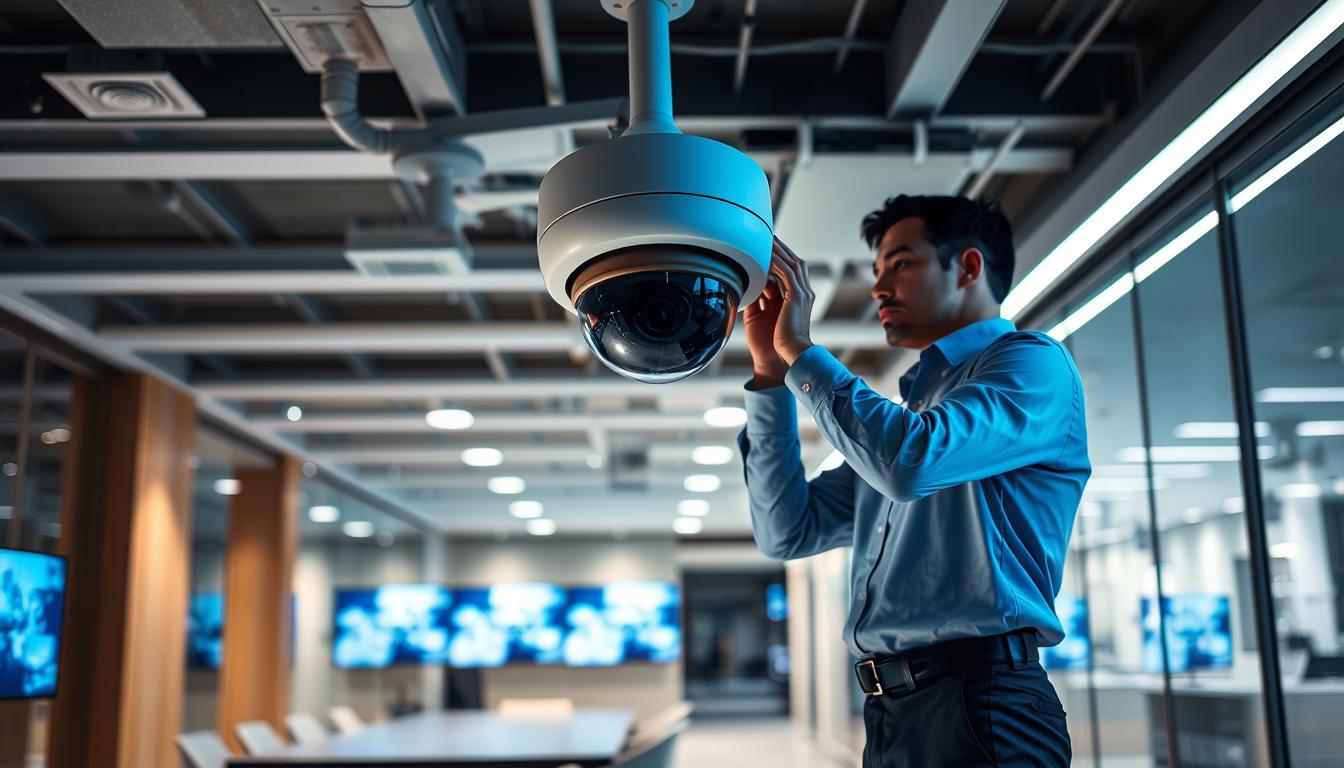
Who is responsible for CCTV? A Guide to CCTV Responsibilities
Singapore has become a nation watched by cameras. Over 500,000 CCTV units operate across the island. These systems play a vital role in public safety and crime prevention.
Retailers particularly rely on surveillance technology. Studies show 93% use these cameras for security. Their effectiveness in combating theft reaches 83%.
But with great monitoring power comes great responsibility. Owners must follow strict rules regarding data protection and privacy. Understanding your legal obligations is crucial for proper system management.
This guide explores the complex landscape of surveillance laws in Singapore. We’ll examine both residential and commercial usage scenarios. You’ll learn about recent regulatory changes and best practices.
Key Takeaways
- CCTV ownership carries significant legal obligations under Singapore law
- The Personal Data Protection Act (PDPA) governs how footage can be used
- Different rules apply to residential versus commercial surveillance systems
- Proper signage and community engagement are essential components
- Regular maintenance and secure data management are critical responsibilities
- Recent HDB regulations have specific requirements for public housing installations
- Balancing security needs with privacy rights requires careful consideration
The Critical Role of CCTV in Singapore’s Security Landscape
Singapore’s approach to public safety has transformed through widespread surveillance adoption. The island nation now features an extensive network of monitoring systems that protect both public and private spaces.
This technological integration represents a strategic commitment to security enhancement. Modern systems offer sophisticated capabilities beyond basic monitoring.
Prevalence of Surveillance Systems
Singapore hosts over 500,000 active CCTV installations across various locations. This impressive number demonstrates the nation’s serious investment in surveillance technology.
Retail businesses lead this adoption trend with remarkable statistics. Approximately 93% of retailers utilize these systems for their security needs.
Commercial establishments aren’t the only places embracing this technology. Residential areas, transportation hubs, and public spaces all contribute to this growing network.
Primary Objectives: Deterrence and Evidence
Surveillance systems serve two fundamental purposes in security management. The first function involves preventing incidents before they occur.
“Visible cameras act as powerful deterrents against potential criminal activity.”
Research from the Center for Retail Research confirms their effectiveness. Properly installed systems can reduce theft incidents by up to 50%.
The second critical function involves documentation and investigation. Recorded footage provides invaluable evidence for resolving security incidents.
Eighty-three percent of retail security professionals regard CCTV as highly effective for combating theft. This high approval rating underscores the technology’s practical value.
Modern systems offer additional benefits beyond basic security functions. Business owners gain operational insights through customer behavior analysis.
Proper implementation can even lead to insurance premium reductions. Companies demonstrate risk mitigation through comprehensive security measures.
Singapore’s embrace of surveillance technology reflects a balanced approach. The nation prioritizes safety while maintaining respect for individual privacy rights.
This careful balance ensures that security enhancement doesn’t compromise personal freedoms. System owners must follow established guidelines regarding data protection.
The widespread adoption of these systems creates shared security benefits. Residents and employees alike experience increased peace of mind.
As technology evolves, so do the capabilities of modern surveillance systems. Today’s installations offer sophisticated features that extend beyond traditional monitoring.
Defining CCTV Camera Ownership
Understanding camera ownership forms the foundation of surveillance compliance in Singapore. Clear ownership determination prevents legal complications and ensures proper system management.
Ownership extends beyond simple possession of equipment. It encompasses installation rights, management control, and maintenance duties.
What Constitutes Legal Ownership?
Legal ownership of surveillance systems depends on three key factors. The party that installs, manages, and maintains the equipment typically holds ownership rights.
This definition applies regardless of property boundaries. Even cameras on private property must follow established guidelines.
“Ownership responsibility includes ensuring cameras don’t capture unauthorized areas or violate privacy expectations.”
Singapore’s legal framework distinguishes between different ownership scenarios. Residential installations enjoy more flexibility than commercial operations.
Homeowners can typically install cameras on private property without special licenses. However, common areas require additional permissions.
Residential vs. Commercial Ownership Models
Residential camera ownership focuses primarily on personal security. Homeowners face fewer regulatory requirements for their surveillance systems.
Commercial ownership carries significantly stricter obligations. Business operations must comply with the Personal Data Protection Act (PDPA).
Key differences between these models include:
- Consent requirements for recording in commercial spaces
- Data handling policies for collected footage
- Notification obligations to individuals under surveillance
- Permission structures for different areas and purposes
Commercial entities must establish clear protocols for data management. This includes proper storage, access controls, and retention periods.
Town Council regulations specifically govern installations in common areas. Unauthorized placements in HDB common spaces can result in fines up to $5,000.
Understanding these ownership models helps ensure compliance with Singapore’s legal framework. Proper classification prevents regulatory violations and protects all parties involved.
Who is responsible for CCTV? The Core Answer
Surveillance system accountability rests squarely with the equipment proprietor. This individual or entity holds complete legal liability for all operations and compliance matters.
Ownership extends beyond mere possession of cameras. It encompasses every aspect from initial setup to daily operations and data handling.
The Ultimate Duty of the System Owner
Proprietors carry the primary burden for surveillance compliance. They must ensure their equipment follows all local regulations and privacy standards.
This includes proper camera positioning to prevent privacy violations. Monitoring private spaces like restrooms remains strictly prohibited under any circumstances.
Landlords must maintain transparent communication with tenants about surveillance practices. Clear disclosure prevents misunderstandings and legal complications.
Businesses face additional obligations under the Personal Data Protection Act. Recording in non-public areas requires explicit consent from individuals.
“System proprietors cannot delegate their fundamental compliance responsibilities to third parties.”
The Data Protection Act grants individuals specific rights regarding their recorded information. People may request access to footage where they appear.
Regular system checks maintain both functionality and legal compliance. Proper maintenance prevents technical failures that could create liability issues.
Distinguishing Between Installation and Ongoing Management
Initial setup represents just one component of surveillance duties. Installation focuses on proper camera placement and system configuration.
Ongoing management involves continuous operational responsibilities. This includes regular maintenance, footage review, and data protection measures.
Understanding this separation helps allocate duties properly. Many proprietors mistakenly believe installation completes their obligations.
Continuous management ensures cameras function correctly over time. It also guarantees compliance with evolving regulations and standards.
Data handling represents a critical ongoing responsibility. Proprietors must establish clear protocols for storage and access control.
Footage retention periods must follow legal requirements. Proper deletion schedules prevent unnecessary data accumulation.
Security measures protect recorded information from unauthorized access. Encryption and access logs help maintain data integrity.
Regular audits verify continued compliance with all applicable laws. These checks identify potential issues before they become violations.
Navigating the Legal Framework: The PDPA and Beyond
Singapore’s surveillance landscape operates within a structured legal environment. Multiple regulations govern how cameras capture and handle information.
Understanding these rules helps owners maintain proper compliance. The framework balances security needs with individual rights.
Understanding the Personal Data Protection Act (PDPA)
The Personal Data Protection Act forms the cornerstone of surveillance regulation. This protection act governs how organizations collect and use personal data.
Consent requirements apply when recording identifiable individuals. Exceptions exist for law enforcement and legitimate business purposes.
The purpose limitation principle restricts how cctv footage gets used. Companies must clearly justify their surveillance activities.
“Organizations must conduct Data Protection Impact Assessments before deploying surveillance systems.”
Data retention policies represent another critical requirement. Businesses must specify how long they keep recorded footage.
Regular audits ensure ongoing adherence to Singapore’s legal standards. These checks verify proper data protection practices.
Complying with Town Council Regulations
Local authorities enforce specific rules for common areas. Town Council regulations address cctv camera placements in HDB spaces.
These rules protect community privacy while allowing reasonable security measures. Proper installation avoids legal complications.
Signage requirements notify people when surveillance occurs. Clear notices help maintain transparency about monitoring activities.
Government operations follow the Surveillance Cameras Act for public spaces. This law permits official camera usage with appropriate safeguards.
Successful compliance involves understanding both federal and local requirements. Businesses must navigate multiple regulatory layers.
Proper implementation protects both organizational interests and individual rights. Balanced approaches serve everyone’s needs effectively.
Responsibilities for CCTV in Residential Areas
Managing surveillance cameras at home involves navigating specific regulations and neighbor relations. Homeowners enjoy more flexibility than commercial entities but still face important obligations.
Residential installations serve personal security needs while respecting community standards. Understanding these boundaries prevents conflicts and ensures proper system operation.
HDB Flat Regulations and Recent Changes
Singapore’s public housing authority has updated its surveillance policies. Recent changes now permit corridor-facing camera installation without prior approval.
This regulatory shift acknowledges growing security concerns among residents. Homeowners can now implement protective measures more quickly.
Digital locks with integrated cameras represent emerging security solutions. These devices offer convenience while maintaining monitoring capabilities.
Despite relaxed approval requirements, certain restrictions remain. Cameras must not capture neighboring units’ private spaces.
“Proper camera positioning respects both security needs and community privacy expectations.”
Violations of Town Council bylaws can result in significant penalties. Fines may reach $5,000 for improper installations in common areas.
Indoor camera placements generally don’t require government authorization. Residents maintain broad discretion for interior surveillance arrangements.
Balancing Home Security with Neighbor Privacy
Effective residential surveillance requires careful consideration of camera angles. Positioning should minimize impact on adjacent units.
Open communication with neighbors about camera installations promotes community harmony. Transparent discussions prevent misunderstandings and conflicts.
Singapore’s legal framework provides mechanisms for addressing privacy concerns. Residents can raise issues through proper community channels.
The Personal Data Protection Act guides how footage gets handled. Homeowners should establish clear data management practices.
Proper installation respects both security requirements and neighborhood privacy rights. Balanced approaches serve everyone’s interests effectively.
Community engagement remains essential for successful residential surveillance. Neighbor cooperation enhances overall security while maintaining privacy standards.
Corporate Accountability: CCTV in Commercial Spaces
Commercial surveillance operations demand heightened corporate responsibility. Companies must navigate complex legal frameworks while maintaining operational security.
Businesses face stricter requirements than residential users under Singapore’s regulatory environment. Proper implementation protects both organizational interests and public trust.
Business Owners’ Duty to Inform and Protect
Transparency forms the foundation of ethical surveillance practices. Companies must clearly notify employees and customers about monitoring activities.
Clear signage must appear in all areas under surveillance. These notices should explain the purpose of monitoring and contact information.
Comprehensive usage policies govern cctv footage access and utilization. These documents specify who can view recordings and for what legitimate purposes.
“Regular staff training on privacy rights and data handling procedures maintains compliance standards.”
Businesses must respond to individual requests for footage within mandated timeframes. This responsibility ensures proper adherence to privacy rights.
Commercial entities should conduct Privacy Impact Assessments before deployment. These evaluations identify potential data protection risks in advance.
Implementing PDPA-Compliant Data Handling Policies
The Personal Data Protection Act establishes strict guidelines for information management. Companies must develop comprehensive protocols for recorded material.
Secure storage protocols protect cctv footage from unauthorized access. Encryption and access controls prevent data breaches.
Data retention policies specify maximum storage periods for different footage types. Proper deletion schedules avoid legal complications from unnecessary data accumulation.
Key components of compliant data management include:
- Encrypted storage systems for all recorded material
- Access logs tracking all footage viewing activities
- Regular audits of data handling practices
- Clear documentation of retention and deletion procedures
Implementing PDPA-compliant practices builds customer trust and prevents penalties. Proper compliance demonstrates corporate responsibility.
Commercial surveillance requires balancing security needs with privacy protections. Successful implementation serves both business objectives and legal obligations.
Fulfilling Your CCTV Camera Maintenance Responsibility
Proper upkeep ensures your surveillance system remains reliable and legally compliant. Regular maintenance prevents system failures that could compromise security coverage.
Camera proprietors must establish consistent maintenance schedules. This ongoing duty protects both equipment investment and legal standing.
Essential Regular Maintenance Guidelines
Monthly inspections form the foundation of effective system care. Check all cameras and connections for physical damage or corrosion.
Lens cleaning maintains clear image quality over time. Dust and weather elements can obstruct camera views without proper cleaning.
Software updates address emerging security vulnerabilities. Regular patches protect against cyber threats and improve functionality.
Biannual system testing verifies all components work correctly. Test motion detection, recording functions, and alert systems.
Key maintenance activities include:
- Monthly visual inspections of all equipment
- Regular lens cleaning to prevent image obstruction
- Timely software updates for security protection
- Storage capacity monitoring to prevent data loss
- Recording settings verification for proper operation
Documentation creates accountability for maintenance activities. Keep records of all inspections and repairs performed.
Evaluating Professional vs. DIY Maintenance
Professional services offer expertise and comprehensive coverage. Technicians can identify issues that untrained eyes might miss.
This option comes with higher service costs however. Businesses often prefer professional maintenance for complex systems.
DIY approaches provide significant cost savings for capable owners. This method requires technical knowledge and time investment.
Homeowners with basic systems often choose self-maintenance. Simple residential setups may not need professional attention.
“The choice between professional and DIY maintenance depends on system complexity and owner capability.”
Consider these factors when deciding maintenance approach:
- System complexity and number of cameras
- Available technical knowledge and time
- Budget constraints for ongoing maintenance
- Importance of system reliability for your needs
- Legal requirements for certain types of businesses
Proper maintenance ensures your system operates within legal parameters. It helps avoid complications from malfunctioning equipment.
Operational Duties of CCTV Camera Monitoring
Effective surveillance requires skilled operators who handle daily monitoring tasks. These professionals ensure systems function properly and respond to security incidents. Their role combines technical knowledge with ethical decision-making.
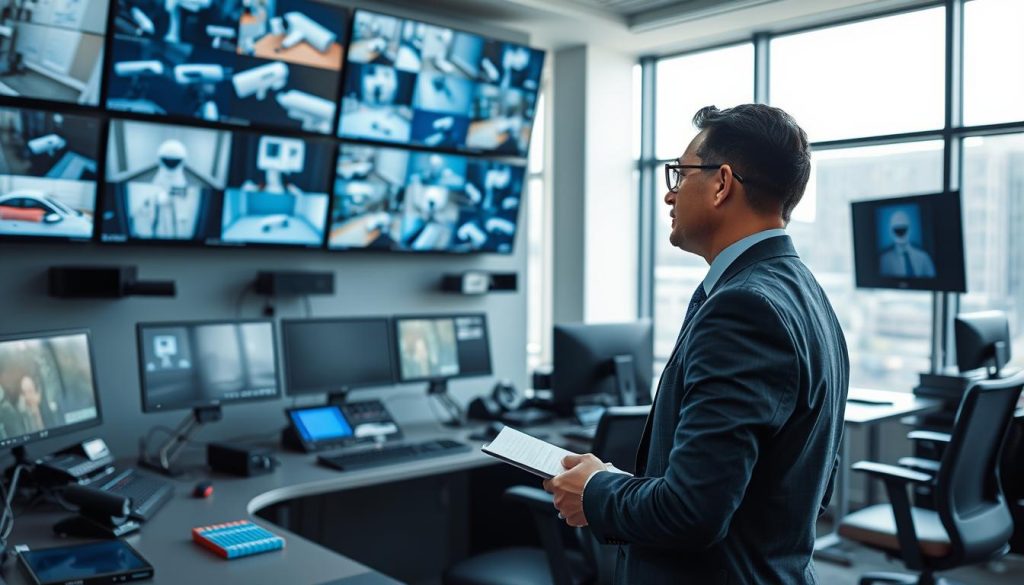
Monitoring centers demand highly trained personnel with specific qualifications. Operators must maintain focus and follow strict protocols during shifts.
Effective Footage Review and Incident Response
Proper monitoring involves continuous observation of multiple camera feeds. Operators must identify potential security threats quickly and accurately.
Immediate reporting procedures ensure rapid response to suspicious activities. Senior management receives alerts about potential security incidents.
“Trained operators can assess situations and initiate appropriate responses within seconds.”
Professional communication skills enable effective coordination with security teams. Clear incident documentation supports subsequent investigations.
Regular system testing maintains operational readiness. Safety checks verify all monitoring equipment functions correctly.
Key operator responsibilities include:
- Maintaining BTEC Level 2 certification in Public Space Surveillance
- Holding valid SIA PSS licensing for professional operation
- Conducting regular equipment functionality tests
- Documenting all testing results and system checks
- Following established incident reporting protocols
Ensuring Authorized and Ethical Access
Strict access controls govern who can view recorded material. Detailed logs track all footage retrieval and viewing activities.
Ethical guidelines determine appropriate usage of surveillance systems. Operators must understand legal boundaries for footage access.
Personal device restrictions maintain operational security. Mobile phone use during monitoring duties remains prohibited.
Comprehensive training prepares operators for various security scenarios. Proper education ensures effective response to emergencies.
Data protection principles guide all monitoring activities. The Personal Data Protection Act establishes clear rules for handling footage.
Security personnel play vital roles in protecting both property and people. Their vigilance helps maintain safe environments through proper surveillance usage.
Upholding Privacy in a Surveillance Environment
Maintaining privacy remains a critical challenge in today’s monitored world. Surveillance systems must balance security benefits with individual rights protection.
Singapore’s legal framework provides clear guidance for ethical monitoring practices. System operators must implement these standards consistently.
Effective privacy protection involves both technical measures and operational policies. Cameras should serve security needs without compromising personal dignity.
Key Privacy Considerations Under Singapore Law
The Personal Data Protection Act establishes fundamental rules for surveillance activities. This protection act governs how organizations handle recorded information.
Consent requirements apply when capturing identifiable individuals in non-public spaces. Businesses must obtain permission before monitoring private areas.
Transparency represents a core principle under Singapore’s regulatory framework. Companies must clearly explain their surveillance purposes to affected individuals.
“Organizations must conduct regular privacy impact assessments for all surveillance systems.”
Camera placement requires careful consideration of privacy boundaries. Monitoring must avoid private spaces like restrooms and changing areas.
Regular privacy reviews ensure ongoing compliance with evolving regulations. These assessments identify potential issues before they become violations.
Avoiding Invasive Recording Practices
Invasive monitoring practices undermine public trust in surveillance systems. Operators must avoid capturing unnecessary personal information.
Data encryption protects stored footage from unauthorized access. This security measure prevents potential privacy breaches.
Reasonable retention periods should be established for all recorded material. While no fixed duration exists in law, excessive storage violates privacy principles.
Individuals maintain the right to request access to their recorded footage. System operators must respond to these requests promptly.
Audio recording capabilities require special consideration under privacy laws. Many jurisdictions restrict audio surveillance more strictly than video monitoring.
Ethical surveillance practices build trust with employees and community members. Balanced approaches serve both security and privacy needs effectively.
Engaging Your Community on CCTV Usage
Building community trust requires proactive engagement before installing surveillance systems. Open dialogue transforms security measures from potential intrusions into welcomed protection tools. This approach prevents conflicts and builds neighborhood support.
Successful programs balance security benefits with privacy respect. They demonstrate how surveillance serves everyone’s interests. Community buy-in makes systems more effective and accepted.
Best Practices for Informing Neighbors
Transparent communication forms the foundation of successful community relations. Share your security plans before installation begins. Explain the purpose and benefits clearly.
Organize neighborhood meetings to discuss surveillance proposals. These forums allow open discussion of concerns and suggestions. They create opportunities for collaborative planning.
“Early engagement prevents misunderstandings and builds collective security ownership.”
Share relevant crime statistics to demonstrate security needs. Numbers help neighbors understand the practical benefits. They show how systems protect everyone.
Establish clear points of contact for surveillance questions. Designate someone to address concerns promptly. This approach builds trust and accountability.
Key communication strategies include:
- Pre-installation meetings to discuss camera placements
- Clear explanations of how footage will be used and protected
- Educational materials about crime prevention benefits
- Regular updates about system performance and results
- Accessible contact information for questions or concerns
Addressing and Alleviating Surveillance Concerns
Privacy worries represent the most common community concern. Address these issues directly and honestly. Explain your data protection measures clearly.
Demonstrate compliance with the Personal Data Protection Act. Show how you handle recorded material responsibly. This builds confidence in your management practices.
Proactively discuss camera angles and coverage areas. Assure neighbors about respecting private spaces. Transparency reduces suspicion and fear.
Consider integrating surveillance with neighborhood watch programs. These complementary approaches enhance community security. They create multiple layers of protection.
Successful community engagement requires ongoing effort. Maintain open communication after installation. Address new concerns as they arise promptly.
Remember that community support evolves through demonstrated benefits. Show how systems actually improve neighborhood safety. Share success stories when appropriate.
This collaborative approach turns surveillance into community asset rather than point of conflict. It creates environments where security and privacy coexist harmoniously.
Implementing Best Practices for CCTV Security Obligations
Establishing comprehensive security protocols ensures your surveillance system operates effectively while maintaining legal compliance. These practices protect both your investment and the privacy rights of those being monitored.
Developing Clear Usage and Retention Policies
Clear documentation forms the foundation of proper surveillance management. Usage policies should specify acceptable purposes for accessing recorded material.
Retention schedules prevent excessive data storage beyond operational needs. Most businesses maintain footage for 30-90 days depending on their security requirements.
“Well-defined policies demonstrate commitment to both security and privacy protection.”
The Personal Data Protection Act requires organizations to establish reasonable retention periods. Regular deletion of old footage maintains compliance with data protection principles.
Usage guidelines should address:
- Authorized purposes for footage review
- Access authorization procedures
- Incident documentation requirements
- Data deletion protocols
- Exception handling processes
Securing Footage Against Unauthorized Access
Robust security measures protect your surveillance system from both physical and digital threats. Encryption protocols are necessary for protecting stored footage.
Access control measures limit viewing privileges to authorized personnel only. Multi-factor authentication adds an extra layer of security for sensitive systems.
Regular security audits identify vulnerabilities in CCTV systems and data handling processes. These assessments should occur at least annually or after significant system changes.
Employee training on proper data handling procedures ensures compliance across your organization. Staff should understand their obligations under the data protection act.
Network security protocols prevent cyber attacks on connected systems. Isolated networks for surveillance equipment provide additional protection.
Physical security measures protect recording equipment from tampering. Locked server rooms and restricted access areas prevent unauthorized physical access.
Incident response plans should address potential data breaches. Preparedness ensures quick action when security incidents occur.
Comprehensive security practices protect both the footage and the surveillance system itself. These measures help avoid legal complications while maintaining system integrity.
Moving Forward with Responsible CCTV Management
Effective surveillance management requires continuous commitment to both security and ethical practices. Regular system reviews ensure ongoing compliance with evolving regulations. Technology updates maintain effectiveness against emerging threats.
Professional consultations help address complex legal and technical questions. Community feedback mechanisms improve surveillance practices over time. A balanced approach respects both security needs and privacy rights.
Comprehensive management involves continuous improvement processes. Documentation of policies provides accountability. Training programs should reflect legal changes.
Responsible CCTV management creates safer environments while respecting individual rights. Moving forward requires dedication to both security enhancement and ethical standards.
FAQ
Who legally owns a CCTV system and is responsible for it?
The person or entity that purchases, installs, and operates the CCTV cameras is the legal owner. This owner bears full responsibility for the system’s compliance with laws like the PDPA, its maintenance, and the ethical use of its footage.
What are the main laws governing CCTV usage in Singapore?
The primary law is the Personal Data Protection Act (PDPA), which regulates the collection, use, and disclosure of personal data captured on camera. Additionally, town council regulations may apply, especially for HDB flats and public areas within estates.
Can I install a CCTV camera at my HDB flat door?
Yes, but recent guidelines require that your camera must not invade your neighbor’s privacy. It should be positioned to only cover your own doorstep and the immediate public corridor directly outside your unit, avoiding the capture of adjacent doors or windows.
What are a business owner’s key duties when using CCTV?
Business owners must inform individuals they are under surveillance through clear signage. They are also obligated to protect the recorded data, implement strict access controls, and have a clear policy for how long footage is retained before it is securely deleted.
What regular maintenance is required for a CCTV system?
Essential maintenance includes regularly cleaning camera lenses, checking and securing all wiring and connections, ensuring recording equipment and storage devices are functioning properly, and verifying that the date and time stamps on recordings are accurate.
How can I ensure my CCTV usage respects my neighbors’ privacy?
Carefully angle your cameras to minimize recording beyond your property boundaries. Be transparent with neighbors about your security measures, and be prepared to address any concerns they have. Never use cameras to peer into private spaces like neighboring homes.
Who can access the footage from my CCTV system?
Access should be strictly limited to authorized individuals for a legitimate purpose, such as reviewing an incident. You must have protocols in place to prevent unauthorized viewing, copying, or sharing of footage to comply with data protection obligations.


