
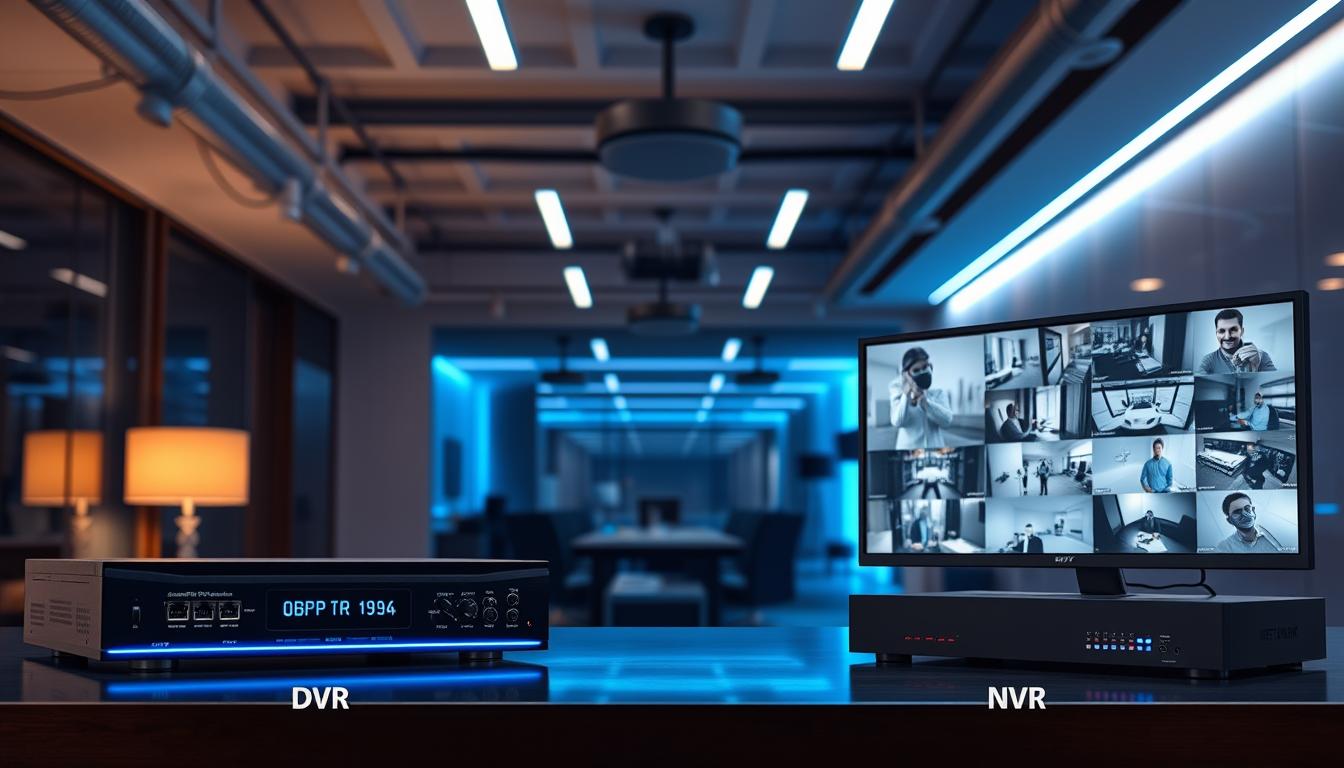
What is the difference between DVR and NVR? Explained
Choosing the right security system for your Singapore property requires understanding key recording technologies. Both digital video recorder and network video recorder systems capture surveillance footage effectively. However, their technical approaches vary significantly.
These variations impact your budget, camera options, and installation complexity. Modern analog HD technology has narrowed the resolution gap between these systems. Still, important distinctions remain that affect overall performance.
Network video recorder setups typically offer superior features like remote viewing and audio support. Digital video recorder solutions remain a cost-effective choice for straightforward security needs. Your decision should align with your property’s infrastructure and surveillance requirements.
This guide explores camera compatibility, cabling requirements, video quality, and selection criteria. Understanding these elements helps you make an informed choice for optimal property protection.
Key Takeaways
- DVR and NVR systems both record surveillance footage but use different technologies
- NVR systems generally provide better picture quality and easier installation
- DVR systems are more budget-friendly for basic security setups
- Camera compatibility differs significantly between the two systems
- Modern analog HD has reduced the resolution gap between DVR and NVR
- NVR systems typically offer remote viewing and audio support features
- The right choice depends on your specific security needs and property infrastructure
Understanding DVR and NVR Security Systems
At the heart of every security setup lies the recording technology that determines how footage is captured, processed, and stored. These systems form the foundation of reliable property monitoring, with each approach offering distinct advantages for different scenarios.
Defining Digital Video Recorder Technology
DVR technology represents the traditional approach to security recording. This system utilizes analog cameras connected via coaxial cables to a central recording unit.
The recorder processes raw, unprocessed signals into viewable video footage. Each camera must connect directly to the recorder unit for proper operation.
DVR recorders employ an AD encoder chipset to convert analog signals into digital format. This conversion process happens at the recorder level rather than the camera.
Exploring Network Video Recorder Systems
NVR systems represent newer technology in security monitoring. These setups employ IP cameras that process video data internally before transmission.
The cameras encode footage at the source, streaming digital information to the recorder. This occurs via Ethernet connections or wireless network capabilities.
NVR recorders primarily handle storage and management of pre-processed digital data. This architecture allows greater flexibility in camera placement and system expansion.
Core Purpose of Both Surveillance Systems
Both DVR and NVR systems share the same fundamental objective. They provide reliable video recording and storage for security surveillance purposes.
These recording systems capture essential footage for home and business protection. Each approach remains viable for different security requirements and infrastructure setups.
The core difference lies in implementation rather than ultimate purpose. Both technologies effectively monitor properties while offering distinct feature sets and installation requirements.
What is the difference between DVR and NVR?
Security recording solutions differ fundamentally in their approach to handling surveillance footage. These technological variances create significant implications for installation, performance, and feature availability.
Fundamental Technology Distinctions
DVR systems operate on analog principles, requiring signal conversion at the recorder level. The technology processes raw camera feeds through hardware encoders within the main unit.
NVR systems function entirely in digital format from capture to storage. This digital foundation enables more advanced capabilities and streamlined data handling.
Processing Location: Camera vs Recorder
Recording systems diverge dramatically in where video processing occurs. DVR setups perform analog-to-digital conversion centrally at the recorder device.
NVR configurations process video data at the camera itself before transmission. This distributed processing approach reduces bandwidth requirements and enhances efficiency.
System Architecture Variations
Physical connections represent another critical distinction between these technologies. DVR architecture demands direct coaxial cable links between each camera and the recorder.
NVR systems utilize network connections, allowing cameras to connect via Ethernet or wirelessly. This architecture supports greater placement flexibility and simpler expansion.
The architectural differences impact overall system capabilities significantly. NVR’s network-based approach naturally supports remote access and advanced analytics features.
DVR systems require additional technology for similar functionality. These variations affect installation complexity and long-term scalability for Singapore properties.
Camera Technology: Analog vs IP Cameras
The choice between camera technologies directly impacts your security system’s functionality and future expansion. These technologies determine resolution limits, feature availability, and integration capabilities.
DVR Systems: Traditional Analog Camera Requirements
Traditional security setups rely on analog cameras that connect directly to recording units. These cameras transmit raw, unprocessed video signals through coaxial cables.
The recording device handles all encoding and quality enhancement processes. This approach keeps individual camera costs lower but limits advanced functionality.
Basic surveillance needs often find these systems perfectly adequate. They provide reliable monitoring without complex installation requirements.
NVR Systems: Advanced IP Camera Capabilities
Modern security solutions utilize sophisticated ip cameras with built-in processing power. These devices encode video internally before transmitting digital data.
Network connectivity enables flexible placement and system expansion. Higher resolution capabilities support detailed surveillance needs.
Advanced models support audio recording without additional hardware. This integrated approach simplifies installation while enhancing functionality.
Image Processing and Smart Features Comparison
Processing location creates significant differences in capability and performance. IP cameras handle image enhancement at the source for superior clarity.
Smart features represent another major distinction between these technologies:
- Video analytics including facial recognition and motion detection
- License plate recognition capabilities for enhanced security
- Cloud integration for flexible storage and access options
- Superior low-light performance through advanced sensors
These advanced analytics capabilities benefit both homes and businesses seeking comprehensive security solutions. The improved video quality supports better identification and evidence collection.
Remote viewing capabilities become more seamless with IP-based systems. Users can access live feeds and recorded footage from anywhere with internet connectivity.
Traditional systems require additional components for similar functionality. The choice ultimately depends on your specific security requirements and budget considerations.
Cabling and Installation Requirements
The physical infrastructure supporting your security system significantly impacts installation practicality and long-term performance. Different recording technologies demand specific cabling solutions that affect setup complexity and system flexibility.
These physical requirements determine how easily you can implement surveillance coverage throughout your Singapore property. The right cabling approach ensures reliable operation while minimizing installation challenges.
Coaxial Cable Limitations and Considerations
Traditional security setups rely on thick, rigid coaxial cables for video transmission. These cables present significant challenges when routing through tight spaces or concealed areas.
Signal integrity becomes compromised beyond 90 meters of cable length. This restriction limits camera placement options and overall system layout flexibility.
Installation complexity increases with separate power requirements for each camera. Properties often need additional electrical outlets near camera locations.
Many installers note that coaxial-based systems demand careful planning for optimal performance. The infrastructure needs careful consideration before implementation.
Ethernet Cable Advantages and PoE Technology
Modern security solutions utilize thin, flexible ethernet cables for data transmission. These cables easily route through confined spaces without installation difficulties.
Power over Ethernet technology represents a significant advancement in surveillance systems. PoE delivers both power and data through single ethernet connections.
This integrated approach eliminates separate power cabling requirements. Installation becomes cleaner and more straightforward for various property types.
Network switches extend cable runs beyond 100 meters without signal degradation. This flexibility supports comprehensive coverage for larger Singapore properties.
Installation Complexity and Flexibility Differences
Installation approaches vary dramatically between traditional and modern security systems. Each method offers distinct advantages for different property requirements.
Traditional setups demand fixed wiring between cameras and recording units. This approach limits placement options and expansion possibilities.
Modern systems provide greater flexibility through wireless capabilities and network connections. Camera placement becomes less constrained by physical wiring limitations.
“The right cabling solution should balance current needs with future expansion possibilities while considering installation practicalities.”
Network-based systems support gradual expansion as security needs evolve. This scalability makes them suitable for growing residential or commercial properties.
Ultimately, your choice depends on existing infrastructure and specific surveillance requirements. Both approaches provide reliable security when properly installed and configured.
Recorder Functionality and System Operation
The core processing units of security systems determine how surveillance data gets managed and stored. These devices handle the critical tasks of converting, organizing, and preserving your camera footage.
Understanding their operational differences helps you choose the right solution for your Singapore property. Each approach offers distinct advantages depending on your specific security needs.
DVR Recorder: Analog-to-Digital Processing
Traditional DVR units employ specialized hardware for signal conversion. They use an AD encoder chipset to transform raw analog signals into digital format.
This processing occurs centrally within the main recording unit. Each camera must connect directly to the recorder using coaxial cables.
External power sources are required for all connected cameras. The system doesn’t provide power through the video connections.
Audio support remains limited with few input ports available. This represents one of the notable cons of traditional setups.
NVR Recorder: Digital Storage and Management
Modern NVR systems function primarily as storage and access points. They receive pre-processed digital information from IP cameras.
These recorders handle organization and remote viewing of surveillance footage. The actual video processing happens at the camera level.
Network connectivity allows flexible camera placement throughout your property. NVRs integrate seamlessly with existing digital infrastructure.
This architecture supports better scalability for future expansion needs. System upgrades become more straightforward with network-based solutions.
Power Requirements and Connectivity Options
Power delivery methods vary significantly between these technologies. Traditional systems demand separate power cables for each camera.
Modern solutions utilize Power over Ethernet technology for streamlined operation. PoE delivers both data and power through single Ethernet connections.
Security professionals note that wiring complexity decreases with network-based systems. Installation becomes cleaner and more efficient.
Connectivity options directly impact system flexibility and expansion capabilities. Network-based storage solutions offer superior long-term adaptability.
“The right recording technology should match your property’s infrastructure while allowing for future security enhancements.”
Digital systems handle video data more efficiently than traditional analog approaches. This results in better performance and more advanced feature availability.
Your choice ultimately depends on existing wiring and specific surveillance requirements. Both technologies provide reliable security when properly configured.
Video Quality and Audio Capabilities
Multimedia performance separates modern security solutions from traditional approaches. Clear visuals and audio support enhance surveillance effectiveness significantly.
These capabilities determine how well your system captures critical details. Property protection depends on reliable evidence collection through superior multimedia features.
Resolution and Image Quality Comparison
Modern security systems deliver exceptional video quality through digital processing. Network-based recorders support resolutions up to 4K for crystal-clear footage.
This superior quality helps identify faces, license plates, and other important details. Digital transmission preserves image integrity throughout the recording process.
Traditional systems have improved with analog HD technology. However, they generally provide lower resolution than modern alternatives.
The gap in detail clarity impacts evidence reliability for Singapore properties. Higher resolution supports better monitoring and incident documentation.
Audio Transmission: Native Support vs Limitations
Audio capabilities vary dramatically between security system types. Modern configurations offer native sound recording through Ethernet connections.
This integrated approach supports microphones on all connected cameras. Users enjoy seamless audio features without additional hardware requirements.
Traditional systems face significant audio limitations:
- Require separate audio-over-coax technology or RCA connections
- Limited input ports restrict how many cameras support sound
- Additional wiring increases installation complexity
- Audio quality often suffers from interference issues
These constraints affect comprehensive surveillance capabilities. Properties needing audio evidence benefit from modern system architectures.
Signal Integrity Over Distance
Signal reliability determines consistent performance across your property. Digital systems maintain data integrity through network switches and proper cabling.
This consistency ensures uniform video quality regardless of camera placement distance. Network infrastructure supports extended runs without quality degradation.
Analog systems experience signal degradation beyond 90 meters. Coaxial cables suffer from interference and quality loss over longer distances.
Security experts emphasize that reliable signal transmission is crucial for effective monitoring. Digital digital video systems provide more consistent performance for larger Singapore properties.
This reliability supports comprehensive coverage without compromising evidential quality. Your security investment maintains its effectiveness throughout the entire property.
Choosing the Right System for Your Singapore Property
Selecting the ideal surveillance solution depends on your property’s unique characteristics. Consider your budget, existing infrastructure, and specific security needs carefully.
DVR systems work best for cost-conscious setups with coaxial wiring already in place. They offer reliable basic monitoring without complex installation requirements.
NVR solutions excel when you need superior video quality and advanced features. They provide better flexibility for larger properties or high-security demands.
Evaluate your internet bandwidth and remote access requirements. Both systems deliver effective protection when matched to your property’s context.
FAQ
Can I use existing analog cameras with an NVR system?
No, NVR systems require IP cameras. These devices process video data internally and transmit it digitally. Analog cameras lack this capability and are incompatible with network video recorders.
Which system offers better video quality: DVR or NVR?
NVR systems generally deliver superior video quality. They support higher resolution IP cameras, often exceeding 4K. DVR systems are limited by analog camera technology and coaxial cable bandwidth, typically maxing out at 1080p or 2MP.
What are the main cabling differences between these systems?
DVR setups use coaxial cables for video transmission and require separate power cables. NVR installations utilize Ethernet cables, which can carry power, data, and video simultaneously through Power over Ethernet technology.
Do both systems support remote viewing capabilities?
Yes, both DVR and NVR systems support remote viewing through mobile apps or web browsers. However, NVR systems often provide smoother streaming and better performance due to their native network integration.
Which system is easier to install and expand?
NVR systems offer greater installation flexibility. Ethernet cables are simpler to run than coaxial cables, and adding cameras often requires just connecting to existing network infrastructure. DVR systems need direct coaxial runs to the recorder.
Can NVR systems support advanced features like video analytics?
Yes, NVR systems excel at supporting advanced features. IP cameras often include built-in analytics like motion detection, facial recognition, and object tracking. These smart features process at the camera level before sending data to the recorder.
How does audio support differ between these systems?
NVR systems typically offer better audio capabilities. Most IP cameras include built-in microphones and support two-way audio. DVR systems require separate audio input connections and often have more limited audio functionality.
Which system provides better cybersecurity protection?
NVR systems generally offer stronger cybersecurity. They support modern encryption protocols and network security features. Many IP cameras include built-in security measures that protect video data from interception or unauthorized access.


