
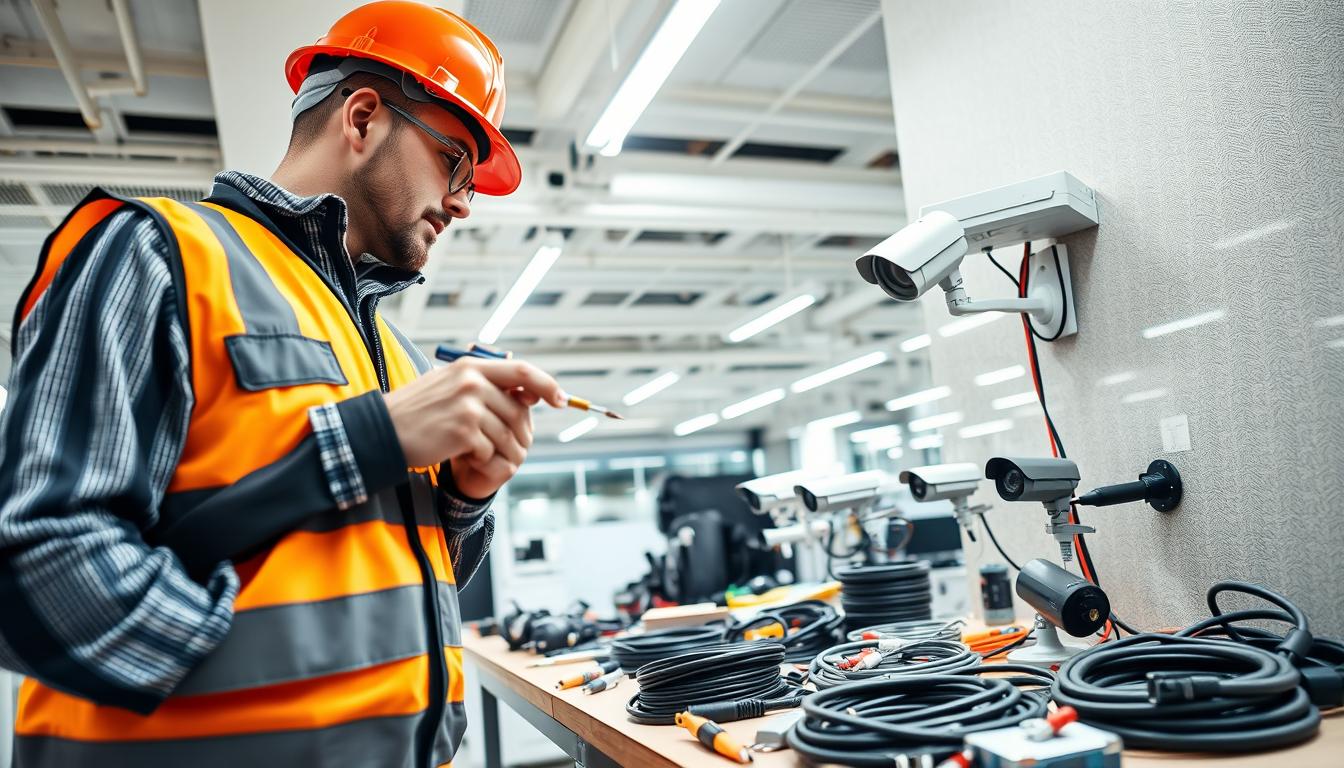
What Qualifications Do I Need to Be a CCTV Installer? Expert Advice
Security needs are growing fast in Singapore. Many people want to become CCTV installers. This career offers great opportunities in the security industry.
Understanding the right path is key for success. You need proper training and skills. This guide gives expert advice on starting this career.
Education starts with a high school diploma. Specialized courses help build technical knowledge. Hands-on experience through apprenticeships is valuable.
Certification improves job prospects. It shows you meet industry standards. Singapore has specific licensing rules to follow.
Both hard and soft skills matter in this field. Technical ability with security systems is crucial. Good communication helps with clients and teams.
Key Takeaways
- Singapore’s security market is expanding, creating more CCTV installation jobs
- A high school diploma is the basic educational requirement to begin
- Technical training programs provide essential knowledge for security systems
- Hands-on experience through apprenticeships builds practical skills
- Professional certification enhances career opportunities and advancement
- Understanding Singapore’s licensing requirements is necessary for compliance
- Both technical and interpersonal skills contribute to career success
Understanding the CCTV Installer Profession in Singapore
Becoming a surveillance technician involves mastering multiple technical disciplines. This career path combines electronics expertise with practical problem-solving abilities. Professionals in this field ensure security systems operate effectively.
Core Responsibilities and Daily Tasks
Installation specialists handle diverse technical duties daily. They configure hardware and software components for optimal performance. Camera positioning requires understanding surveillance coverage principles.
System maintenance forms a crucial part of routine work. Technicians troubleshoot camera and recording equipment issues regularly. They ensure all components meet operational standards.
Compliance with Singapore’s privacy regulations is mandatory. Professionals must understand PDPA requirements thoroughly. Legal knowledge protects both clients and installation businesses.
The Growing Security Industry in Singapore
Singapore’s security market continues expanding rapidly. Increased safety concerns drive demand across multiple sectors. Residential, commercial and government facilities all require protection.
Network-connected solutions represent the industry’s future. Both analog and IP-based systems remain relevant. Technicians must understand various surveillance technologies.
Career stability benefits from infrastructure investments. Smart city initiatives create ongoing opportunities. The profession offers strong growth potential for qualified individuals.
“Singapore’s commitment to security technology ensures long-term career opportunities for installation professionals.”
Client relationships demand excellent communication skills. Technicians assess security needs through customer consultations. Appropriate solutions balance technical and budgetary considerations.
Diverse working environments characterize this profession. Each installation presents unique challenges and requirements. Adaptability becomes essential for success in the field.
Essential Educational Foundation for CCTV Installation
Building a successful career in security technology begins with proper educational preparation. The right academic background provides the technical knowledge needed for professional growth. This foundation supports all subsequent training and practical experience.
High School Diploma Requirements and Recommended Subjects
A complete high school education serves as the minimum entry requirement for security technology roles. This basic qualification demonstrates fundamental learning capabilities and commitment to education.
Certain subjects provide particularly valuable knowledge for surveillance systems work:
- Mathematics – Essential for calculating camera coverage areas and system specifications
- Physics – Helps understand lighting conditions and optimal camera placement strategies
- Electronics – Provides crucial background for understanding system components and wiring
These subjects create a strong foundation for advanced technical training. They develop the analytical thinking needed for complex installation scenarios.
Vocational Training Programs in Electronics and Security Systems
Specialized training programs build directly upon high school education. Vocational courses offer practical skills development in security technology. Many institutions provide targeted programs for aspiring professionals.
Key training areas include:
- Electronic security systems installation techniques
- Camera technologies and recording systems
- Network configuration for modern surveillance systems
- Monitoring solutions and control systems
“Quality training programs combine theoretical knowledge with hands-on practice, creating well-rounded security professionals.”
Technical colleges in Singapore offer comprehensive diploma programs. These courses include practical components that simulate real-world installation scenarios. The combination of classroom learning and workshop experience prepares students for actual field work.
Continuous learning remains important throughout a security technology career. Additional courses help professionals stay current with evolving surveillance technologies. This ongoing education ensures technicians can handle the latest installation techniques and equipment.
Technical Skills Required for CCTV Installation
Mastering the right technical abilities separates competent professionals from average technicians. These capabilities form the backbone of every successful security implementation project. Proper skill development ensures reliable system performance and client satisfaction.
Electrical Systems and Wiring Fundamentals
Electrical knowledge serves as the foundation for all security system work. Professionals must understand power requirements and proper connection methods. This expertise prevents safety hazards and ensures equipment longevity.
Wiring techniques vary based on camera types and installation environments. Technicians need to select appropriate cables and connectors for each situation. Proper cable management maintains system reliability and professional appearance.
Safety standards govern all electrical work in Singapore. Compliance with these regulations protects both technicians and clients. Understanding local electrical codes is non-negotiable for professional installations.
Network Configuration and IP Camera Systems
Modern surveillance relies heavily on network infrastructure. IP camera systems demand solid networking knowledge for optimal performance. Technicians configure routers, switches, and IP addresses regularly.
Bandwidth management becomes crucial in multi-camera setups. Professionals must balance video quality with network capacity. Remote access configuration allows clients to monitor their properties from anywhere.
“Network proficiency transforms basic installers into comprehensive security solutions providers.”
Different camera types serve specific surveillance needs. Dome cameras offer discreet monitoring in indoor environments. Bullet cameras provide long-range coverage for outdoor applications.
PTZ units deliver flexible viewing through pan-tilt-zoom capabilities. Thermal imaging cameras detect heat signatures in low-light conditions. Each camera type requires unique installation considerations.
Troubleshooting and Maintenance Techniques
Diagnostic skills separate experienced technicians from beginners. Professionals use specialized tools to identify system issues quickly. Both hardware malfunctions and software problems require attention.
Regular maintenance ensures ongoing system reliability. Technicians perform firmware updates and preventive checks. These practices extend equipment lifespan and maintain optimal performance.
Recording system knowledge covers both DVR and NVR technologies. Each system type offers distinct advantages for different applications. Understanding these differences helps technicians recommend appropriate solutions.
Problem-solving abilities develop through hands-on experience. Each installation presents unique challenges that require adaptable thinking. Technical proficiency grows with exposure to diverse security scenarios.
Practical Experience Pathways
Gaining real-world experience transforms theoretical knowledge into practical expertise. This hands-on approach bridges classroom learning with actual field requirements. Employers strongly prefer candidates with demonstrated installation capabilities.
Apprenticeship Opportunities in Singapore’s Security Sector
Structured apprenticeship programs offer comprehensive learning experiences. These opportunities combine technical education with paid work experience. Many security companies provide formal training pathways for new technicians.
Apprentices work alongside experienced professionals daily. They learn installation best practices through direct observation. This mentorship accelerates skill development significantly.
Programs typically include both classroom and field components. Trainees study system design principles and safety protocols. They then apply this knowledge during actual installation projects.
“Quality apprenticeships create well-rounded security professionals ready for independent work.”
Networking opportunities arise naturally during apprenticeship periods. Trainees connect with industry professionals and potential employers. These relationships often lead to permanent job offers after program completion.
Entry-Level Positions and On-the-Job Training
Many security firms hire assistant technicians for entry-level roles. These positions provide immediate exposure to daily operations. New hires begin with basic tasks under close supervision.
Responsibilities gradually increase as skills develop. Assistants progress from cable management to full system configuration. This structured approach builds confidence and technical competence.
On-the-job training covers diverse installation scenarios. Technicians encounter various security systems and environments. Each project presents unique challenges that enhance problem-solving abilities.
Practical experience includes client consultation and site assessment. Technicians learn to balance technical requirements with customer needs. This comprehensive exposure prepares them for independent project management.
Building a portfolio of completed projects demonstrates practical capabilities. This documentation enhances future job prospects significantly. Employers value visible evidence of successful installation experience.
Certification Programs for Professional Development
Professional credentials elevate technical capabilities to recognized industry standards. These programs validate expertise and build client confidence in service quality. Certification demonstrates commitment to excellence in security technology.
Formal recognition separates qualified technicians from general practitioners. Credentials verify adherence to current installation methodologies and safety protocols. This professional development enhances career trajectory significantly.
Recognized CCTV Installation Certifications in Singapore
Singapore’s security industry values several key certification programs. The Certified Security Project Manager (CSPM) credential covers comprehensive project oversight. Manufacturer-specific certifications validate equipment-specific technical knowledge.
These programs typically involve:
- Rigorous examination processes testing practical and theoretical knowledge
- Hands-on assessment of actual installation techniques and troubleshooting
- Understanding of Singapore’s specific regulatory environment and standards
“Professional certification transforms technical skills into industry-recognized expertise, creating immediate credibility with clients.”
Continuing education requirements maintain certification validity. Professionals must complete regular training updates. This ensures knowledge remains current with technological advancements.
Advanced Specialization Courses
Specialized training programs address emerging technologies in surveillance systems. Artificial intelligence integration represents a growing field of study. Cloud-based surveillance management requires specific technical understanding.
Advanced courses typically cover:
- AI-powered analytics for intelligent threat detection systems
- Cybersecurity protocols for network-connected surveillance equipment
- Integrated security systems combining multiple protection technologies
Workshop components provide hands-on experience with current equipment. These practical sessions reinforce theoretical concepts. Participants gain confidence implementing advanced solutions.
Specialization creates niche expertise within the security field. This focused knowledge commands premium service rates. Advanced training opens doors to complex installation projects.
Licensing and Legal Requirements in Singapore
Operating within Singapore’s security industry demands strict adherence to legal frameworks. Professionals must navigate multiple regulatory bodies and compliance measures. Understanding these obligations protects both businesses and clients.
Compliance with PDPA and Surveillance Regulations
The Personal Data Protection Act establishes clear guidelines for surveillance operations. This legislation governs how personal information gets collected through security systems. Installers must implement proper data handling protocols.
Proper signage installation becomes mandatory under PDPA rules. Notices must inform individuals about surveillance presence clearly. This transparency maintains legal compliance and public trust.
Data storage protocols require secure encryption methods. Access control measures prevent unauthorized viewing of recorded footage. These practices align with Singapore’s privacy protection standards.
“Adherence to PDPA isn’t optional—it’s fundamental to professional surveillance work in Singapore.”
Regular training updates keep technicians current with regulation changes. The security market evolves constantly with new privacy considerations. Ongoing education ensures continued compliance.
Regional Licensing Variations and Requirements
Municipal requirements differ across Singapore’s various districts. Professionals must understand specific local regulations for each area. This knowledge prevents legal complications during installation projects.
Background checks form part of the licensing process typically. Technical competency verification ensures installers meet industry standards. Insurance requirements provide additional client protection.
Certification from recognized bodies often satisfies licensing components. These credentials demonstrate adherence to national security standards. They enhance professional credibility significantly.
Regional variations affect signage placement rules sometimes. Data retention periods might differ between municipalities. Installers must research each location’s specific requirements.
Understanding these differences enables seamless work across Singapore. It demonstrates comprehensive professional capability. Clients appreciate technicians who navigate legal landscapes effectively.
What qualifications do I need to be a CCTV installer?
Successful security technicians typically develop their expertise through multiple learning channels. The ideal candidate possesses both classroom knowledge and field experience. This combination creates well-rounded professionals ready for diverse installation challenges.
Academic Qualifications Versus Practical Experience
Educational foundations begin with a high school diploma or equivalent qualification. This basic requirement demonstrates fundamental learning capabilities. Many employers consider this the minimum entry point for security roles.
Specialized education follows the basic diploma. Technical programs in electronics provide crucial background knowledge. Security systems courses build directly upon this electrical foundation.
Practical experience complements academic learning perfectly. Hands-on training through apprenticeships develops real-world problem-solving abilities. Many technicians start with entry-level positions that offer gradual skill development.
“The most effective security professionals balance theoretical knowledge with practical application experience.”
The balance between education and experience varies by employer. Some companies prioritize formal certifications. Others value demonstrated field capabilities above academic credentials.
Modern surveillance systems demand both traditional and digital skills. Technicians must understand analog systems and IP-based solutions. Networking knowledge becomes increasingly important in today’s connected environments.
Singapore-Specific Requirements
Singapore’s security market operates under specific regulatory frameworks. Professionals must understand local compliance requirements thoroughly. The Personal Data Protection Act governs surveillance operations significantly.
Licensing requirements differ across Singapore’s various districts. Technicians should research regional variations before undertaking projects. This preparation prevents legal complications during installation work.
Certification from recognized Singaporean security associations enhances credibility. These credentials validate adherence to national standards. They demonstrate comprehensive understanding of local regulations.
Ongoing training maintains qualification relevance in Singapore’s evolving market. Smart city initiatives demand updated technical knowledge. Emerging technologies like AI analytics require continuous learning.
Proper qualifications encompass more than technical capabilities. They include legal knowledge, customer service skills, and business understanding. This comprehensive approach ensures career success in Singapore’s competitive security industry.
Soft Skills for Success in CCTV Installation
Technical expertise alone won’t guarantee success in the security industry. The best professionals combine hardware knowledge with exceptional interpersonal abilities. These soft skills often determine long-term career growth and client satisfaction.
Client Communication and Needs Assessment
Effective communication forms the foundation of every successful security project. Technicians must translate technical concepts into understandable language for clients. This dialogue ensures appropriate system recommendations match actual security needs.
Active listening skills help professionals understand unstated concerns. Clients may not express their true security priorities directly. Skilled technicians read between the lines during consultations.
Needs assessment capabilities determine optimal camera placement and system specifications. Professionals evaluate physical spaces while considering privacy concerns. This balance requires both technical and ethical consideration.
“The ability to listen often reveals more about security needs than any questionnaire could uncover.”
Customer service skills ensure client satisfaction and generate positive referrals. Happy customers become the best source of future business. Professional presentation builds trust during initial meetings.
Problem-Solving and Adaptability in Field Work
Unexpected challenges arise during most installation projects. Problem-solving abilities turn obstacles into opportunities. Technicians must think creatively when standard solutions don’t apply.
Adaptability allows professionals to adjust to varying site conditions. Each location presents unique physical and technical challenges. Flexible approaches ensure successful outcomes despite complications.
Time management skills keep projects within deadlines and budget constraints. Efficient work practices maintain profitability while delivering quality results. Documentation capabilities preserve accurate records for future reference.
Team collaboration enables effective coordination with other tradespeople. Security installations often involve multiple professionals working together. Clear communication prevents conflicts and ensures smooth operations.
These interpersonal abilities complement technical knowledge perfectly. They create well-rounded professionals ready for diverse challenges. The combination drives lasting success in Singapore’s security market.
Career Advancement Opportunities
Professional development leads to increased responsibility and specialization. The surveillance field offers multiple pathways for growth beyond entry-level positions. Strategic career planning helps technicians maximize their potential.

Experience builds the foundation for advancement opportunities. Each project enhances technical knowledge and problem-solving abilities. These accumulated skills create doors to higher-level positions.
From Technician to Supervisor: Career Progression Paths
Career progression typically begins with mastering installation techniques. Entry-level roles focus on developing hands-on skills with various systems. Successful technicians then advance to senior positions with more complex responsibilities.
Supervisory roles involve team management and project coordination. These positions require strong leadership capabilities and technical oversight skills. Quality control becomes a primary responsibility at this level.
“The transition from technician to supervisor represents natural growth for professionals who excel in both technical and interpersonal skills.”
Project management roles oversee large-scale installation projects. These positions coordinate multiple teams and manage timelines and budgets. They require comprehensive understanding of security system design and implementation.
Security consulting opportunities emerge for experienced professionals. Consultants provide expert advice and customized system design services. This path leverages accumulated knowledge to help clients make informed decisions.
Training and development roles allow seasoned technicians to educate newcomers. These positions share valuable experience with the next generation of professionals. They contribute to overall industry quality standards.
Specialization Areas in Security Systems
Specialization creates niche expertise within the surveillance field. Focused knowledge commands premium service rates and enhances job security. Professionals can choose from several growing specialization areas.
IP network expertise remains in high demand across Singapore. Networked systems require specific configuration and troubleshooting skills. This knowledge becomes increasingly valuable as more systems connect digitally.
Wireless technology specialization addresses modern installation challenges. Wireless systems offer flexibility in difficult installation environments. Technicians with this expertise can solve unique placement problems.
Integrated security solutions combine multiple protection technologies. These systems require understanding of access control, alarms, and surveillance integration. This comprehensive approach serves commercial clients particularly well.
Emerging technologies like AI analytics represent future growth areas. Artificial intelligence enhances threat detection and system efficiency. Specialization in these cutting-edge technologies future-proofs career opportunities.
Cybersecurity knowledge protects network-connected surveillance equipment. This specialization addresses growing concerns about digital security breaches. It adds crucial value to modern security system installations.
Cross-training in related fields like access control expands career options. Broad knowledge makes professionals more versatile and valuable to employers. It creates opportunities across multiple security sectors.
Business ownership represents the ultimate advancement for entrepreneurial technicians. Starting your own security company requires both technical and business skills. This path offers complete control over career direction and growth.
Professional networking through industry associations opens doors to advanced opportunities. Connections often lead to specialized projects or partnership opportunities. Active participation demonstrates commitment to professional growth.
Continuous learning through advanced certification programs supports career advancement. These credentials validate specialized knowledge and skills. They demonstrate commitment to staying current with industry developments.
The security industry in Singapore offers diverse paths for professional growth. Technical expertise combined with strategic career planning creates numerous advancement opportunities. Specialization and continued development ensure long-term career success.
Future-Proofing Your CCTV Installation Career
Staying ahead in the security industry requires constant skill development. Technology evolves rapidly, making ongoing education essential for career longevity.
Continuous learning through specialized CCTV installation training programs keeps your knowledge current. Workshops and certification courses help you master new surveillance technologies.
Focus on emerging areas like AI integration and cloud-based systems. These skills ensure you remain valuable in Singapore’s competitive security market.
Networking with industry professionals provides insights into future trends. Building strong relationships opens doors to advanced career opportunities.
Adapting to changing client needs and technology standards guarantees long-term success. Your commitment to growth makes you an invaluable security professional.
FAQ
What are the basic educational requirements for becoming a CCTV installer?
A high school diploma is the minimum requirement. Subjects like physics, mathematics, and IT provide a strong foundation. Vocational training in electronics or security systems is highly recommended.
Do I need certification to work as a CCTV installer in Singapore?
While not always mandatory, certifications enhance credibility. Programs like those from the Security Industry Institute (SII) are recognized. Specialized courses in IP camera systems and networking are valuable.
What technical skills are most important for CCTV installation?
Key skills include electrical wiring, network configuration, and troubleshooting. Knowledge of both analog and IP-based surveillance systems is essential. Hands-on experience with various brands like Hikvision or Dahua is beneficial.
Are there legal requirements or licenses needed for CCTV installers in Singapore?
Yes, compliance with the Personal Data Protection Act (PDPA) is critical. Some roles may require a security license from the Police Licensing & Regulatory Department (PLRD). Always check current regulations.
How can I gain practical experience in CCTV installation?
Seek apprenticeships or entry-level roles with security firms. On-the-job training under experienced professionals provides invaluable hands-on experience with real-world systems and client interactions.
What soft skills help succeed in this career?
Strong client communication, problem-solving, and adaptability are vital. You must assess customer needs clearly and troubleshoot issues efficiently during installations.
What career advancement opportunities exist for CCTV technicians?
With experience, you can move into supervisory roles or specialize in areas like network security systems or integrated surveillance solutions. Continuous learning keeps your skills market-relevant.


