
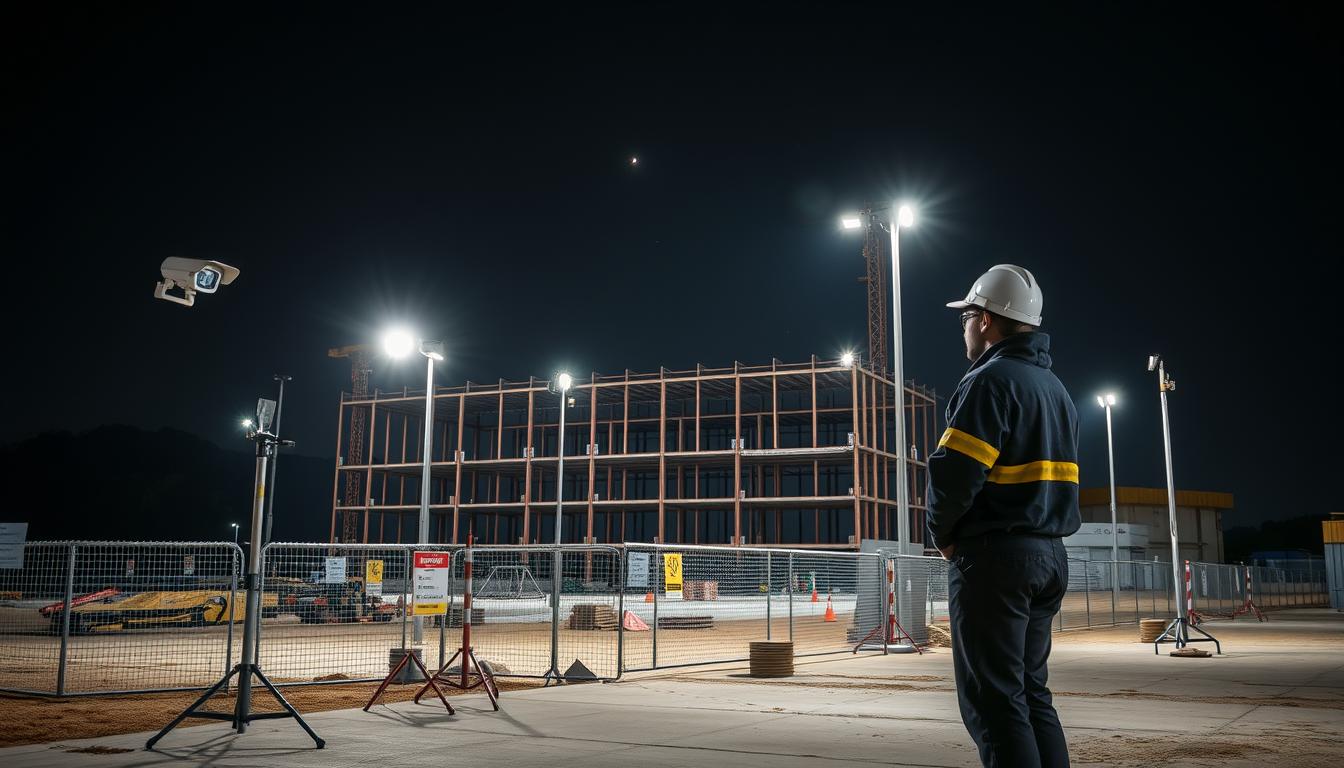
Professional Construction Video Monitoring Services
Modern building projects in Singapore demand advanced protection measures. Professional surveillance services provide real-time oversight for enhanced site security.
These systems utilize high-definition cameras to protect valuable assets. They help prevent theft, vandalism, and ensure worker safety throughout operations.
Remote access capabilities allow project managers to monitor sites from anywhere. This technology supports compliance with Singapore’s strict regulations for high-value projects.
Investing in professional monitoring solutions brings significant benefits. Companies achieve better accountability and data-driven insights for decision-making.
Key Takeaways
- Real-time oversight enhances protection for valuable assets and personnel
- High-definition camera systems provide clear visual documentation
- Remote access allows monitoring from any location 24/7
- Compliance with Singapore’s strict building regulations
- Reduced insurance premiums through improved security measures
- Prevention of financial losses from theft and vandalism
- Improved transparency for stakeholders and project teams
Why Construction Sites in Singapore Need Proactive Video Monitoring
Singapore’s urban development boom creates unprecedented security challenges for work zones. These locations contain valuable equipment and materials that attract unwanted attention. Proactive surveillance becomes essential for comprehensive protection.
The Rising Threat of Theft and Vandalism on Job Sites
Project areas face significant financial risks from criminal activities. Industry reports show annual losses reaching $1 billion nationally. These incidents disrupt operations and cause substantial budget overruns.
Visible security systems serve as powerful deterrents against unauthorized access. Studies demonstrate crime reduction rates up to 65% when proper surveillance is implemented. This protection extends to expensive machinery and building materials.
Modern solutions provide continuous oversight of entire work areas. Managers gain remote access to live feeds from any location. This capability ensures quick response to potential security issues.
Beyond Security: Ensuring Worker Safety and Protocol Compliance
Surveillance technology plays a dual role in modern project management. While preventing theft remains crucial, these systems significantly enhance workplace safety. They help identify hazards before accidents occur.
Continuous observation ensures adherence to safety protocols. Supervisors can immediately address unsafe behaviors through real-time intervention. This proactive approach reduces accident likelihood and protects personnel.
Documentation from camera systems supports regulatory compliance. Singapore’s strict safety standards require thorough record-keeping. Proper surveillance provides evidence of protocol adherence during inspections.
These integrated solutions create cultures of accountability among teams. Workers become more conscious of safety procedures when aware of observation. The result is safer work environments and more efficient operations.
How Modern Video Surveillance Systems Transform Construction Management
Today’s building sites operate with unprecedented intelligence. Advanced oversight solutions have moved far beyond simple recording devices. They now serve as active management tools that drive operational excellence.
From Passive Recording to Active, Real-Time Intervention
Traditional cameras simply captured events after they occurred. Modern technology enables immediate response capabilities. Project teams receive instant alerts when unusual activity happens.
Artificial intelligence analyzes footage continuously. The systems detect potential safety violations or security breaches. Managers can address issues before they escalate into major problems.
Remote access allows supervision from any location. Team members view live feeds on mobile devices. This capability ensures constant awareness of site conditions.
Gaining Data-Driven Insights for Smarter Project Decisions
These sophisticated solutions generate valuable operational intelligence. They track worker productivity and equipment utilization patterns. The data helps optimize resource allocation across projects.
Time-lapse functionality documents progress visually. Stakeholders gain clear visibility into development milestones. This documentation supports accurate reporting and planning.
Analytics identify workflow bottlenecks and efficiency opportunities. Companies make informed decisions based on actual site conditions. The result is smarter management and improved outcomes.
Integration with other management tools creates comprehensive oversight. Project teams access unified data from multiple sources. This holistic approach enhances coordination and communication.
Core Benefits of Implementing a Dedicated Monitoring System
Singaporean construction firms gain competitive advantages through advanced security integration. These specialized solutions deliver multiple operational improvements beyond basic protection.
Companies achieve measurable financial returns through comprehensive oversight technology. The investment transforms how projects manage risk and operational efficiency.
Significant Reduction in Losses from Crime and Vandalism
Professional surveillance dramatically decreases financial losses from criminal activities. Studies show crime reduction rates up to 65% when proper systems are implemented.
This protection prevents millions in annual losses from equipment theft and material disappearance. Visible cameras serve as powerful deterrents against unauthorized access.
The continuous oversight ensures quick response to potential security breaches. Managers receive instant alerts when unusual activity occurs on site.
Lower Insurance Premiums Through Demonstrable Risk Management
Insurance companies recognize the value of comprehensive surveillance solutions. They often provide premium reductions up to 15% for sites with professional systems.
This demonstrates effective risk management to insurers and stakeholders. The documentation shows commitment to protecting assets and personnel.
Lower insurance costs contribute directly to improved project profitability. Companies save significantly on operational expenses over time.
Enhanced Accountability and Transparency for All Stakeholders
Continuous observation creates cultures of responsibility among team members. Workers become more conscious of safety procedures when aware of oversight.
Stakeholders gain clear visibility into site operations through remote access features. This transparency builds trust with clients and partners.
Surveillance footage serves as valuable evidence in disputes and investigations. It reduces legal expenses and supports regulatory compliance requirements.
The psychological impact encourages adherence to safety protocols. This reduces negligent behavior and creates safer work environments for everyone involved.
Essential Features of Today’s Construction Surveillance Cameras
Modern security technology has evolved significantly to meet the demanding needs of project sites. These advanced systems incorporate multiple critical components that work together seamlessly. They provide comprehensive protection while supporting operational efficiency.
High-Resolution Imaging and Infrared Night Vision Capabilities
Clear visual documentation requires superior image quality. Modern cameras capture footage at minimum HD 1080 resolution. This ensures every detail remains visible and identifiable.
Infrared technology enables continuous operation after dark. These systems automatically switch to night vision mode when light levels drop. They maintain clear visibility around the clock without additional lighting.
High-resolution standards support regulatory compliance requirements. They provide usable evidence for investigations and documentation. This feature proves essential for insurance claims and legal proceedings.
Robust Durability for Harsh Outdoor Environments
Project sites present challenging conditions for equipment. Surveillance cameras feature high IP ratings indicating environmental protection. They withstand rain, dust, and extreme temperatures.
This durability reduces maintenance needs and operational downtime. Tamper-resistant designs prevent unauthorized interference. The systems remain functional throughout project durations.
Weather-resistant construction ensures reliable performance. Companies avoid frequent replacements and service interruptions. This reliability contributes to consistent security coverage.
Advanced Analytics: Motion Detection and AI-Powered Alerts
Modern solutions transform from passive recording to active protection. Artificial intelligence analyzes footage in real-time. The technology identifies potential threats immediately.
Motion detection triggers instant notifications for unusual activity. Managers receive alerts directly to mobile devices. This enables quick response to security breaches.
AI capabilities recognize specific behaviors and patterns. The systems detect safety violations and unauthorized access attempts. This proactive approach prevents incidents before escalation.
Additional features include time-lapse functionality for project documentation. Wireless capabilities and cloud storage offer flexibility. Remote access allows supervision from any location.
These comprehensive features make surveillance systems indispensable for modern operations. Understanding these components helps companies select appropriate solutions. They ensure regulatory compliance while enhancing overall protection.
The Critical Role of Remote and Live Feed Access
Singapore’s fast-paced building industry requires immediate oversight capabilities. Remote access technology transforms how project teams manage work zones. This innovation provides constant visibility without physical presence.
Monitoring Site Activity from Anywhere, Anytime
Modern security systems offer unprecedented flexibility for managers. Internet-connected devices enable real-time viewing from any location. This capability ensures continuous oversight during off-hours.
Mobile applications and web portals create seamless monitoring experiences. Teams access live feeds through smartphones and tablets. This technology reduces the need for physical site visits.
Resource savings become significant over time. Companies minimize travel expenses and personnel costs. Remote access also supports work-life balance for management teams.
“The ability to monitor multiple sites simultaneously revolutionized our operational efficiency. We respond faster and make better decisions.”
Enabling Faster Response to Emergencies and Incidents
Immediate alerts transform security management. Systems notify managers of unusual activity instantly. This enables quick decision-making during critical situations.
Emergency response times improve dramatically. Teams coordinate interventions through shared live feeds. Every second counts when mitigating damage or addressing safety concerns.
During the COVID-19 pandemic, this technology proved invaluable. Sites maintained operations with reduced on-site staff. Remote monitoring ensured compliance with safety protocols.
Key benefits include:
- Instant notification of security breaches
- Real-time collaboration with emergency services
- Visual documentation for incident investigations
- Enhanced transparency for clients and stakeholders
This technology creates safer work environments. It also builds trust through visible commitment to protection. Companies that implement these solutions gain significant advantages.
Navigating Singapore’s Mandatory Video Surveillance System (VSS) Regulations
Singapore’s regulatory landscape for major projects has changed significantly. New requirements now mandate specific oversight technology for certain work zones. Understanding these rules helps companies maintain legal operations.
Effective June 1, 2024, all projects valued at S$5 million or more must implement surveillance systems. This threshold ensures comprehensive protection for substantial investments. Companies must verify contract values to determine compliance needs.
Understanding the S$5 Million Contract Value Threshold
The financial benchmark serves as a clear guideline for implementation. Projects below this value may still benefit from voluntary adoption. However, mandatory requirements apply strictly to larger-scale operations.
This threshold reflects Singapore’s commitment to protecting significant assets. It also addresses the increased risks associated with major developments. Companies should carefully assess project values during planning phases.
Key High-Risk Areas Requiring Comprehensive Coverage
Regulations specifically identify zones needing dedicated camera attention. These include elevated work platforms and crane operations. Vehicle movement areas also require constant observation.
Proper coverage ensures worker safety and protocol adherence. Strategic placement eliminates blind spots in critical zones. This approach maximizes protection throughout entire sites.
“Meeting regulatory requirements isn’t just about compliance—it’s about demonstrating our commitment to safety excellence.”
Technical Specifications for Compliance: Resolution and Data Retention
Systems must capture footage at minimum HD 1080 resolution. A frame rate of 12 frames per second ensures smooth playback. These specifications guarantee usable evidence when needed.
Data retention periods vary based on incident status. Routine footage requires 30 days of storage. Reportable incidents mandate 180-day preservation for investigations.
Non-compliance carries significant financial penalties. Fines can reach S$50,000 for safety breaches. Proper system configuration avoids these costly violations.
Some temporary sites may qualify for portable solutions. These must still meet all technical requirements. Companies should consult regulators about specific exemptions.
Understanding these rules helps organizations plan effectively. Proper implementation demonstrates commitment to safety standards. It also builds trust with clients and regulatory bodies.
Choosing Between Wired and Wireless Camera Solutions
Selecting the right surveillance technology requires careful evaluation of multiple factors. Each project presents unique challenges that influence equipment choices. The decision impacts both immediate security and long-term operational efficiency.
Assessing Reliability, Installation Complexity, and Cost
Wired systems provide exceptional stability and consistent performance. They maintain secure connections with minimal signal interference. These solutions rarely experience disruptions from environmental factors.
Installation demands professional expertise and higher initial investment. A four-camera setup typically costs around $2,000 for complete implementation. This includes cabling, labor, and configuration services.
Wireless options offer remarkable flexibility and simpler setup processes. They eliminate extensive wiring requirements across the site. Temporary projects benefit greatly from this adaptability.
Potential issues include signal drops and cybersecurity vulnerabilities. Modern encryption technology helps protect against unauthorized access. Battery and solar power advancements improve reliability.
Determining the Best Fit for Your Site’s Layout and Needs
Permanent facilities with stable infrastructure often favor wired systems. Large sites benefit from consistent, high-quality coverage. These installations provide peace of mind for long-term operations.
Dynamic projects with changing layouts may prefer wireless solutions. Scalability becomes crucial when areas expand or reconfigure. Cellular connectivity supports remote locations without infrastructure.
Consider these key factors when making your decision:
- Project duration and potential layout changes
- Available power sources and infrastructure
- Security requirements and risk assessment
- Budget constraints and long-term value
The optimal choice balances performance with practical considerations. Companies should evaluate their specific operational needs carefully. This ensures effective protection throughout project timelines.
“Wireless cameras transformed our temporary site management, while wired systems protect our permanent facilities perfectly.”
Both options deliver excellent results when matched appropriately to site conditions. The right technology enhances security while supporting smooth operations. Careful planning ensures maximum return on investment.
Leveraging AI and Video Analytics for Smarter Security
Artificial intelligence transforms how project teams approach protection measures. These advanced systems analyze visual data in real-time. They identify potential issues before they become serious problems.
Automated PPE Detection and Safety Protocol Monitoring
Smart cameras constantly watch for safety gear compliance. They detect missing helmets, vests, or other required equipment. The system sends immediate alerts to supervisors.
This technology ensures workers follow established safety rules. It reduces accident risks significantly. Companies report up to 80% fewer fatal incidents with proper implementation.
Automated oversight eliminates human error in observation. It works continuously without breaks or distractions. This consistency improves overall site safety dramatically.
Predictive Analytics for Proactive Hazard Identification
AI examines patterns from historical data and current conditions. It forecasts potential dangers before they occur. Managers receive early warnings about risky situations.
This proactive approach allows preventive measures implementation. Teams can address hazards before they cause harm. The technology analyzes multiple factors simultaneously.
Predictive systems help allocate resources more effectively. They identify areas needing additional safety attention. This optimization saves both time and money.
“Our AI-driven solution reduced manual oversight costs by 70% while improving safety outcomes dramatically.”
These intelligent solutions represent the future of project protection. They create safer environments through continuous improvement. Companies adopting this technology gain significant advantages.
Strategic Camera Placement for Maximum Site Coverage
Effective security implementation requires strategic positioning of surveillance equipment throughout project zones. Proper placement ensures comprehensive oversight while meeting regulatory requirements.
Thorough site assessment identifies all vulnerable locations needing attention. This planning phase determines optimal equipment positioning for complete coverage.
Identifying Critical Zones: Access Points, Storage, and High-Risk Work Areas
Primary entry and exit points demand constant observation. These access zones see the most traffic and potential security issues.
Storage locations containing valuable materials require dedicated coverage. Equipment yards and material storage areas represent high-value targets.
High-risk work zones need special attention for safety compliance. Elevated platforms and excavation sites mandate continuous monitoring according to regulations.
Singapore’s requirements specifically identify these critical areas. Proper coverage demonstrates commitment to comprehensive protection standards.
Avoiding Blind Spots and Ensuring Optimal Field of View
Strategic angling and elevation eliminate uncovered sections. Even small blind spots can compromise entire security systems.
Pan-tilt-zoom cameras offer flexible coverage for changing needs. These solutions allow remote adjustment to focus on specific areas as required.
Site maps and risk analyses guide placement decisions. These tools help position equipment for both security and operational monitoring purposes.
“Proper camera placement reduced our security incidents by 40% while improving regulatory compliance scores significantly.”
Best practices include overlapping coverage between multiple units. This approach ensures no area remains unobserved during operations.
For optimal equipment selection, consider our guide to best site cameras for construction projects that meet Singapore’s specific requirements.
Strategic placement maximizes return on surveillance investments. It creates safer environments while supporting compliance objectives.
Understanding the Investment: Cost Analysis and ROI
Smart budgeting for site protection systems delivers measurable returns for Singaporean projects. Companies must evaluate both immediate expenses and future savings when implementing oversight solutions.
Breaking Down Initial Installation vs. Long-Term Operational Savings
Initial setup expenses vary significantly based on project scale. Small residential sites typically invest $2,000-$5,000 for basic coverage. Large commercial developments often spend $20,000-$50,000 for comprehensive systems.
These costs include cameras, installation labor, and data storage infrastructure. The complexity of your site layout directly affects the final price.
Long-term financial benefits quickly offset these initial investments. Effective oversight reduces theft losses dramatically. Industry reports show annual savings reaching billions nationwide.
Insurance providers recognize the value of professional security systems. Many offer premium reductions up to 15% for properly protected sites.
Key cost factors include:
- Number and type of cameras required
- Installation complexity and site accessibility
- Storage needs and data retention periods
- Integration with existing management systems
How Effective Monitoring Leads to Tangible Financial Returns
Comprehensive oversight generates multiple revenue streams through loss prevention. Companies report rapid return on investment, often within the first year.
Reduced equipment theft represents the most immediate financial benefit. Stolen machinery and materials account for substantial annual losses industry-wide.
“Our surveillance investment paid for itself in eight months through theft prevention alone. The ongoing savings continue to accumulate year after year.”
Legal cost avoidance provides another significant advantage. Security footage serves as valuable evidence in disputes and false claims. This documentation reduces legal expenses and settlement costs.
Improved productivity creates additional financial returns. Better oversight leads to more efficient operations and resource allocation. Teams work more effectively when proper systems are in place.
Companies should view this technology as proactive asset protection rather than expense. The investment ensures project continuity and protects valuable resources. Calculating specific ROI helps businesses make informed decisions about implementation.
This financial analysis demonstrates the value of modern security solutions. Smart investments in protection technology deliver lasting benefits for Singaporean projects.
Industry Applications Beyond Traditional Construction Sites
Modern surveillance technology serves diverse industries across Singapore’s development landscape. These advanced systems adapt to unique operational requirements beyond standard building projects.
Specialized oversight solutions protect critical infrastructure and industrial operations. They deliver enhanced security for complex, high-value environments.
Securing Infrastructure Projects and Large-Scale Industrial Works
Major infrastructure developments demand comprehensive protection measures. Roadworks, bridge construction, and utility installations present unique security challenges.
These large-scale operations span extensive geographical areas. Traditional security methods often prove insufficient for complete coverage.
Advanced surveillance systems provide centralized oversight of dispersed sites. Managers monitor multiple locations simultaneously through integrated platforms.
Industrial plants and manufacturing facilities benefit from tailored solutions. These environments require specialized equipment capable of withstanding harsh conditions.
Explosion-proof cameras and chemical-resistant housings ensure reliable performance. The technology maintains operation in challenging industrial settings.
Utilizing Monitoring for Disaster Recovery and Remote Operations
Emergency response teams leverage surveillance technology during crisis situations. Natural disasters and accidents create hazardous environments for personnel.
Remote oversight enables damage assessment without exposing workers to danger. Teams can evaluate structural integrity and plan interventions safely.
Inaccessible locations benefit particularly from these advanced systems. Mountainous terrain and offshore installations present logistical challenges for physical access.
Live feeds provide real-time situational awareness for coordination centers. Decision-makers direct resources based on current conditions rather than delayed reports.
Drones integrated with surveillance systems offer aerial perspectives for large areas. This technology enhances oversight capabilities for comprehensive emergency management.
“During the recent flood response, our surveillance systems allowed us to coordinate rescue operations while keeping our team safe from rapidly changing conditions.”
The flexibility of modern oversight technology supports various operational scales. From small residential developments to massive industrial complexes, these systems provide adaptable solutions.
Companies across multiple sectors now recognize the value of professional surveillance. The technology enhances security while improving operational efficiency in diverse environments.
Case Studies: Success Stories from Singaporean Projects
Singapore’s building industry provides compelling evidence of surveillance effectiveness. Real-world implementations demonstrate measurable improvements across multiple operational areas.
These documented experiences offer valuable insights for decision-makers. They showcase practical applications with tangible outcomes.
Quantifiable Results in Theft Prevention and Accident Reduction
One major developer reported dramatic security improvements. Their integrated system reduced equipment losses by 78% within six months.
The technology identified unauthorized access attempts immediately. Quick response prevented potential theft incidents worth millions.
Safety performance showed even more impressive gains. AI-powered observation detected hazards before accidents occurred.
Personal protective equipment compliance reached 98% consistently. This contributed to a 90% reduction in safety violations.
The financial impact extended beyond direct loss prevention. Insurance premiums decreased significantly due to improved risk management.
Testimonials on Improved Operational Efficiency and Compliance
Industry leaders consistently praise the operational benefits. Their experiences highlight multiple advantages beyond basic security.
“Our surveillance investment transformed how we manage projects. We maintain schedules better and avoid costly delays through continuous oversight.”
Regulatory adherence became simpler with comprehensive documentation. The systems automatically captured evidence of protocol compliance.
This eliminated manual record-keeping while improving accuracy. Managers could focus on operational improvements rather than paperwork.
Stakeholder confidence increased significantly with transparent operations. Clients appreciated the ability to verify progress and safety remotely.
These success stories demonstrate the transformative power of modern technology. They provide convincing evidence for companies considering implementation.
Implementing Your System: A Step-by-Step Guide
Successful implementation of surveillance technology requires careful planning and execution. Following a structured approach ensures optimal performance and regulatory compliance.
This guide outlines the essential steps for deploying effective oversight solutions. Companies can achieve comprehensive protection through proper installation practices.
Conducting an Initial Site Assessment and Risk Analysis
Begin with a thorough evaluation of your project location. Identify all vulnerable areas needing protection coverage.
Consider these critical factors during your assessment:
- Entry and exit points requiring constant observation
- High-value equipment and material storage zones
- Areas with previous security incidents or safety concerns
- Regulatory requirements for specific work zones
Environmental conditions impact equipment selection. Assess weather exposure and potential interference sources.
Power availability determines system configuration options. Some locations may need solar or battery-powered units.
Document all findings for reference during installation. This analysis forms the foundation for your security strategy.
Selecting the Right Technology Partner and Professional Installer
Choosing experienced partners ensures system reliability and compliance. Look for companies with proven track records in your industry.
Evaluate potential providers based on these criteria:
- Industry-specific experience and project portfolio
- Technical certifications and training credentials
- Customer references and satisfaction ratings
- Maintenance support and service response times
Professional installation avoids common implementation mistakes. Experts position equipment for maximum coverage and performance.
They ensure proper integration with existing management systems. This creates seamless operation across all platforms.
“Our technology partner provided invaluable guidance during implementation. Their expertise ensured we met all regulatory requirements while maximizing coverage.”
Training ensures your team can use the system effectively. Proper education maximizes return on investment through full utilization.
Ongoing support maintains system performance over time. Regular updates and maintenance prevent operational disruptions.
Following these steps creates robust protection for your assets. Proper implementation delivers peace of mind and enhanced safety.
Overcoming Common Implementation Challenges
Every security enhancement project faces unique obstacles during deployment. Smart planning helps teams navigate these hurdles effectively. Addressing concerns early ensures smooth system integration.
Addressing Privacy Concerns and Data Security for Workers
Workers often worry about constant observation on site. These concerns require thoughtful handling. Transparent communication builds trust among team members.
Explain the system’s purpose clearly to all personnel. Focus on safety benefits rather than surveillance. This approach reduces resistance and increases acceptance.
Strong data protection measures safeguard everyone’s privacy. Implement encryption for all stored footage. Limit access to authorized personnel only.
“Our workers embraced the system once they understood its safety focus. Clear guidelines prevented any privacy issues.”
Regular audits ensure compliance with data handling policies. These practices protect both the company and its people. They also meet Singapore’s strict privacy regulations.
Solving Logistical Hurdles on Complex and Evolving Job Sites
Dynamic project layouts present unique installation challenges. Space limitations often complicate equipment placement. Temporary setups require flexible solutions.
Portable camera systems adapt to changing site conditions. Wireless options eliminate wiring complications. These units can relocate as work areas shift.
Remote locations face power and connectivity issues. Solar-powered units operate independently of grid power. Cellular connectivity ensures continuous data transmission.
Consider these practical solutions for common problems:
- Modular designs that scale with project expansion
- Weather-resistant equipment for outdoor durability
- Mobile monitoring stations for temporary coverage
- Redundant systems for critical area protection
Professional installers offer valuable experience-based insights. Their expertise helps avoid common pitfalls. Proper planning turns challenges into opportunities.
Anticipating these issues ensures successful system deployment. The right approach delivers maximum protection benefits. It also maintains operational efficiency throughout the project.
Future-Proofing Your Security with Scalable Technology
Singapore’s dynamic building landscape demands forward-thinking protection strategies. Tomorrow’s security solutions must adapt to emerging challenges while maintaining current compliance standards.
Scalable systems provide the flexibility needed for evolving project requirements. They integrate seamlessly with new innovations as they become available.
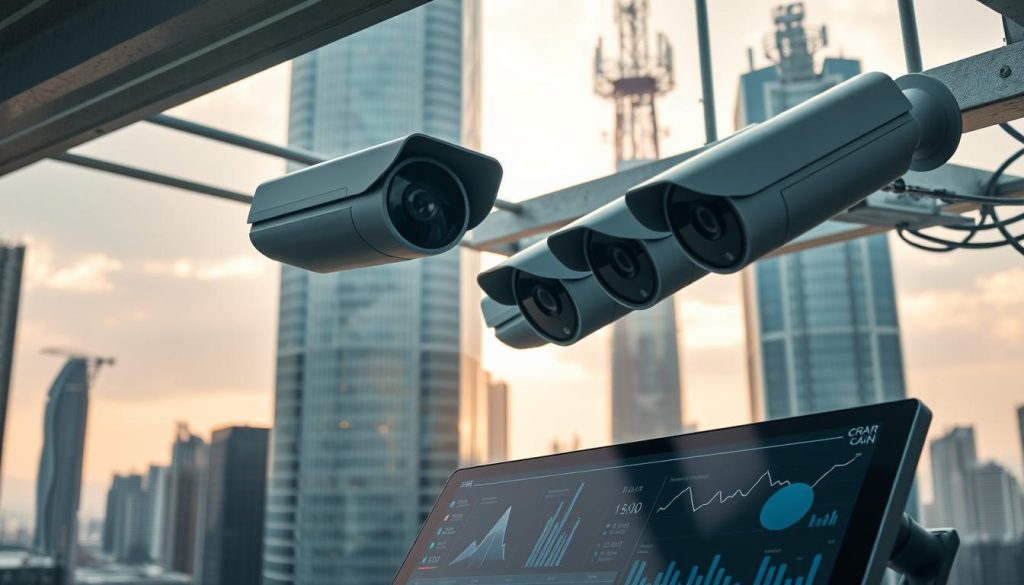
Integrating Drones and IoT Sensors for a Comprehensive View
Aerial surveillance offers unprecedented oversight capabilities. Drones capture perspectives impossible with traditional camera placements.
These flying units survey large areas quickly and efficiently. They identify potential issues from angles ground-based systems cannot reach.
IoT sensors create interconnected networks throughout work zones. They monitor environmental conditions and equipment status in real-time.
Temperature, humidity, and vibration data enhance safety protocols. The system alerts managers to potential hazards before they escalate.
Combined technologies deliver complete situational awareness. Managers access integrated data through unified platforms.
Preparing for Evolving Regulations and Advanced Threats
Singapore’s regulatory environment continues to develop rapidly. Future-proof systems accommodate changing compliance requirements.
Upgradable technology avoids costly replacement cycles. Companies can enhance capabilities through software updates.
Cybersecurity becomes increasingly crucial for connected systems. Robust protection measures safeguard against digital threats.
Encryption and access controls prevent unauthorized system interference. Regular security patches maintain defense against emerging risks.
“Our scalable approach allowed seamless integration of drone technology when regulations permitted. We avoided complete system overhauls and maintained continuous protection.”
Proactive companies stay ahead of industry developments. They implement solutions that grow with their projects and needs.
This forward-thinking approach delivers lasting value and protection. It ensures security measures remain effective through project completion.
Taking the Next Step Toward a Fully Secure Construction Site
Protecting your project requires immediate action with professional security solutions. These systems offer comprehensive oversight for complete site protection.
Partner with experts like ED Viston or Wen Hong Engineering for proper installation. They ensure regulatory compliance while maximizing your investment benefits.
Modern technology delivers significant advantages beyond basic security. Companies gain operational efficiency and stakeholder confidence through advanced access systems.
Act now to avoid penalties and future-proof your operations. Contact providers today for customized quotes and implementation guidance.
Secure your assets with tailored surveillance solutions that meet Singapore’s strict standards.
FAQ
Why is proactive video monitoring essential for job sites in Singapore?
Proactive monitoring helps combat rising theft and vandalism while ensuring worker safety and regulatory compliance. It provides real-time oversight and documented evidence for incidents.
What are the primary benefits of installing a dedicated surveillance system?
Key benefits include significant reductions in losses from crime, lower insurance premiums through proven risk management, and enhanced transparency for all stakeholders.
What features should I look for in construction site cameras?
Look for high-resolution imaging, infrared night vision, robust durability (IP ratings), and advanced analytics like motion detection and AI-powered alerts.
How does remote access improve site management?
Remote access allows managers to view live feeds from anywhere, enabling faster responses to emergencies and better overall oversight of operations.
Are there specific regulations for video surveillance on Singapore construction sites?
Yes, projects with a contract value of S million or more must comply with mandatory Video Surveillance System (VSS) regulations, covering specific high-risk areas and technical specs.
Should I choose wired or wireless camera solutions?
The choice depends on your site’s layout, reliability needs, installation complexity, and budget. Each option has distinct advantages for different scenarios.
How can AI and analytics enhance site security?
AI enables automated PPE detection, safety protocol monitoring, and predictive analytics to identify hazards before they become incidents.
What is the typical return on investment for these systems?
Effective monitoring leads to tangible financial returns through theft prevention, reduced insurance costs, and fewer project delays, often outweighing initial setup expenses.
Post Tags : Construction project management Construction site security Construction video monitoring Enhanced construction security Professional monitoring services Real-time construction monitoring Remote project monitoring Site safety monitoring Video monitoring technology Video surveillance solutions


