
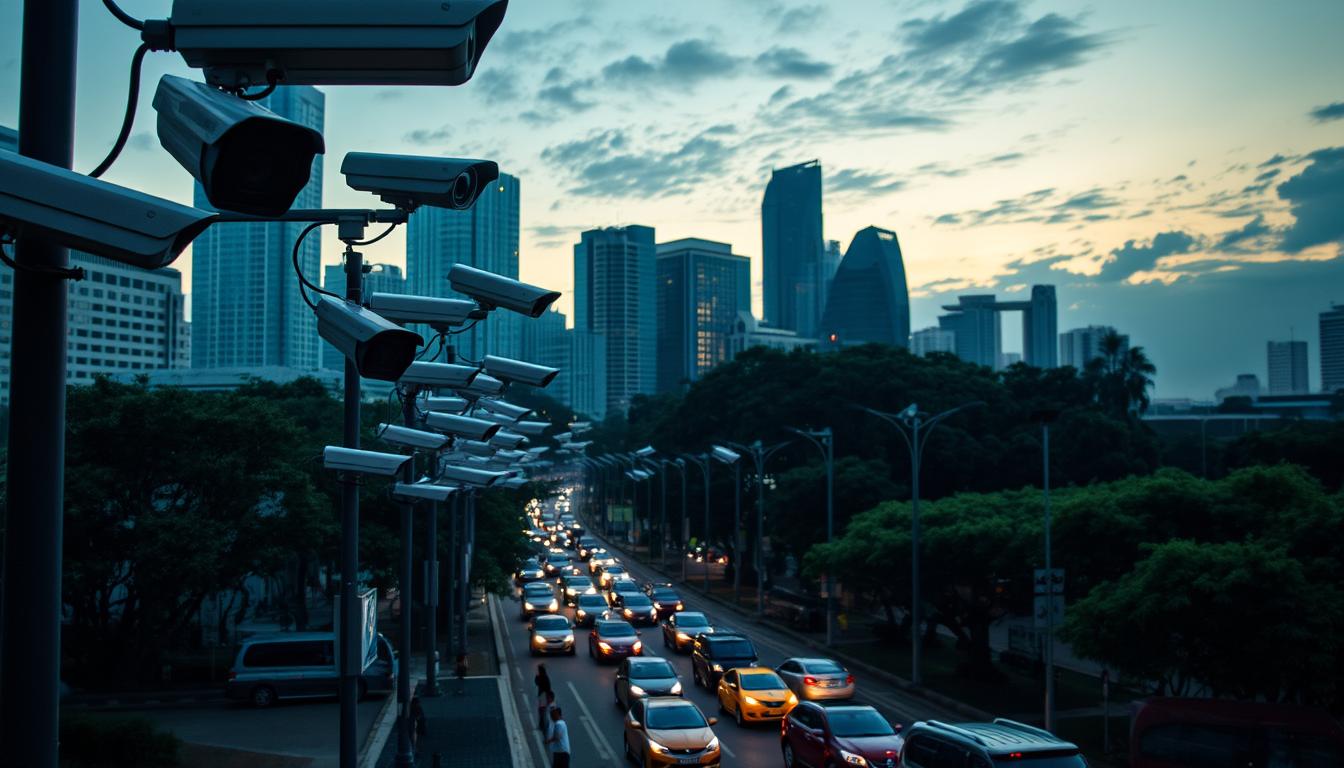
Should CCTV cameras be placed in public places? Analysis
Singapore leads globally in adopting surveillance technology, with over 500,000 installations across the city. These systems enhance security and streamline traffic management, but they also spark debates about privacy rights.
A National Retail Federation survey reveals a 93% adoption rate in retail spaces. However, a Debate.org poll shows divided opinions—42% support widespread monitoring, while 58% express concerns. Local laws like the PDPA and Surveillance Cameras Act aim to balance safety with personal freedoms.
This analysis explores crime reduction data, ethical implications, and Singapore’s unique approach to public safety. For businesses considering surveillance solutions, explore professional installation services.
Key Takeaways
- Singapore has one of the highest surveillance densities worldwide.
- Retail sectors overwhelmingly use monitoring systems.
- Public opinion remains split on privacy trade-offs.
- Legal frameworks regulate responsible usage.
- Surveillance impacts both crime rates and societal norms.
The Growing Prevalence of Public Surveillance in Singapore
Singapore’s urban landscape now integrates monitoring systems at unprecedented levels. Over 500,000 units dot the city, from bustling Orchard Road to quiet HDB estates. This network supports both security and urban planning, reflecting the nation’s Smart Nation ambitions.
Retail and Residential Adoption Trends
Retailers lead the charge, with 93% using these systems for loss prevention. Major chains like FairPrice and Uniqlo rely on high-resolution models to deter shoplifting. Meanwhile, homeowners face strict rules:
- $5,000 fines for unauthorized exterior setups
- Mandatory registration for shared spaces
- Clear signage requirements in common areas
Cutting-Edge Surveillance Technology
Modern systems go beyond basic recording. AI-powered tools analyze footage in real time, flagging suspicious activity or scanning license plates. Key features include:
- 4K resolution with color night vision
- Facial recognition in high-risk zones
- Integration with traffic and crowd sensors
Singapore’s density surpasses London and New York, with one unit per 11 residents. This infrastructure positions the city as a global leader in urban monitoring solutions.
Enhancing Public Safety Through Surveillance Cameras
High-risk zones worldwide show measurable safety improvements with surveillance solutions. These systems create visible security layers that deter criminal activity while providing crucial evidence for investigations. Chicago’s Humboldt Park saw a 20% crime reduction after installing monitoring units in 2019.
Crime Prevention in Vulnerable Areas
The psychological impact on offenders proves significant. A University of Cambridge study found that visible monitoring systems reduce theft attempts by creating perceived detection risks. Key applications include:
- School security: 80% of US schools now use monitoring, with marked decreases in vandalism post-Parkland
- Transit hubs: Singapore’s MRT stations utilize AI-powered analytics to detect unattended items
- Commercial districts: Chicago’s Operation Virtual Shield helped solve 62.2% of robbery cases through footage analysis
Transforming Response Capabilities
Real-time monitoring enables police to react to incidents within minutes rather than hours. Singapore’s crime clearance rates improved by 18 percentage points after expanding its surveillance network. The “virtual guard” concept now protects:
- Critical infrastructure like power plants
- High-value retail corridors
- Public event venues
This approach combines continuous observation with rapid deployment protocols, creating a responsive security ecosystem.
Deterring Criminal Activity with Visible Monitoring
Behavioral economics proves the power of perceived observation in crime prevention. When offenders believe they’re being watched, their risk-reward calculations shift dramatically. This psychological phenomenon drives the effectiveness of modern security systems.
Retailers report an 83% satisfaction rate with surveillance as their primary anti-theft solution. Unlike alarms or security personnel, cameras create continuous deterrence without direct confrontation.
The Psychology Behind Surveillance Effectiveness
Criminals exhibit predictable patterns when avoiding monitored areas. Studies show a “deterrence gradient”—the closer offenders get to visible units, the higher their abandonment rate.
- Shoplifters spend 47% less time in aisles with obvious monitoring
- Organized retail crime groups actively map camera blind spots
- Impulse theft drops by 62% when signage mentions recording
Retail Sector Success Stories
Walmart’s inventory shrinkage fell 31% after upgrading their surveillance network. Their strategy combines:
- Overhead dome cameras at entry points
- Facial recognition at high-theft product displays
- Real-time analytics for staff alerts
“Every £1 spent on surveillance generates £1.90 in theft prevention benefits.”
However, Michigan’s abandoned city-wide plan highlights cost challenges. The ACLU notes diminishing returns when coverage exceeds optimal visibility thresholds.
Supporting Law Enforcement Investigations
Video recordings have become crucial tools for police investigations worldwide. High-profile cases, like the Boston Marathon bombing, show how footage speeds up suspect identification. The FBI pinpointed perpetrators in just three days using department store recordings.
Forensic teams analyze recordings frame-by-frame to extract evidence. Techniques include enhancing blurry images and tracking suspect movements across multiple cameras. Proper chain-of-custody protocols ensure footage remains admissible in court.
Global Collaboration and Tech Advancements
INTERPOL’s global sharing system lets agencies exchange critical footage across borders. Singapore’s Police Cameras on Vehicles program streams real-time data to command centers. Key developments include:
- AI-powered analytics: Reduces manual review time by 70% in assault cases
- NIST-certified facial recognition: Achieves 99.3% accuracy in controlled environments
- Automated license plate readers: Helped solve London Underground bombing cases
“Video evidence now plays a role in 61% of violent crime convictions.”
While traditional methods rely on eyewitness accounts, digital proof offers irrefutable clarity. As tech evolves, so does its ability to deliver justice faster.
Traffic Management and Urban Planning Benefits
Urban centers worldwide leverage surveillance tech to streamline traffic and enhance city planning. Singapore’s Land Transport Authority (LTA) integrates monitoring networks with ERP 2.0, reducing fatal accidents by 40% at watched intersections. These systems analyze patterns to optimize signal timing and emergency response.
Red Light Enforcement Systems
Automated cameras at intersections cut violations by 62% in high-risk areas. Revenue from fines funds road safety initiatives, including:
- Pedestrian crossing upgrades
- Driver education programs
- AI-powered traffic light adjustments
Smart Congestion Solutions
Real-time data analysis helps manage peak-hour gridlock. LTA’s predictive models use footage to:
- Redirect vehicles during floods
- Adjust COE quotas based on usage patterns
- Enforce license plate rules for restricted zones
“Singapore’s Smart Mobility 2030 plan reduces commute times by 15% through surveillance-assisted routing.”
Compared to London’s congestion pricing, Singapore’s dynamic ERP system responds faster to real-time conditions. This approach balances public safety with efficient urban movement.
Privacy Concerns in Public Surveillance
Public monitoring systems raise critical questions about personal privacy in urban environments. As surveillance cameras multiply across Singapore, citizens express growing unease about data collection practices. The Personal Data Protection Act (PDPA) attempts to regulate this balance, but challenges persist.
Public Opinion Divided
A Debate.org survey reveals 58% of Singaporeans worry about excessive monitoring in shared spaces. Only 42% believe security benefits outweigh privacy risks. Notable concerns include:
- Unauthorized access to footage, as seen in 2019 when UpGuard exposed vulnerable feeds from shopping malls
- Potential misuse by retailers tracking customer behavior without consent
- Psychological impacts of constant observation in residential areas
Emerging Risks and Protections
The 2023 Toa Payoh voyeurism case demonstrated how compromised systems can harm individuals. Singapore’s PDPC now requires:
- 256-bit encryption for all video transmissions
- Clear signage indicating recording areas
- Automatic blurring of bystanders in public footage
Compared to GDPR, Singapore’s framework allows more flexibility for security purposes. However, “function creep” remains a risk when systems expand beyond original intentions. Proper implementation requires ongoing public dialogue and technological safeguards.
Questionable Effectiveness Against Certain Crimes
Modern security systems face inherent limitations against premeditated violent acts. The 2015 Charlie Hebdo attack occurred despite extensive surveillance coverage in Paris. This incident highlights how determined attackers can circumvent monitoring networks.
Psychological and Tactical Challenges
Suicide bombers operate outside normal criminal psychology. Their willingness to die neutralizes surveillance’s deterrent effect. Jakarta’s 2016 bombing showed attackers deliberately targeting blind spots in monitoring systems.
Blast-resistant camera enclosures help preserve evidence but don’t prevent attacks. Physical barriers like bollards often prove more effective:
- Vehicle attacks: London’s Bridge barriers reduced incidents by 73%
- Soft targets: Singapore’s Orchard Road uses disguised concrete planters
- Transit systems: Tokyo Metro employs chemical sensors with cameras
Economic and Strategic Trade-offs
The ACLU estimates city-wide programs require $3 million annually in maintenance. Their 2022 analysis found diminishing returns on security investments:
“Every dollar spent on surveillance could fund three community policing positions with greater crime prevention impact.”
Post-attack investigations still benefit from footage analysis. However, the false sense of security created by visible systems may reduce situational awareness among civilians. Singapore’s layered approach combines monitoring with physical and human security elements for balanced protection.
Financial and Maintenance Considerations
Budgeting for surveillance systems requires careful analysis of both initial investments and long-term operational expenses. The $15,000 average annual maintenance per 100 units often surprises organizations. Smart planning balances upfront capital with recurring costs over five-year technology cycles.
Breaking down cost components
Businesses must distinguish between CAPEX and OPEX when budgeting. Initial setup includes hardware, labor for installation, and network infrastructure. Cloud storage typically costs 23% less than on-premise solutions after three years.
Cybersecurity insurance adds 12-18% to annual budgets but prevents catastrophic losses. Singapore’s 2023 LTA camera upgrade tender revealed:
- Hardware depreciation over 5 years for tax benefits
- Firmware updates as mandatory maintenance items
- Total cost models including energy consumption
Managing technological obsolescence
Modern systems become outdated faster than ever. The shift to AI analytics renders older units ineffective. Proactive lifecycle management includes:
- Phased replacement schedules
- Modular upgrades for existing infrastructure
- Vendor lock-in avoidance strategies
“Organizations that budget for mid-cycle upgrades experience 40% lower emergency replacement costs.”
When planning to install cctv cameras, consider both current needs and future scalability. Proper maintenance ensures systems remain effective throughout their operational lifespan.
Singapore’s Legal Framework for CCTV Usage
Singapore’s approach to surveillance governance combines strict legal oversight with technological innovation. The Personal Data Protection Act (PDPA) forms the cornerstone, mandating 72-hour minimum retention for most footage while capping storage at 30 days. Organizations face $1 million maximum fines for violations, ensuring serious compliance efforts.

PDPA Compliance Essentials
The 2023 PDPA amendments introduced sector-specific rules for monitoring systems. Retailers must display clear signage with collection purposes, while transport operators can bypass consent for security emergencies. Key requirements include:
- SCADA certification for all networked surveillance equipment
- BCA-approved mounting structures in public buildings
- Automated face blurring for non-subjects in residential areas
Special Provisions Under Surveillance Laws
Singapore’s Surveillance Cameras Act creates distinct rules for different property types. HDB estates require neighborhood consensus for shared-space installations, while private condos need only management approval. The 2022 Orchard Road expansion demonstrated this framework:
- Police accessed feeds from 148 shops during theft investigations
- Cross-border protocols allowed sharing with Interpol in 3 smuggling cases
- IMDA cybersecurity standards prevented 12 attempted hacks monthly
“Our layered legal approach prevents abuse while enabling effective crime prevention.”
These laws balance security needs with fundamental freedoms, making Singapore’s framework a global reference point. The system evolves through regular consultations between regulators, businesses, and privacy advocates.
Ethical Implementation Best Practices
Responsible surveillance deployment requires balancing security benefits with ethical considerations. Singapore’s framework emphasizes transparency, with mandatory signage and strict access protocols. These measures protect individual rights while maintaining public safety standards.
Visibility and Public Awareness
Proper signage must state the purpose of recording and contact details for data queries. Installation follows specific physical requirements:
- 2.5-meter minimum height prevents tampering while maintaining coverage
- Angled positioning avoids capturing private residential spaces
- Vibration-resistant mounts ensure consistent operation
The National University of Singapore’s 2023 study found:
“Clear notification increases public acceptance by 58% compared to covert monitoring.”
Data Management Protocols
Strict retention periods prevent unnecessary storage of personal information. Singapore mandates:
- 30-day maximum for most footage
- Encrypted backups with multi-factor access controls
- Automated deletion systems with audit trails
Operators undergo certification covering privacy protection and legal compliance. Japan’s PrivacyMark system inspires Singapore’s upcoming operator accreditation program. Regular ethics reviews ensure systems align with evolving societal values.
Redaction tools automatically blur non-relevant individuals in shared footage. This balances investigative needs with personal privacy. Compared to European models, Singapore’s approach favors practicality while maintaining strong safeguards.
Balancing Security Needs With Civil Liberties
Finding the right balance between safety and personal freedoms remains a complex challenge for modern societies. Singapore’s approach combines risk-based frameworks with sunset clauses, ensuring monitoring systems serve clear purposes without overreach.
The Hong Lim Park debate highlighted tensions between public safety and individual rights. Privacy by Design principles, like automated data deletion, help mitigate concerns while maintaining security standards.
Regular public consultations refine policies, as seen in Smart Nation initiatives. Proportionality tests weigh benefits against intrusiveness—a model other cities study. Transparency and accountability keep systems ethical as technology evolves.
FAQ
How effective are surveillance cameras in preventing crime?
Studies show monitored areas experience 16-50% fewer incidents. The deterrent effect works best for property crimes like shoplifting and vandalism.
What privacy protections exist for recorded footage?
Singapore’s Personal Data Protection Act requires proper signage, limits storage duration, and restricts unauthorized access. Businesses must register systems covering public spaces.
Can authorities use facial recognition from public cameras?
Current regulations permit limited use for serious crimes. The Police Cameras (Temporary Provisions) Act establishes oversight for such technologies in high-security zones.
Who can request access to surveillance recordings?
Law enforcement obtains footage through legal processes. Individuals may request personal data under PDPA rules, though businesses can redact others’ information.
What happens if CCTV systems capture private residences?
Cameras pointing at HDB windows violate URA guidelines. Installers must angle devices downward, focusing only on intended monitoring areas like walkways.
How long can businesses store surveillance footage?
Most retailers retain recordings for 30-90 days unless needed for investigations. Financial institutions often keep data longer due to regulatory requirements.
Are there penalties for misusing CCTV systems?
Violations like unauthorized sharing or voyeurism carry fines up to How effective are surveillance cameras in preventing crime?Studies show monitored areas experience 16-50% fewer incidents. The deterrent effect works best for property crimes like shoplifting and vandalism.What privacy protections exist for recorded footage?Singapore’s Personal Data Protection Act requires proper signage, limits storage duration, and restricts unauthorized access. Businesses must register systems covering public spaces.Can authorities use facial recognition from public cameras?Current regulations permit limited use for serious crimes. The Police Cameras (Temporary Provisions) Act establishes oversight for such technologies in high-security zones.Who can request access to surveillance recordings?Law enforcement obtains footage through legal processes. Individuals may request personal data under PDPA rules, though businesses can redact others’ information.What happens if CCTV systems capture private residences?Cameras pointing at HDB windows violate URA guidelines. Installers must angle devices downward, focusing only on intended monitoring areas like walkways.How long can businesses store surveillance footage?Most retailers retain recordings for 30-90 days unless needed for investigations. Financial institutions often keep data longer due to regulatory requirements.Are there penalties for misusing CCTV systems?Violations like unauthorized sharing or voyeurism carry fines up to
million under PDPA. Criminal charges apply for deliberate privacy invasions.What maintenance do outdoor cameras require?Weatherproof housing needs quarterly checks. Lens cleaning, software updates, and storage capacity monitoring prevent system failures during critical moments.Can neighbors legally record shared corridors?HDB residents must obtain consent from adjacent households when installing devices in common areas. Town councils may remove non-compliant systems.Do traffic cameras serve different purposes than security ones?Yes. Red-light and speed cameras focus solely on violations, while urban monitoring systems analyze flow patterns for infrastructure planning. million under PDPA. Criminal charges apply for deliberate privacy invasions.
FAQ
How effective are surveillance cameras in preventing crime?
Studies show monitored areas experience 16-50% fewer incidents. The deterrent effect works best for property crimes like shoplifting and vandalism.
What privacy protections exist for recorded footage?
Singapore’s Personal Data Protection Act requires proper signage, limits storage duration, and restricts unauthorized access. Businesses must register systems covering public spaces.
Can authorities use facial recognition from public cameras?
Current regulations permit limited use for serious crimes. The Police Cameras (Temporary Provisions) Act establishes oversight for such technologies in high-security zones.
Who can request access to surveillance recordings?
Law enforcement obtains footage through legal processes. Individuals may request personal data under PDPA rules, though businesses can redact others’ information.
What happens if CCTV systems capture private residences?
Cameras pointing at HDB windows violate URA guidelines. Installers must angle devices downward, focusing only on intended monitoring areas like walkways.
How long can businesses store surveillance footage?
Most retailers retain recordings for 30-90 days unless needed for investigations. Financial institutions often keep data longer due to regulatory requirements.
Are there penalties for misusing CCTV systems?
Violations like unauthorized sharing or voyeurism carry fines up to
FAQ
How effective are surveillance cameras in preventing crime?
Studies show monitored areas experience 16-50% fewer incidents. The deterrent effect works best for property crimes like shoplifting and vandalism.
What privacy protections exist for recorded footage?
Singapore’s Personal Data Protection Act requires proper signage, limits storage duration, and restricts unauthorized access. Businesses must register systems covering public spaces.
Can authorities use facial recognition from public cameras?
Current regulations permit limited use for serious crimes. The Police Cameras (Temporary Provisions) Act establishes oversight for such technologies in high-security zones.
Who can request access to surveillance recordings?
Law enforcement obtains footage through legal processes. Individuals may request personal data under PDPA rules, though businesses can redact others’ information.
What happens if CCTV systems capture private residences?
Cameras pointing at HDB windows violate URA guidelines. Installers must angle devices downward, focusing only on intended monitoring areas like walkways.
How long can businesses store surveillance footage?
Most retailers retain recordings for 30-90 days unless needed for investigations. Financial institutions often keep data longer due to regulatory requirements.
Are there penalties for misusing CCTV systems?
Violations like unauthorized sharing or voyeurism carry fines up to $1 million under PDPA. Criminal charges apply for deliberate privacy invasions.
What maintenance do outdoor cameras require?
Weatherproof housing needs quarterly checks. Lens cleaning, software updates, and storage capacity monitoring prevent system failures during critical moments.
Can neighbors legally record shared corridors?
HDB residents must obtain consent from adjacent households when installing devices in common areas. Town councils may remove non-compliant systems.
Do traffic cameras serve different purposes than security ones?
Yes. Red-light and speed cameras focus solely on violations, while urban monitoring systems analyze flow patterns for infrastructure planning.
million under PDPA. Criminal charges apply for deliberate privacy invasions.
What maintenance do outdoor cameras require?
Weatherproof housing needs quarterly checks. Lens cleaning, software updates, and storage capacity monitoring prevent system failures during critical moments.
Can neighbors legally record shared corridors?
HDB residents must obtain consent from adjacent households when installing devices in common areas. Town councils may remove non-compliant systems.
Do traffic cameras serve different purposes than security ones?
Yes. Red-light and speed cameras focus solely on violations, while urban monitoring systems analyze flow patterns for infrastructure planning.
What maintenance do outdoor cameras require?
Weatherproof housing needs quarterly checks. Lens cleaning, software updates, and storage capacity monitoring prevent system failures during critical moments.
Can neighbors legally record shared corridors?
HDB residents must obtain consent from adjacent households when installing devices in common areas. Town councils may remove non-compliant systems.
Do traffic cameras serve different purposes than security ones?
Yes. Red-light and speed cameras focus solely on violations, while urban monitoring systems analyze flow patterns for infrastructure planning.


