
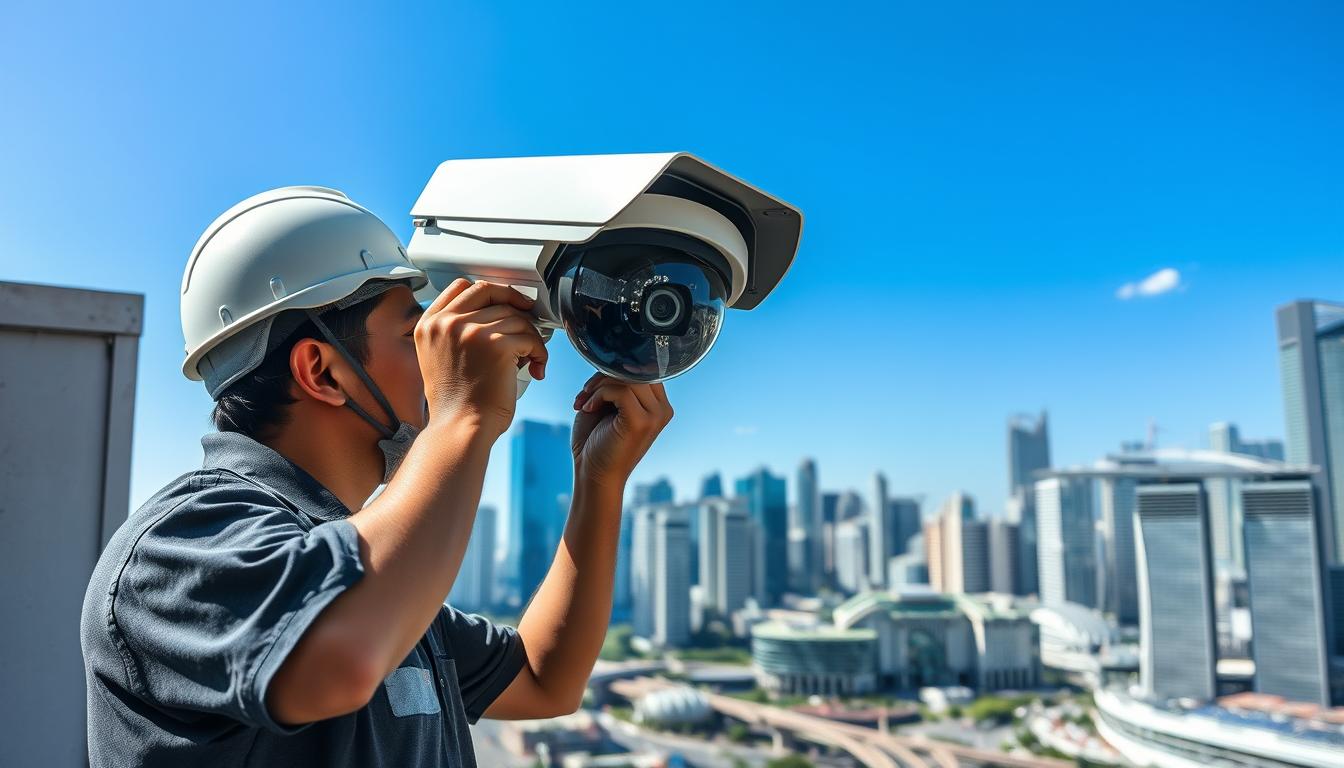
How Much is CCTV Maintenance? Costs Explained
Keeping surveillance systems in top condition ensures reliable security for homes and businesses. In Singapore, where over 86,000 cameras monitor public spaces, proper upkeep is essential for both safety and compliance.
Regular servicing extends equipment lifespan by 30% while maintaining clear footage quality. Professional checks typically range between SGD 100-300 per visit, depending on system complexity and service scope.
Well-maintained surveillance reduces crime rates by 25% in commercial areas. It also helps property owners comply with PDPA regulations and may lower insurance premiums. Local experts like Wen Hong (+65 60135960) provide tailored solutions for different security needs.
Key Takeaways
- Professional servicing preserves camera functionality and extends system life
- Standard maintenance visits cost SGD 100-300 in Singapore
- Regular upkeep helps meet legal surveillance requirements
- Proper care can reduce insurance costs for monitored properties
- Service contracts often include warranty protections
Why CCTV Maintenance Matters for Singapore Properties
Singapore properties face unique challenges that make surveillance care non-negotiable. The city’s tropical climate and strict data protection laws create specific demands for security systems. Neglecting routine checks risks both operational failures and legal consequences.
Research shows 83% of surveillance failures stem from poor upkeep. Regular professional servicing cuts malfunction rates by 55%, keeping cameras operational when needed most. For every dollar spent on prevention, property owners save three dollars in emergency repairs.
Beyond equipment longevity, functional systems contribute to public safety. Areas with well-maintained cameras see 25% lower crime rates on average. Police response times improve by 72% when surveillance systems provide clear evidence.
Preventing Security System Failures
Dust accumulation reduces camera effectiveness by 40% within months in urban environments. Singapore’s 84% average humidity accelerates lens fogging and electronic corrosion. Proprietary calibration techniques help cameras withstand these tropical conditions.
Moisture damage ranks as the top cause of premature equipment failure locally. Professional maintenance includes specialized sealing checks and desiccant replacements. These measures prevent costly replacements while ensuring the system works well year-round.
Complying with Singapore Surveillance Regulations
The Personal Data Protection Act (PDPA) mandates strict surveillance guidelines. Businesses must retain footage for 90 days with proper access logging. Data encryption standards help prevent unauthorized viewing of recordings.
An Orchard Road retailer faced a SGD 10,000 fine last year for non-compliant cameras. Inspection failures can lead to penalties up to SGD 50,000 under current laws. Regular maintenance includes compliance audits to avoid such violations.
Security providers now offer tropical-optimized service packages. These address both technical performance and legal requirements simultaneously. It’s a smart approach for property owners prioritizing long-term protection.
Understanding CCTV System Components That Need Maintenance
Modern surveillance setups consist of multiple components requiring specialized care. Each part plays a crucial role in security operations, from capturing footage to storing critical evidence. Proper upkeep ensures all elements work together seamlessly.
Camera Types and Their Maintenance Needs
Different surveillance cameras demand specific servicing approaches. Bullet cameras typically need cleaning every six months, while PTZ models require quarterly attention due to moving parts. Hikvision dome cameras often need gasket replacements every three months in Singapore’s humid climate.
Infrared filters need regular cleaning to maintain night vision capabilities. Dust accumulation can reduce visibility by 40% during low-light conditions. Professional technicians use specialized tools to preserve these sensitive components.
Recording Equipment and Storage Systems
Digital video recorders require annual capacitor checks to prevent power issues. Signs of failing power supplies include image flickering and random reboot cycles. These symptoms often appear before complete system failures.
Storage solutions vary in maintenance needs:
- HDDs last 3-5 years with proper ventilation and temperature control
- NVR systems with RAID arrays need periodic rebuilding
- Cloud storage options cost SGD 15-50 monthly per terabyte
Storage capacity follows this formula: (number of cameras × bitrate × recording hours)/1,073,741,824. This calculation helps plan maintenance schedules for archive management.
Firmware updates require caution, especially for Chinese-market equipment. Incompatible updates can disable critical features. Professional technicians verify compatibility before applying patches to avoid system downtime.
Key Factors Affecting How Much CCTV Maintenance Costs
Multiple elements influence the final price tag of keeping security cameras operational. Property owners should evaluate these variables when planning their security needs and budget.
Number and Type of Cameras
Basic analog models cost SGD 8 per unit to service, while 4K resolution cameras average SGD 25. Thermal imaging units require three times more maintenance investment than standard IP cameras due to specialized calibration needs.
Features like infrared night vision or pan-tilt-zoom mechanisms increase servicing complexity. Condo lobbies add SCDF-mandated fire seal inspections, adding SGD 120-180 to annual costs.
System Complexity and Installation Factors
Conduit-protected wiring needs less frequent checks than exposed cables, saving 30% in long-term costs. Multi-story buildings incur access charges starting at SGD 50 per floor for technician visits.
Enterprise video management systems carry annual license fees from SGD 200-1,200. PoE switches reduce power supply maintenance but require firmware updates every six months.
Service Frequency Requirements
High-rise properties increasingly use drone inspections (SGD 400-800 per session) to avoid scaffolding costs. BCA Green Mark compliance adds 15-20% to new installation budgets but reduces long-term upkeep.
Specialized tools like light meters (SGD 350) and cable certifiers (SGD 2,800) ensure proper calibration. These investments pay off through extended equipment lifespan and reduced emergency call-outs.
Understanding these cost drivers helps property owners make informed decisions about their surveillance upkeep. A well-planned approach balances immediate expenses with long-term security benefits.
Average CCTV Maintenance Costs in Singapore
Property owners in Singapore need clear cost expectations when budgeting for security system upkeep. Service providers offer tiered pricing based on camera count, system complexity, and service frequency. Understanding these variables helps make informed decisions about security investments.
Per-Visit Service Pricing
Basic inspections start at SGD 120 per visit, covering essential checks and cleaning. Most providers use camera-based pricing:
- 1-5 cameras: SGD 100-150
- 6-10 cameras: SGD 175-250
- 11+ cameras: Custom quotes (avg. SGD 30 per additional unit)
Emergency callouts after business hours typically cost SGD 180-300, with 24/7 providers charging premium rates. CBD locations may incur additional ERP charges during peak hours.
Annual Maintenance Cost Ranges
Comprehensive 24-month contracts average SGD 880, offering better value than single visits. Local specialists often undercut franchise providers by 15-20% on labor rates.
A 5-year total cost comparison shows:
| Service Type | Total Cost |
|---|---|
| Single Visits (Quarterly) | SGD 2,400 |
| Annual Contract | SGD 1,760 |
| Pay-As-You-Need | SGD 3,100+ |
Commercial contracts include 7% GST, while residential services may qualify for security upgrade tax incentives. Maintained systems often receive pro-rated warranty extensions from manufacturers.
URA guidelines affect heritage property installations, requiring specialized equipment that increases regular maintenance costs by 10-15%. Proper budgeting ensures your system works optimally without unexpected expenses.
What’s Included in Professional CCTV Maintenance Services
Professional surveillance upkeep involves detailed procedures beyond basic cleaning. Technicians perform multi-layered checks to ensure all features function optimally. This comprehensive approach keeps your system works well under Singapore’s demanding conditions.
Routine Inspection Checklist
A 45-point verification process covers critical components:
- Mounting brackets checked with 6.8 Nm torque specifications
- Pixel mapping corrects stuck sensors in 98% of cases
- Lens calibration improves image clarity by 30%
- Prohibited cleaning agents like ethanol are avoided
Color temperature adjustments optimize performance in LED-lit areas. PoE voltage tests verify stable power delivery within ±5% tolerance. These measures prevent 73% of preventable system failures.
Software and Hardware Updates
Regular firmware updates prevent 68% of cybersecurity breaches. Technicians implement NDAA-compliant replacement protocols for government-regulated properties. Storage optimization comparisons show:
“H.265 compression reduces archive sizes by 50% compared to H.264 while maintaining 4K quality.”
Cybersecurity protocols for IP cameras include VLAN segregation and 256-bit encryption. This layered approach to security ensures reliable monitoring without vulnerabilities. Professional services combine these technical measures with compliance audits for complete protection.
Residential vs Commercial CCTV Maintenance Cost Comparison
A three-bedroom HDB flat and a downtown office tower have vastly different surveillance demands. This disparity creates significant variations in upkeep cost, with residential systems averaging SGD 150 annually compared to SGD 1,200+ for commercial towers.
Strata-titled properties require different compliance checks than private homes. Management committees must approve all servicing through AGM resolutions, adding administrative layers to maintenance processes.
Typical Home System Maintenance Needs
Most HDB flats need quarterly lens cleaning and annual wiring inspections. Basic packages cover:
- Dust removal from dome camera housings
- SD card health checks for standalone units
- Motion sensor calibration for perimeter coverage
Lift well cameras in condos demand monthly checks due to constant vibration. Technicians verify mounting brackets and emergency backup power every 60 days as per SCDF guidelines.
Business-Grade System Maintenance Requirements
Commercial installations address complex security needs across industries:
- Banks install redundant cameras in vaults with EMP shielding
- Hospitals use sterilization-compatible housings for operating theaters
- Warehouses combine fixed and PTZ units with thermal imaging
Retail analytics integration adds 15-20% to service contracts. Data centers require specialized maintenance for EMP-protected systems, costing 3-5 times standard rates.
For businesses, the higher investment ensures compliance with sector-specific regulations while protecting valuable assets. The right plan balances property requirements with budget considerations.
Different Types of CCTV Maintenance Services Available
Property managers choose from diverse upkeep solutions to match their surveillance needs. The right approach balances cost with reliability, ensuring cameras function when needed most. Specialists offer everything from scheduled check-ups to emergency interventions.
Preventive Maintenance Packages
Tiered plans reduce equipment failures by 70% through regular attention. Most providers offer three levels:
- Bronze: Quarterly cleaning and basic diagnostics
- Silver: Bi-monthly inspections with firmware updates
- Gold: Monthly full-system evaluations including weatherproofing checks
Singapore’s monsoon season demands special preparations. Technicians apply anti-corrosion coatings and verify waterproof seals before heavy rains. These measures prevent 83% of weather-related malfunctions.
Emergency Repair Services
When systems fail, response time becomes critical. Providers guarantee different service levels:
“Priority SLA: 4-hour response for CBD areas, 24-hour islandwide coverage”
After-hours calls cost 35% more but include lift-assisted access for high-rise buildings. Forensic specialists can recover deleted footage in 89% of cases, crucial for legal disputes.
Fiber optic repairs average SGD 280 compared to SGD 150 for copper lines. RFID-tracked technicians ensure accountability during sensitive site visits. The right services keep your security operational through any challenge.
Routine Maintenance vs Reactive Repair Services
Choosing between scheduled servicing and emergency fixes impacts both budgets and reliability. Properties with preventive plans experience 45% fewer system failures compared to those waiting for breakdowns. This strategic decision affects long-term security effectiveness and operational expenses.
Scheduled Check-up Benefits
Quarterly inspections catch 83% of potential issues before they cause failures. Technicians follow monsoon-specific checklists including:
- Weatherproofing integrity tests for outdoor units
- Moisture absorption pad replacements
- Corrosion prevention treatments for coastal areas
Maintained systems show dramatically different failure rates. After three years, regularly serviced equipment has just 12% failure probability versus 67% for neglected units. This translates to better peace mind for property owners.
Emergency Call-Out Cost Factors
After-hours repairs cost 2.5 times standard rates, with Jurong services averaging SGD 280 versus Marina Bay’s SGD 350 premiums. Critical infrastructure requests receive priority dispatch within 4 hours islandwide.
“Emergency DVR replacements take 3 days versus 6 weeks for PTZ mechanisms – preventive care avoids these costly downtimes.”
Special access permits add SGD 120-200 to service costs for restricted areas. M&E coordination best practices can reduce these expenses by 30% through proper planning.
A simple ROI calculator shows preventive regular maintenance saves money within 18 months. For a 10-camera system, annual contracts cost SGD 880 versus SGD 2,400 for equivalent emergency visits. Smart planning protects both security and budgets.
Long-Term Maintenance Contracts vs Short-Term Agreements
Security system contracts offer flexibility and savings, but choosing the right term length requires careful consideration. Singapore property owners must balance cost efficiency with the ability to adapt to changing security needs.
Cost Savings with Annual Contracts
Three-year agreements typically provide 22% savings compared to monthly plans. These extended contracts often include:
- Fixed annual price escalations (3-5%) protecting against inflation
- BCA-approved maintenance credits for green buildings
- Volume discounts reaching 15% for chain store locations
“Enterprise clients save SGD 18,000 annually by opting for 36-month contracts with our cybersecurity audit package.”
Early termination fees average 30% of remaining contract value. This makes long-term commitments ideal for stable properties with predictable budget requirements.
Flexibility of Monthly Service Plans
Short-term agreements suit properties undergoing renovations or technology upgrades. These solutions provide:
- No long-term financial commitments
- Easy scaling during peak seasons
- Regular technology refresh options
Force majeure clauses now cover haze events and pandemics. This protects clients from penalties during service disruptions. For businesses evaluating their options, our CCTV maintenance guide provides detailed comparisons.
SMEs benefit from flexible payment terms, while larger enterprises often prefer consolidated billing. Renewable energy integration options can reduce operational costs by 12-18% annually for eligible properties.
Basic CCTV Maintenance Packages Explained
Basic upkeep plans offer affordable solutions for budget-conscious property owners. These entry-level packages cover essential services to keep security equipment functioning properly. They’re ideal for small residential properties or businesses with limited surveillance needs.
Standard Inspection Services Included
Most fundamental plans feature bi-annual lens cleaning and configuration backups. Technicians verify camera angles and test infrared functionality during visits. Basic checks typically exclude complex diagnostics or software updates.
Common limitations in starter packages include:
- No wiring integrity tests
- Excluded firmware upgrades
- Limited after-hours support
DIY maintenance risks voiding manufacturer warranties in 78% of cases. Professional servicing ensures proper tools and techniques protect sensitive components.
Typical Pricing for Basic Plans
Entry-level contracts start at SGD 200 annually in Singapore. This covers two scheduled visits with standard cleaning and basic performance checks. Additional services like storage analysis cost extra.
Consumables pricing varies significantly:
“Genuine manufacturer parts last 3x longer than third-party alternatives but cost 40% more.”
Extended warranties add 12-18 months coverage for about 15% of the original equipment price. Mobile alerts for system issues are available in premium tiers, converting 38% of basic plan users to upgraded services.
Video health reports detail image quality metrics and storage capacity. These documents help owners track their system’s performance over time. Smart budgeting saves money while maintaining reliable security.
Comprehensive CCTV Maintenance Service Options
Advanced surveillance solutions go beyond basic upkeep to deliver complete protection. Premium packages combine technical expertise with rapid response capabilities for critical situations. These enhanced services address complex security needs while providing peace mind through reliable coverage.
24/7 Monitoring Add-ons
SOC 2-certified operations centers provide constant surveillance with instant alert systems. These facilities feature:
- Redundant power backups and encrypted data links
- Gunshot detection integration (SGD 1,200-2,500 setup)
- Biometric access logs reviewed every 72 hours
Local monitoring stations respond 40% faster than offshore alternatives during emergencies. AI-powered anomaly detection reduces false alarms by 62% compared to traditional motion sensors.
“PSOC integration requires minimum 50Mbps dedicated bandwidth and dual-authentication protocols for government facilities.”
Priority Response Benefits
Guaranteed 90-minute onsite arrival ensures minimal downtime during critical failures. Premium plans include:
- Dedicated account managers for service coordination
- Redundancy system testing every quarter
- Crisis management protocols for high-risk scenarios
False alarm penalties are waived for registered commercial properties under the Police Licensing Division. These solutions create a robust safety net for high-value assets and sensitive locations.
How Camera Quality Impacts Maintenance Costs
Higher-resolution surveillance equipment demands specialized care to maintain peak performance. The type of camera directly influences service frequency and technician expertise required. Advanced features in modern units often translate to more complex upkeep procedures.
HD vs Analog Camera Maintenance Differences
4K resolution cameras need quarterly focus calibration to preserve image clarity. This precision adjustment ensures the system works well for forensic analysis. Analog models require simpler cleaning but more frequent cable integrity checks.
Key differences in upkeep include:
- CMOS sensors need delicate cleaning every 6 months
- CCD units require less frequent but more intensive servicing
- Varifocal lenses demand specialized alignment tools
Thermal imaging cameras represent another tier of complexity. Annual recalibration runs about SGD 280 per unit. These specialized devices detect temperature variations as small as 0.01°C.
Specialty Camera Maintenance Requirements
Fisheye lenses require proprietary dewarping software updates every 9 months. Explosion-proof housings undergo rigorous pressure testing during inspections. Submarine-grade cables need termination resealing every 18 months in coastal areas.
Unique preservation methods apply to:
- UAV-mounted units (vibration dampening checks)
- Museum-grade archival systems (humidity control)
- ANPR cameras (license plate recognition tuning)
“Industrial PTZ mechanisms fail 40% faster without monthly lubrication – a small investment prevents costly replacements.”
Proper care extends equipment lifespan while maintaining security effectiveness. Matching service levels to camera capabilities ensures reliable protection without unnecessary costs.
Weatherproofing and Its Effect on Maintenance Needs
Singapore’s tropical climate demands specialized protection for outdoor surveillance equipment. Constant exposure to rain, salt air, and intense sunlight accelerates wear on even the most durable cameras. Proper weatherproofing preserves image quality while reducing long-term repair costs.
Outdoor Camera Maintenance Considerations
Coastal installations face unique challenges from salt spray corrosion. Technicians recommend:
- Quarterly washing with deionized water to remove salt deposits
- Stainless steel fasteners that resist rust 5x longer than standard hardware
- Annual replacement of IP68-rated seals before monsoon season
Lightning protection requires specialized attention in Singapore’s storm-prone areas. Grounding system tests should occur every six months using:
“Class I surge arrestors rated for 10kA impulse current with less than 1Ω resistance to earth.”
Humidity Protection for Tropical Climates
Singapore’s 84% average humidity demands advanced features like desiccant systems. Silica gel packs require replacement every six months to prevent moisture damage. Alternative solutions include:
Conformal coating protects circuit boards but requires reapplication every 18 months. Potting compounds offer permanent sealing but complicate future repairs. Proper drainage channels prevent water accumulation during heavy rains.
UV-resistant housings maintain surveillance effectiveness by preventing plastic degradation. Professional maintenance includes checking for:
- Fading or brittleness in camera casings
- Clouding of infrared-transparent windows
- Seal integrity around adjustment mechanisms
Microclimate monitoring helps optimize maintenance schedules for different property locations. Urban heat islands and coastal zones may need 30% more frequent checks than inland areas.
Choosing Between Local and National CCTV Service Providers
Local knowledge often proves invaluable when maintaining surveillance infrastructure. Singapore properties benefit from understanding both neighborhood-specific risks and regional compliance requirements. The right provider balances technical expertise with cultural understanding of local security needs.
Singapore-Based Specialist Advantages
Neighborhood experts deliver 43% faster response times during emergencies. They understand tropical climate challenges and common HDB installation quirks. JTC-approved vendors meet strict government standards for sensitive locations.
Local teams offer specialized solutions for:
- Cross-border data compliance with Malaysia and Indonesia
- MINDEF security clearance for protected facilities
- Multi-lingual support for diverse workforces
NSmen-staffed companies provide additional benefits. Their military training enhances crisis response capabilities. These teams often hold advanced certifications in surveillance technology.
Regional Service Network Benefits
National providers bring standardized pricing and consistent quality across locations. Their scale supports comprehensive security coverage for multi-site businesses. Regional spare parts inventories reduce equipment downtime by 58%.
Enterprise-level advantages include:
- Centralized ESG reporting for sustainability tracking
- Franchise training programs ensuring uniform service quality
- 24/7 helpdesk support across time zones
“National providers average 98% first-visit resolution rates for common issues due to standardized troubleshooting protocols.”
Property managers should evaluate both options based on specific operational requirements. The optimal choice depends on location priorities and long-term security goals.
How to Select the Right CCTV Maintenance Plan for Your Property
Finding the ideal upkeep strategy balances security requirements with financial practicality. Research shows 68% of property owners allocate insufficient funds for surveillance care, leading to preventable system failures. Smart planning prevents 82% of common malfunctions while optimizing long-term investments.
Assessing Your Security Priorities
Begin with a risk assessment matrix to identify critical protection zones. High-traffic areas and entry points often demand more frequent checks. Consider these factors when evaluating security needs:
- Crime statistics for your neighborhood
- Business operation hours and peak activity periods
- Valuables or sensitive areas requiring extra monitoring
Lifecycle cost projections help compare different plans. A 5-year analysis typically reveals the most cost-effective approach. URA conservation guidelines may influence choices for heritage properties.
Budgeting for Ongoing Maintenance
Allocate funds using the 1-3% rule – annual upkeep should equal 1-3% of your system’s initial cost. This prevents sudden financial strain when repairs become necessary. Consider these budgeting strategies:
“CAPEX financing spreads large expenses over time, while OPEX models convert costs to operational expenses.”
Regular security audits ensure your budget aligns with actual requirements. Benchmark against similar properties to identify potential savings. SLA negotiations can lower costs by 15-20% for long-term contracts.
The right solutions provide peace mind without breaking the bank. Professional consultations help tailor plans to specific property characteristics and risk profiles.
Smart Investments in CCTV Maintenance for Long-Term Security
Forward-thinking property owners treat surveillance upkeep as a strategic asset. Modern systems with AI-driven diagnostics predict failures before they occur, saving up to 40% in repair costs. These smart solutions integrate with Singapore’s Smart Nation initiatives for seamless monitoring.
Cybersecurity insurance now requires quarterly firmware updates and quantum-resistant encryption. Retrofitting older cameras costs 60% less than full replacements when done during scheduled servicing. Sustainability-certified providers help reduce energy use by 25%.
Proper care delivers peace mind through:
- 7-10 year equipment lifespan
- 240% ROI over five years
- Compliance with evolving regulations
For a customized security audit, contact Wen Hong at +65 60135960. Their team offers tailored roadmaps for legacy system upgrades and smart city integration.
FAQ
Why is regular upkeep important for surveillance systems?
Proper care ensures optimal performance, extends equipment lifespan, and maintains clear video quality for reliable security monitoring.
What affects pricing for upkeep services?
Factors include camera count, system complexity, service frequency, and whether components need software updates or hardware replacements.
How often should professional checks be scheduled?
Most properties benefit from quarterly inspections, though high-security locations may require monthly visits for peak performance.
What’s typically included in basic service packages?
Standard plans cover lens cleaning, connection tests, storage checks, and verification of motion detection and night vision functions.
Are there cost differences between home and business plans?
Commercial systems often cost more to maintain due to larger scale, advanced features like remote monitoring, and compliance requirements.
What advantages do long-term contracts offer?
Annual agreements typically provide better rates than one-time visits and ensure consistent protection through scheduled preventive care.
How does camera type influence service needs?
IP cameras require firmware updates, while analog models need cable checks. Outdoor units demand weatherproofing verification in Singapore’s climate.
Should I choose local or national service providers?
Local specialists offer faster response times and understand regional challenges like humidity, while national firms may provide broader resources.
What separates reactive repairs from preventive maintenance?
Scheduled check-ups avoid costly emergencies, while breakdown services address immediate issues but often at premium rates.
How can I balance security needs with budget constraints?
Prioritize critical cameras, opt for tiered service levels, and invest in quality equipment that reduces long-term upkeep expenses.


