
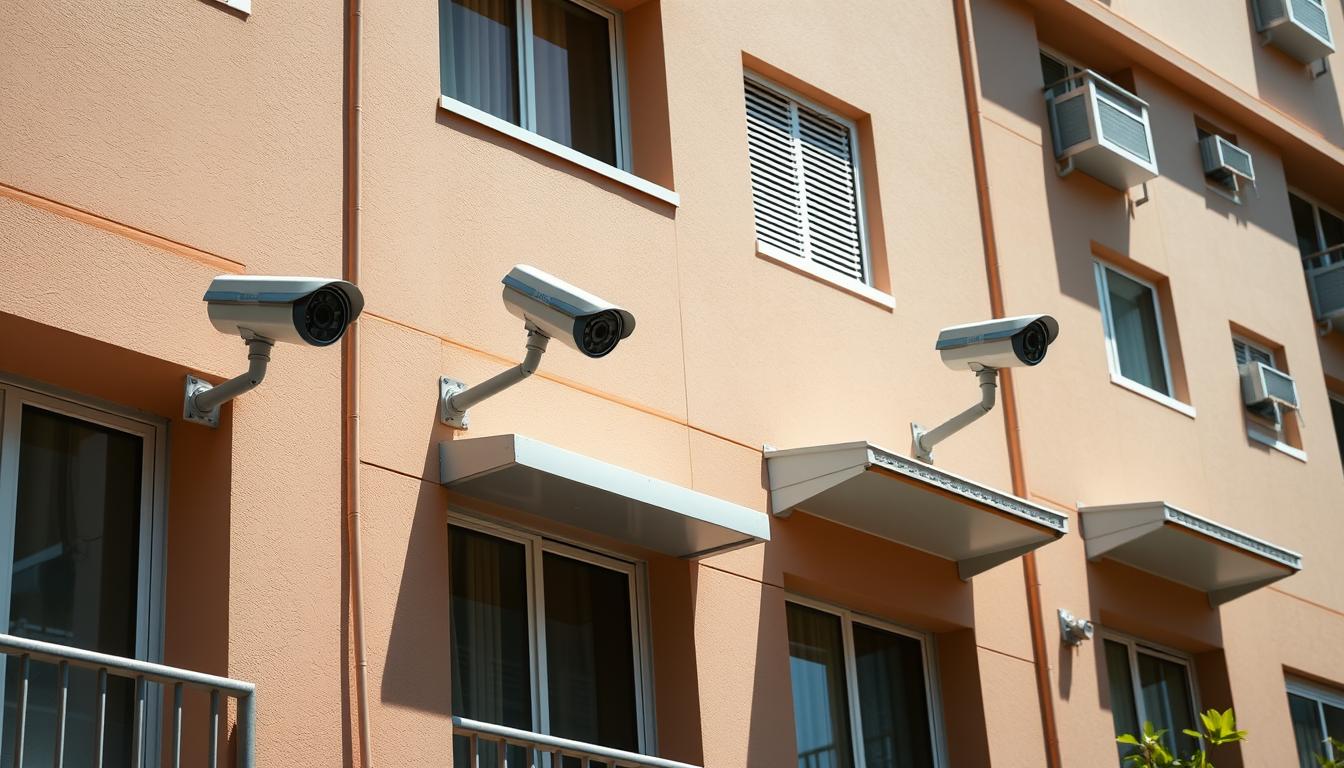
Is it illegal to install CCTV outside HDB flat? Explained
Many Singapore residents wonder about the rules for setting up surveillance devices around their homes. The regulations differ based on location and purpose, with recent updates affecting corridor-facing setups. Since May 2023, homeowners can place cameras within their unit boundaries without prior approval.
Outdoor placements require permission from Town Councils, as common areas fall under stricter guidelines. The Personal Data Protection Act (PDPA) and Community Disputes Resolution Act (CDRA) govern usage, with fines up to $5,000 for violations. Smart doorbells with recording functions follow separate exceptions.
Understanding these distinctions helps avoid disputes with neighbors while maintaining security. Temporary installations often receive six-month validity periods, requiring renewal for extended use. This guide clarifies positioning requirements and approval processes for different scenarios.
Key Takeaways
- Corridor-facing cameras don’t need approval if placed within unit limits
- Outdoor setups on common property require Town Council permission
- Violations may lead to penalties under PDPA and CDRA regulations
- Smart doorbells have different rules compared to traditional systems
- Temporary installations typically last six months before renewal
Understanding Singapore’s CCTV Laws for HDB Flats
Singapore’s housing regulations establish clear boundaries for surveillance device usage in residential areas. The Personal Data Protection Act primarily governs organizational data handling, but residential applications fall under different rules. Homeowners must consider both privacy laws and housing policies when installing security systems.
Key regulations under PDPA and CDRA
While the Personal Data Protection Act sets standards for data collection, the Community Disputes Resolution Act specifically addresses neighbor conflicts. CDRA prohibits surveillance that captures activity within a 100-meter radius of neighboring properties. This includes recording through windows or doorways of adjacent units.
Recent cases show authorities prioritize privacy protection in shared living spaces. The Ang Mo Kio Town Council allows smart doorbells but restricts their recording angles. Devices must focus solely on the owner’s property without capturing common walkways.
How HDB classifies common vs. private property
HDB estates distinguish between personal and shared spaces in their regulations. Private property includes areas within your unit’s boundaries, while common spaces encompass corridors, void decks, and lift lobbies. Any modifications to common areas require Town Council approval.
Corridor-facing installations remain controversial. Recent guidelines permit cameras if mounted within your unit’s door frame. However, devices extending beyond this boundary or altering building structures violate HDB rules. Unauthorized modifications may result in fines or mandatory removal orders.
Is It Illegal to Install CCTV Outside HDB Flat? The 2024 Rules
Recent updates to surveillance policies have clarified what homeowners can and cannot do regarding security cameras in HDB estates. The latest guidelines specify exact thresholds for lawful monitoring in shared spaces, with stricter enforcement since early this year.
When outdoor cameras require Town Council approval
Any device capturing common property areas needs written authorization from your local town council. This includes cameras mounted on exterior walls, railings, or ceilings beyond your unit’s boundary. A recent Ang Mo Kio case saw a resident fined for overlooking this rule.
The approval process now requires a police report if citing security incidents as justification. Most applications take 7-10 working days to process, with temporary permits valid for six months. Renewals demand fresh documentation showing continued need.
Penalties for unauthorized installations
Violators face escalating penalties under HDB bylaws and the PDPA. First offenses typically draw warnings, while repeat cases incur fines up to $5,000. A 2023 Bukit Batok incident resulted in maximum fines when a resident refused to remove improperly angled devices.
Prohibited locations include:
- Shared stairwells and lift lobbies
- Boundary walls between units
- Areas capturing neighbor doorways/windows
Town councils conduct quarterly inspections, requiring non-compliant setups to be removed within 14 days. Homeowners must submit removal evidence to avoid further action.
Step-by-Step Approval Process for External CCTV
Getting approval for security cameras in shared HDB spaces involves specific steps. Residents must submit documentation and adhere to temporary installation limits. Following the correct workflow prevents penalties and ensures compliance.
Filing a police report for incident justification
If citing security concerns, a police report copy is mandatory. This validates your request to install cctv cameras in common areas. Reports should detail incidents like theft or vandalism within the past six months.
“Jurong Town Council processes requests 14 days faster when applicants attach incident reports.”
Submitting requests to your Town Council
Email your local town council with:
- Completed application form
- Installation blueprint showing camera angles
- Police report (if applicable)
Technical specifications must include resolution limits and storage methods. Most councils reply within 10 working days.
Temporary installation limits (6-month validity)
Approved setups expire after six months. Renewals require updated incident logs or risk assessments. Rejected applications can be appealed with additional evidence within 14 days.
Variations exist between councils—Ang Mo Kio mandates in-person submissions, while Jurong accepts digital copies. Always confirm post-approval installation deadlines to avoid lapses.
Indoor vs. Outdoor CCTV: What’s Allowed Without Permits
Security-conscious HDB residents often ask about permitted surveillance options for their living spaces. The distinction between indoor and outdoor setups determines whether you need official approval.
Corridor-facing cameras within your unit
Placing cameras inside home boundaries follows different rules than external installations. Devices mounted within your door frame can monitor corridors if they don’t extend beyond your unit’s perimeter.
Night vision capabilities must use infrared illumination below 850nm wavelength to prevent disturbing neighbors. The Housing Board recommends 256GB microSD cards for continuous recording without capturing excessive common area footage.
Smart doorbells and peephole cameras: Special exceptions
Video doorbells enjoy relaxed regulations compared to full surveillance systems. The Xiaomi Smart Doorbell received explicit approval for HDB door installations after meeting specific criteria.
“Approved smart doorbells must have a 160° horizontal field of view maximum and automatic motion zone cropping.”
Peephole cameras offer a discreet alternative, with brands like Ring and Arlo providing HDB-compliant models. These devices must disable audio recording by default to comply with privacy laws.
When choosing security solutions for your hdb flat, consider these approved options:
- Wall-mounted cameras with adjustable angles (maximum 110° tilt)
- Magnetic brackets for easy repositioning
- Systems with local storage instead of cloud backups
- Devices featuring timestamp overlays on recordings
Proper placement of cameras inside home spaces ensures compliance while maintaining effective monitoring. Always test camera angles from your neighbor’s perspective to verify they don’t capture private areas.
Choosing Between Wired and Wireless CCTV Systems
Homeowners face critical decisions when picking security systems that balance functionality with housing guidelines. Modern cctv systems offer distinct advantages depending on property layout and monitoring needs.
Installation requirements for compliant setups
Wired configurations demand licensed electricians for permanent fixture installations. HDB regulations specify conduit routing rules to prevent structural damage during installation. Wireless alternatives simplify setup but require monthly battery replacements for optimal performance.
The TP-Link Tapo C210 demonstrates hybrid capabilities with its magnetic mounting bracket. This model meets HDB drilling restrictions while offering 360° rotation for precise coverage adjustment.
Stability and privacy trade-offs
Hardwired systems provide uninterrupted operation but lack repositioning flexibility. Wi-Fi dependent cameras risk signal drops during network outages, potentially creating security gaps. Encryption standards like WPA3 help protect wireless feeds from unauthorized access.
Vandalism resistance varies significantly between models. Metal-housed wired cameras withstand tampering better than plastic wireless units. Local storage solutions often comply better with PDPA than cloud-based alternatives that transfer data overseas.
Cost comparisons reveal long-term savings for wired systems despite higher upfront expenses. Wireless options suit temporary monitoring needs but incur recurring battery and maintenance costs over time.
Ethical Camera Placement to Avoid Neighbor Disputes
Ethical surveillance practices prevent conflicts in shared housing environments. Strategic adjustments ensure devices monitor only intended areas without infringing on others’ privacy. The Community Disputes Resolution Act (CDRA) reported 120 mediation cases in 2023, many involving improperly angled devices.
Angles to Avoid for Compliance
Cameras must never capture neighbor doors or windows. Prohibited fields of view include:
- Adjacent unit entrances (beyond 45° side angles)
- Interior spaces visible through glass panels
- Common corridors beyond your doorstep
HDB-approved models like the Homesmart.sg A22 feature fisheye correction to minimize peripheral coverage. Digital masking tools further restrict recording zones.
Optimizing Mounting Solutions
Adjustable brackets (15–45° tilt) focus lenses inward. For corridor-facing setups:
“Brackets should position cameras downward, covering only your door’s immediate vicinity.” — Jurong Town Council Guidelines
Privacy filters reduce light pollution, while motion zones exclude high-traffic areas. If disputes arise, de-escalation scripts help address concerns about theft prevention respectfully.
Technical Features to Comply with Singaporean Laws
Singaporean surveillance regulations mandate specific technical standards for residential security systems. Proper configuration ensures footage meets evidentiary requirements while respecting privacy laws. These specifications cover timestamp accuracy, data handling, and secure storage protocols.
Timestamping Requirements for Legal Evidence
Valid security recording must display accurate timestamps synchronized with Singapore Standard Time. The Personal Data Protection Commission requires:
- Minimum timestamp precision of ±30 seconds
- Date and time display in 24-hour format
- Non-editable metadata for evidentiary purposes
Systems like the Hikvision DS-2CD2043G0-I include built-in atomic clock synchronization. This meets legal standards for incident documentation.
Storage Solutions: Local vs Cloud Under PDPA
Singapore’s data protection laws impose strict rules on storage methods. Local solutions using encrypted SSDs provide:
- Faster access to recent footage
- Better compliance with 21-day retention rules
- Lower risk of unauthorized access
“Cloud storage must use PDPC-approved providers with AES-256 encryption and Singapore-based servers.” — PDPA Advisory Guidelines
Hybrid systems offer balanced solutions, with local buffering and cloud backup for critical events. Always verify your provider holds a valid Data Protection Trustmark certification.
Multi-factor authentication remains mandatory for accessing stored data, whether locally or remotely. Emergency access protocols should include audit trails documenting all viewing activity.
How Condominium and Landed Property Rules Differ
Condominium and landed property owners navigate different security camera regulations than HDB residents. Management corporations enforce stricter regulations for shared spaces, while private homeowners enjoy more installation freedom. This distinction stems from Singapore’s stratified approach to residential surveillance governance.
MCST bylaws for private residences
Condominium residents must obtain Management Corporation Strata Title (MCST) approval before modifying common property. The average processing time spans 28 days, requiring:
- Architectural committee review of mounting plans
- Proof of liability insurance coverage
- Neighbor consent forms for shared wall installations
“MCSTs typically restrict cameras to designated mounting zones and prohibit pan-tilt-zoom functions in communal areas.” — Strata Living Guidelines 2024
Perimeter lighting must coordinate with existing fixtures to prevent light pollution. Some developments limit camera quantities based on unit square footage, with Good Class Bungalows imposing the strictest standards.
Unrestricted installations in landed properties
Landed homeowners face minimal restrictions within their property boundaries. The 2022 Sentosa Cove case established precedent for comprehensive security systems, provided:
- Cameras maintain 1.5m setbacks from boundary walls
- Infrared illumination doesn’t exceed 10 lux at neighboring properties
- Drones aren’t used for routine surveillance
This example demonstrates how private land ownership alters the regulatory equation. Homeowners should still consult town planners when installing more than eight exterior cameras.
Strata committees recommend pre-application consultations to clarify unique development rules. Unlike HDB flats, most landed properties allow concealed wiring through exterior conduits without special permits.
Handling Footage Requests and Privacy Complaints
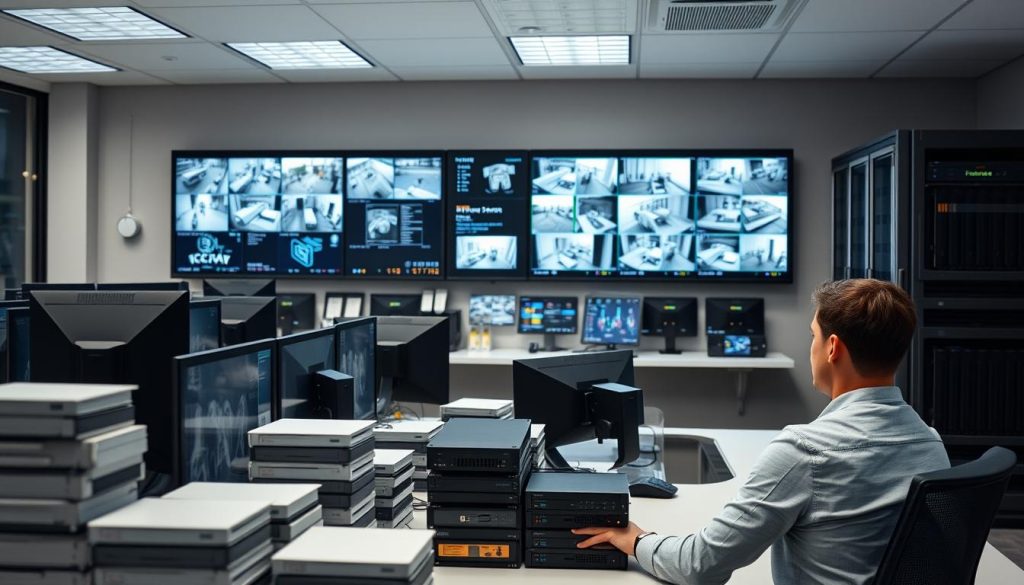
Managing surveillance recordings responsibly prevents legal complications in Singapore’s shared housing environments. Residents must balance security needs with legal obligations when neighbors request access to footage. The Personal Data Protection Act grants individuals rights to their recorded images, creating complex scenarios in communal living spaces.
Neighbor rights under the Community Disputes Resolution Act
The CDRA empowers residents to request footage capturing their property or person. Formal complaints trigger a 30-day response window, with potential compensation up to $20,000 for violations. A 2022 MCST case demonstrated consequences when unredacted footage leaked during a strata dispute.
Proper response procedures involve:
- Acknowledging requests within 3 working days
- Verifying the requester’s legitimate interest
- Documenting all correspondence for tribunal evidence
“Mediation centers report 68% of footage disputes resolve during mandatory cooling-off periods before reaching tribunals.” — Community Justice Centre Report
Redacting third-party data before sharing
Singapore law requires blurring unrelated individuals and private spaces in shared footage. Free tools like OpenShot provide basic masking, while DaVinci Resolve offers advanced AI redaction for evidentiary-quality outputs.
Essential redaction steps include:
- Exporting original footage without compression
- Applying Gaussian blur to non-relevant areas
- Adding timestamp watermarks for authenticity
Exemptions exist for police investigations or imminent safety threats. Always consult the PDPC Advisory Guidelines before disclosing any recordings. Template response letters help maintain professionalism while protecting your rights.
Small claims tribunals handle most neighborhood disputes, with simplified processes for footage-related cases. Preserve original files on write-protected storage until resolution. The 2023 amendments clarified that properly redacted footage carries equal evidentiary weight in these proceedings.
Implementing Your HDB-Compliant CCTV System
Setting up a proper surveillance system requires careful planning and adherence to regulations. Techcom Engineering offers specialized packages that meet all HDB guidelines, including professional mounting and angle calibration.
After setup, schedule a post-installation inspection with your Town Council. This verifies camera positions and recording ranges comply with local laws. Most licensed installers provide 24-month warranties covering equipment malfunctions.
Follow these maintenance best practices:
- Clean lenses monthly to ensure clear footage
- Test motion sensors during daylight hours
- Update firmware every quarter for security patches
Notify neighbors about your security system as a courtesy. Keep installation records and approval documents for potential audits. Weatherproof housings protect devices from Singapore’s tropical climate.
Energy-efficient models reduce power consumption while maintaining 24/7 monitoring. Consult the PSA directory for certified professionals when upgrading systems.
FAQ
Do I need approval to mount cameras outside my HDB flat?
Yes, outdoor surveillance devices require Town Council permission under Singapore’s Community Disputes Resolution Act (CDRA). Unauthorized setups risk fines up to ,000.
Can I record common corridors with indoor cameras?
Corridor-facing devices inside your unit are allowed without permits, but must avoid capturing neighbor doors or windows to prevent privacy violations.
How long does temporary CCTV approval last?
Town Councils typically grant six-month permits for incident-related surveillance, requiring police reports for extensions beyond this period.
Are wireless systems better for HDB compliance?
Wireless cameras simplify installation but require secure data encryption under the Personal Data Protection Act (PDPA) to prevent unauthorized access.
What footage details are legally required?
Timestamps and clear visual identifiers strengthen evidence validity. Avoid audio recording unless justified for security investigations.
Can neighbors request deletion of recorded footage?
Yes, under PDPA rules if their personal data appears unnecessarily. Redact unrelated individuals before sharing clips with authorities.
Do smart doorbells follow the same regulations?
Motion-activated doorbells face stricter scrutiny. Position them to monitor only your doorstep area without sweeping corridor views.
How do landed property rules differ from HDB flats?
Private residences have no common area restrictions. Owners must still comply with PDPA when cameras capture public spaces or adjacent properties.


