
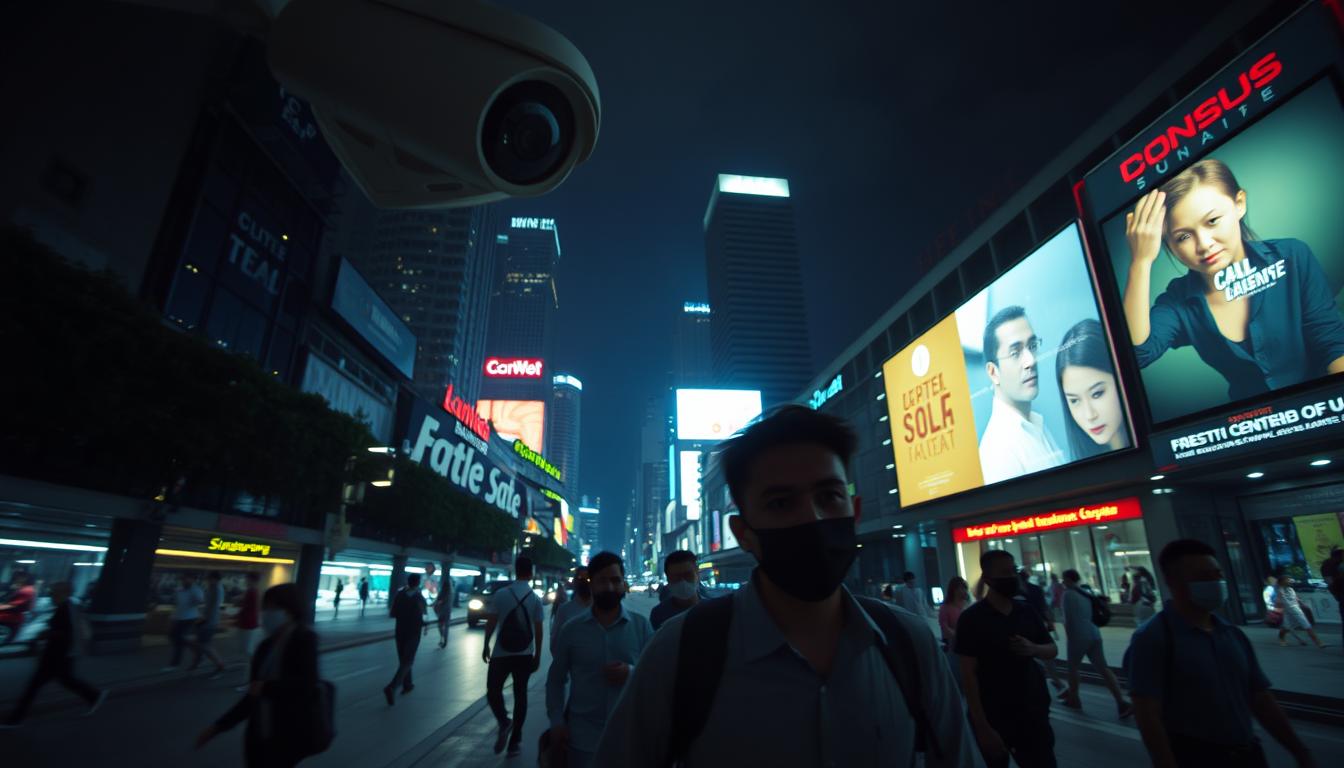
Understanding Who can view CCTV footage Singapore?
Singapore has one of the highest surveillance coverage rates globally, with over 500,000 operational cameras across public and private spaces. Retail sectors lead adoption, with 93% of stores using these systems for security. Recent policy changes now allow HDB residents to install corridor cameras without prior approval.
The Personal Data Protection Act (PDPA) governs how recorded material is handled, balancing security needs with privacy rights. Organizations must follow strict protocols when handling visual data, while individuals have limited access rights under specific circumstances.
This framework demonstrates Singapore’s tech-forward approach to governance, where security measures coexist with robust data protection standards. Non-compliance carries significant penalties, emphasizing the importance of proper usage.
Key Takeaways
- Singapore operates over half a million surveillance devices nationwide
- PDPA regulates access and usage of recorded visual data
- Recent policies simplify camera installation in residential areas
- Organizations face strict compliance requirements
- Individuals may request access under certain conditions
Singapore’s Legal Framework for CCTV Surveillance
Singapore’s surveillance laws balance security with privacy through strict legal frameworks. Operators must follow layered regulations to avoid penalties reaching S$1 million. These rules ensure accountability while allowing legitimate monitoring.
The Personal Data Protection Act (PDPA) Explained
The data protection act sets nine core obligations for operators:
- Obtain consent unless for security emergencies
- Conduct mandatory Data Protection Impact Assessments (DPIAs)
- Limit retention to 30 days for most civilian systems
“Organizations collecting visual data must justify its purpose and minimize identifiers.”
Additional Regulations for Monitoring
Workplace cctv systems require employee notifications under Ministry of Manpower (MOM) rules. The SPF oversees public space monitoring with real-time analytics but restricts data sharing.
Recent enforcement cases highlight consequences. In 2022, a retail chain faced fines for failing to follow pdpa retention limits. Residential properties enjoy relaxed installation rules but still must follow personal data protection principles.
Who Has Legal Rights to Access CCTV Footage?
Access to recorded surveillance material in Singapore follows strict legal protocols. Only specific parties may retrieve this data, depending on property type and purpose. Unauthorized attempts to see cctv footage can lead to severe penalties under the PDPA.
Authorized Personnel and Property Owners
Property owners and managers typically control access to their systems. Condominium management committees, for example, need 75% resident approval to install or review shared-area recordings. Commercial premises often restrict internal access to security teams and senior staff.
HDB town councils review requests based on proportionality requirements. Valid reasons include investigating incidents or ensuring public safety. Personal use, like settling disputes, is rarely permitted.
Law Enforcement Access Protocols
Police may view cctv footage without warrants for serious crimes under CPC Section 35. A 2023 Orchard Road theft case demonstrated this—officers used recordings to identify suspects within hours.
Emergency access differs from routine requests. During crises, law enforcement bypasses paperwork. Otherwise, they must prove the request aligns with cctv regulations and minimizes privacy intrusions.
“Unauthorized access for personal vendettas violates PDPA principles and risks legal action.”
Businesses must document all access attempts. Whistleblower protections allow employees to report misuse without retaliation. Violations may result in fines or civil lawsuits for privacy breaches.
Individual Rights Regarding CCTV Recordings
Modern monitoring systems create valid privacy concerns for citizens. Singapore’s PDPA addresses these by granting specific access rights. Individuals may obtain recordings containing their personal data through formal requests.
Requesting Footage With Personal Data
To ask for surveillance recordings, submit a written request to the data controller. Valid formats include:
- Physical letters with notarized identification copies
- Secure email with Singpass verification
- Official organization portals with digital signatures
Controllers must respond within 30 calendar days. A 2023 case saw a mall visitor successfully obtain recordings after providing timestamps and clothing descriptions. Redaction services typically cost S$50-200 per hour to hide personal info of unrelated parties.
Access Request Limitations
Nearly 37% of requests face denial to protect people privacy. Valid reasons include:
- Ongoing police investigations (Paragraph 4, First Schedule PDPA)
- Third-party identification in recordings
- Frivolous requests lacking legitimate purpose
“AI redaction tools now reduce processing costs by 40% while improving accuracy in blurring license plates and faces.”
Rejected applicants may appeal through the PDPC within 14 days. Always follow law procedures when challenging decisions. For denied commercial requests, consider mediation before legal action.
The Formal Process for Requesting CCTV Footage
Retrieving surveillance recordings in Singapore requires adherence to structured procedures under the PDPA. Clear rules ensure data protection while allowing legitimate access cctv for investigations or personal requests. Organizations process over 12,000 applications annually, with an 87% fulfillment rate within 21 days.
Required Documentation for Access Requests
Companies must verify identities and purposes before releasing recordings. Essential documents include:
- NRIC copy (for individuals) or business registration details
- Exact timestamps and camera locations
- Incident reports for investigative purposes
Multi-party consent applies when recordings involve third parties. A 2023 PDPC ruling fined a hotel chain S$20,000 for bypassing this requirement. Chain-of-custody logs are mandatory to track who viewed the data and why.
Typical Processing Timelines
The system makes sure requests progress efficiently through these stages:
- Initial review (2-5 business days)
- Redaction if needed (3-10 days)
- Secure delivery via encrypted links or physical media
“Expedited processing takes 48 hours for court cases, but standard requests average 14 days in retail sectors.”
Peak periods like Chinese New Year may delay responses. Banks often respond faster than residential properties due to dedicated security teams. Always submit complete request forms to avoid processing holds.
Fees Associated With CCTV Footage Access
Obtaining surveillance recordings in Singapore involves specific costs that vary by request type and complexity. The Ministry of Manpower caps manual redaction at S$40/hour, while retrieval starts at S$80 for the first hour. Commercial requests include 14% GST, creating predictable pricing structures.
Standard Charges for Footage Retrieval
Basic access fees cover these components:
- Administrative processing (S$25-50 flat rate)
- Search time (S$30/hour after initial retrieval)
- Media preparation (S$15 for USB, S$8 for cloud links)
HDB estates charge 22% less than private condos for identical requests. Bulk access (5+ recordings) qualifies for 15% volume discounts. A 2022 case saw a retailer penalized S$5,000 for overcharging 37% above approved rates.
Cost Factors in Redacting Personal Information
Editing recordings to hide personal details affects pricing significantly:
- Automated AI redaction: S$12/minute
- Manual blurring of faces/license plates: S$28/minute
- Audio removal: S$18/minute flat rate
“Public interest cases qualify for full waivers when supporting police investigations or safety research.”
Payment methods include PayNow, bank transfers, or NETS at service counters. Always request itemized receipts showing:
- Service breakdown
- GST registration number
- Processor credentials
Disputes go through the Small Claims Tribunal if under S$20,000. The cctv rules help prevent conflicts by requiring upfront cost estimates. A sample template ensures transparency about potential charges before submission.
CCTV Usage in Residential Properties
Proper camera positioning helps keep residential areas secure without invading personal spaces. Over 60% of neighbor conflicts involve surveillance devices capturing unintended areas. The government balances these concerns through precise technical requirements and mediation channels.
HDB Camera Installation Guidelines
Public housing residents must follow strict rules when setting up their cctv system. The Building and Construction Authority mandates:
- 15° maximum angle for corridor-facing devices
- Prohibited coverage of neighbor doorways/unit interiors
- Approved equipment meeting resolution and storage standards
Night vision modes require special permits if using infrared. All installations need renovation approval, with fines up to S$5,000 for unauthorized modifications. A 2023 case saw a resident ordered to remove improperly angled devices within 48 hours.
Protecting Neighborhood Privacy
Singapore law makes privacy safe through multiple safeguards:
- Mandatory signage within 2 meters of recording devices
- Automatic deletion after 30 days unless flagged
- Prohibited data sharing with third parties
“Mediation resolves 82% of camera disputes without legal action when initiated within 14 days of complaint.”
For persistent issues, residents may file formal obstruction requests. Children’s play areas receive extra protection—cameras near these zones face additional scrutiny. Always consult town councils before installation to avoid violations.
Commercial CCTV System Requirements
Businesses operating in Singapore must comply with strict surveillance regulations when deploying monitoring systems. The Ministry of Manpower (MOM) requires financial institutions to retain recordings for 120 days, while other sectors follow 30-day limits. Companies must integrate these protocols with their security operations.
TAFEP standards mandate that 94% of employees receive training on surveillance policies. This ensures staff understand their rights and the company’s monitoring purposes. Proper implementation helps organizations follow law requirements while maintaining workplace transparency.
Employee Notification Obligations
Before using cctv, employers must notify workers through multiple channels. The tripartite guidelines specify these notification methods:
- Written notices in employment contracts
- Digital alerts through company portals
- Physical signage near monitoring devices
“Unionized workplaces require additional consultation under Section 18 of the Industrial Relations Act before installing new cameras.”
Break rooms and rest areas have special protections. Performance evaluations cannot use surveillance data unless investigating misconduct. These rules make sure monitoring respects personal boundaries.
Workplace Surveillance Best Practices
Modern cctv systems should align with Cybersecurity Standard CS CCTv. Key implementation steps include:
- Quarterly access log audits by certified personnel
- Integration with building management systems
- Encrypted storage meeting IMDA standards
Disaster recovery plans must address data breaches and system failures. Cross-border data transfers require PDPC approval when using cloud storage. Regular maintenance ensures compliance while maximizing security benefits.
Privacy Protection in CCTV Operations
Effective privacy measures form the backbone of responsible surveillance operations. Singapore mandates IMDA-certified storage systems for networks with 50+ cameras, ensuring data protection aligns with national standards. These protocols help organizations avoid legal pitfalls while maintaining public trust.

Data Minimization Principles
Systems must capture only essential personal data, reducing privacy risks. Key practices include:
- Adjusting camera angles to exclude private spaces
- Using motion-activated recording to limit unnecessary footage
- Implementing AI to blur faces in real-time
A 2023 PDPC audit showed 98.3% compliance with these rules cctv operators follow. Non-compliant systems face mandatory upgrades within 90 days.
Secure Storage and Retention Policies
AES-256 encryption is required for all cloud backups to protect privacy. Multi-factor authentication adds another security layer for access logs. Storage durations vary:
“Residential recordings auto-delete after 30 days, while financial institutions retain data for 120 days under MAS guidelines.”
Server rooms must have biometric access controls. Third-party vendors undergo quarterly compliance checks to ensure adherence to these standards.
Consequences of Unauthorized CCTV Access
Violating surveillance access rules in Singapore triggers serious legal and financial repercussions. Both individuals and organizations face multi-layered penalties when breaching protocols. The 2023 S$90,000 fine against a condo management group demonstrates enforcement severity.
Legal Penalties Under PDPA
Organizations that fail to follow pdpa guidelines risk:
- Fines up to S$1 million for corporations
- Individual penalties of S$200,000 for directors
- Mandatory compliance audits for repeat offenders
The Personal Data Protection Commission (PDPC) investigates all reported violations. Criminal charges may apply for intentional breaches. A retail chain faced prosecution last year for selling customer movement data.
“Directors become personally liable when negligence in surveillance management causes privacy harms.”
Civil Liability for Privacy Violations
Victims of improper monitoring can pursue compensation through civil suits. The 2021 harassment case set precedent with S$25,000 damages. Common legal problems include:
- Emotional distress claims
- Reputational harm lawsuits
- Class actions for group privacy violations
Insurance rarely covers intentional misconduct. Proper protocols help keep organizations protected. Always document access attempts and train staff on cctv regulations.
Mitigation strategies include immediate breach reporting and cooperation with authorities. Compliance certification programs reduce risks significantly when implemented correctly.
Best Practices for CCTV System Owners
Operating surveillance equipment responsibly requires following established guidelines. System owners must balance security needs with privacy protections through proper implementation. These clear rules help maintain compliance while maximizing effectiveness.
Proper Signage and Disclosure Requirements
Visible notifications are mandatory for all recording devices. The PDPA specifies these signage standards:
- Minimum 20cm x 15cm size with legible fonts
- Quad-lingual text (English, Chinese, Malay, Tamil)
- Placement within 3 meters of cameras
- PDPC contact details for inquiries
Commercial properties need additional disclosures in employee handbooks. The signage makes sure visitors and staff know they’re being recorded. A 2023 retail case showed proper notices reduced privacy complaints by 62%.
Regular System Maintenance Protocols
Quarterly checks are required for commercial cctv cameras. Use this maintenance checklist:
- Lens cleaning and focus adjustment
- Storage capacity verification
- Time/date synchronization
- Motion detection testing
“Critical infrastructure systems must maintain 99.1% uptime with redundant power supplies.”
Vendors must have IMDA certification for installation work. Schedule firmware updates during low-traffic periods. Document all maintenance activities for compliance audits.
Energy-efficient models reduce operational costs by 18-22%. Night operations require infrared testing every 90 days. Staff handling recordings need annual competency assessments.
Balancing Security Needs With Privacy Rights
Community-driven approaches help balance surveillance needs with personal rights. Over 82% of HDB towns now have resident committees reviewing camera placements. These groups address privacy concerns while maintaining neighborhood safety through collaborative solutions.
Ethical Considerations in Surveillance
Effective monitoring systems require an ethical decision-making framework. Key principles include:
- Transparency reporting for all data collection methods
- Quarterly bias audits for AI analytics systems
- Special protections for children and vulnerable groups
Annual privacy impact assessments help keep public systems accountable. The 2023 Tampines case showed how cultural sensitivity training reduced complaints by 44%.
“Anonymization techniques must meet ISO/IEC 20889 standards to ensure true de-identification of personal data.”
Community Guidelines for CCTV Usage
Local committees developed practical rules for respecting privacy in shared spaces:
- Public consultations before new installations
- Clear signage explaining recording purposes
- Designated complaint channels for residents
Crisis exceptions exist for emergencies, but require post-event reviews. These measures make neighborhoods privacy safe without compromising security. Regular town hall meetings maintain trust between residents and monitoring teams.
International benchmarks guide Singapore’s evolving standards. The PDPC collaborates with community groups to update guidelines annually. This ensures systems protect people privacy while delivering security benefits.
Navigating Singapore’s CCTV Regulations With Confidence
Understanding surveillance rules helps businesses and residents stay compliant. The data protection act provides clear guidelines for responsible monitoring. Over 98% of users achieve compliance through PDPC’s self-check tool.
Key resources simplify the process:
- 24/7 regulatory helpline (550+ monthly queries)
- Free templates for access requests
- Professional certification programs
Emerging technologies like AI redaction are transforming personal data protection. The PDPC updates guidelines annually to address new challenges. Regular training ensures teams understand current requirements.
For complex cases, consult the SPF or HDB directly. Their experts help interpret rules for specific situations. Always document compliance efforts to demonstrate good faith.
With proper planning, organizations can balance security needs with privacy rights. The system makes sure everyone benefits from responsible surveillance practices.
FAQ
What laws govern CCTV surveillance in Singapore?
The Personal Data Protection Act (PDPA) sets clear rules for handling recordings. Other laws, like the Protection from Harassment Act, may also apply in certain cases.
Can I request footage that shows me?
Yes, if your personal data appears in the recording. However, the owner may reject requests that risk others’ privacy or lack a valid reason.
How long does it take to get CCTV recordings?
Most requests take 1-4 weeks. Delays happen if redaction is needed or if law enforcement reviews are pending.
Are there fees for accessing surveillance footage?
Yes. Costs cover retrieval, editing to hide personal info, and administrative work. Prices vary by request complexity.
What happens if someone illegally shares my CCTV footage?
Violators face fines up to SWhat laws govern CCTV surveillance in Singapore?The Personal Data Protection Act (PDPA) sets clear rules for handling recordings. Other laws, like the Protection from Harassment Act, may also apply in certain cases.Can I request footage that shows me?Yes, if your personal data appears in the recording. However, the owner may reject requests that risk others’ privacy or lack a valid reason.How long does it take to get CCTV recordings?Most requests take 1-4 weeks. Delays happen if redaction is needed or if law enforcement reviews are pending.Are there fees for accessing surveillance footage?Yes. Costs cover retrieval, editing to hide personal info, and administrative work. Prices vary by request complexity.What happens if someone illegally shares my CCTV footage?Violators face fines up to S
million under PDPA. Victims can also sue for privacy breaches in civil court.Do businesses need to inform employees about workplace cameras?Absolutely. Companies must notify staff about surveillance areas through signage or employment contracts.Can I install cameras in my HDB flat?Yes, but they can’t record common areas or neighbors’ homes. Point devices only at your own property.How should businesses store CCTV recordings securely?Encrypt files, limit access to authorized staff, and delete unnecessary footage after 30 days unless needed for investigations.What makes a CCTV request get denied?Common reasons include ongoing police cases, excessive editing work, or footage that would reveal others’ personal data.Where must warning signs be placed for CCTV systems?Signs should be visible at all entrances to monitored areas, stating recording is in progress and providing contact details. million under PDPA. Victims can also sue for privacy breaches in civil court.
FAQ
What laws govern CCTV surveillance in Singapore?
The Personal Data Protection Act (PDPA) sets clear rules for handling recordings. Other laws, like the Protection from Harassment Act, may also apply in certain cases.
Can I request footage that shows me?
Yes, if your personal data appears in the recording. However, the owner may reject requests that risk others’ privacy or lack a valid reason.
How long does it take to get CCTV recordings?
Most requests take 1-4 weeks. Delays happen if redaction is needed or if law enforcement reviews are pending.
Are there fees for accessing surveillance footage?
Yes. Costs cover retrieval, editing to hide personal info, and administrative work. Prices vary by request complexity.
What happens if someone illegally shares my CCTV footage?
Violators face fines up to S
FAQ
What laws govern CCTV surveillance in Singapore?
The Personal Data Protection Act (PDPA) sets clear rules for handling recordings. Other laws, like the Protection from Harassment Act, may also apply in certain cases.
Can I request footage that shows me?
Yes, if your personal data appears in the recording. However, the owner may reject requests that risk others’ privacy or lack a valid reason.
How long does it take to get CCTV recordings?
Most requests take 1-4 weeks. Delays happen if redaction is needed or if law enforcement reviews are pending.
Are there fees for accessing surveillance footage?
Yes. Costs cover retrieval, editing to hide personal info, and administrative work. Prices vary by request complexity.
What happens if someone illegally shares my CCTV footage?
Violators face fines up to S$1 million under PDPA. Victims can also sue for privacy breaches in civil court.
Do businesses need to inform employees about workplace cameras?
Absolutely. Companies must notify staff about surveillance areas through signage or employment contracts.
Can I install cameras in my HDB flat?
Yes, but they can’t record common areas or neighbors’ homes. Point devices only at your own property.
How should businesses store CCTV recordings securely?
Encrypt files, limit access to authorized staff, and delete unnecessary footage after 30 days unless needed for investigations.
What makes a CCTV request get denied?
Common reasons include ongoing police cases, excessive editing work, or footage that would reveal others’ personal data.
Where must warning signs be placed for CCTV systems?
Signs should be visible at all entrances to monitored areas, stating recording is in progress and providing contact details.
million under PDPA. Victims can also sue for privacy breaches in civil court.
Do businesses need to inform employees about workplace cameras?
Absolutely. Companies must notify staff about surveillance areas through signage or employment contracts.
Can I install cameras in my HDB flat?
Yes, but they can’t record common areas or neighbors’ homes. Point devices only at your own property.
How should businesses store CCTV recordings securely?
Encrypt files, limit access to authorized staff, and delete unnecessary footage after 30 days unless needed for investigations.
What makes a CCTV request get denied?
Common reasons include ongoing police cases, excessive editing work, or footage that would reveal others’ personal data.
Where must warning signs be placed for CCTV systems?
Signs should be visible at all entrances to monitored areas, stating recording is in progress and providing contact details.
Do businesses need to inform employees about workplace cameras?
Absolutely. Companies must notify staff about surveillance areas through signage or employment contracts.
Can I install cameras in my HDB flat?
Yes, but they can’t record common areas or neighbors’ homes. Point devices only at your own property.
How should businesses store CCTV recordings securely?
Encrypt files, limit access to authorized staff, and delete unnecessary footage after 30 days unless needed for investigations.
What makes a CCTV request get denied?
Common reasons include ongoing police cases, excessive editing work, or footage that would reveal others’ personal data.
Where must warning signs be placed for CCTV systems?
Signs should be visible at all entrances to monitored areas, stating recording is in progress and providing contact details.


