
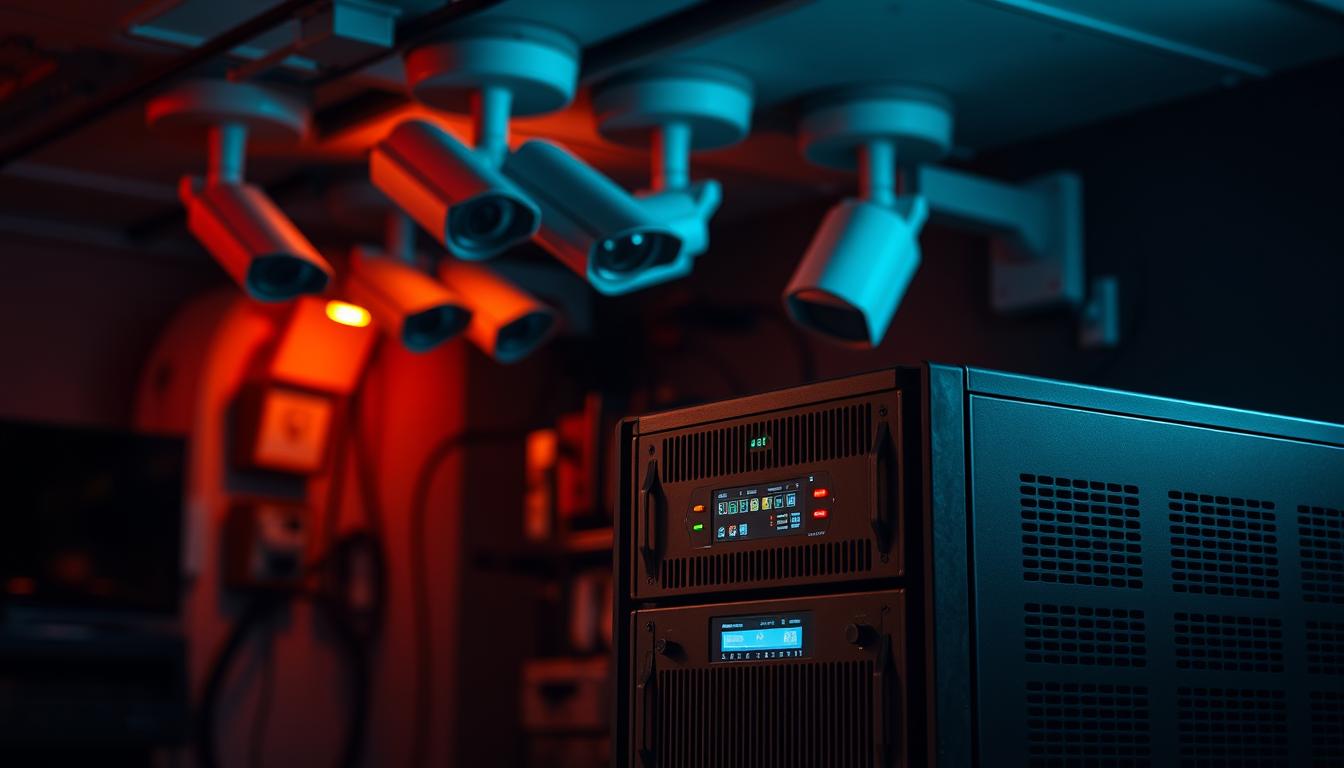
Does CCTV Record When There Is No Electricity? Explained
Security systems play a crucial role in protecting homes and businesses, especially in Singapore, where theft cases rose by 25% in 2023. A common concern is whether surveillance cameras continue working during power outages. Most standard setups stop functioning without electricity unless they have backup solutions.
Advanced setups, like AI-enabled cameras and PoE (Power over Ethernet) devices, often include battery backups or alternative power sources. On average, IP cameras can last 24 to 48 hours on battery power. For businesses, compliance with local regulations ensures uninterrupted monitoring, even in tropical weather conditions.
Understanding power requirements helps maintain reliable security. Backup options like UPS (Uninterruptible Power Supply) or solar-powered systems offer additional protection during outages.
Key Takeaways
- Most surveillance systems stop without power unless equipped with backups.
- Singapore’s rising theft cases highlight the need for reliable security solutions.
- AI-enabled and PoE cameras often include extended battery life.
- Commercial installations must follow local compliance standards.
- Backup power options ensure continuous monitoring during outages.
Understanding CCTV Power Requirements
Modern surveillance setups demand consistent power to maintain uninterrupted monitoring. Whether for homes or businesses, a CCTV system relies on electricity to operate cameras, storage, and sensors. In Singapore, where power grids boast 99.98% uptime, outages are rare but can still disrupt security.
How Standard Systems Rely on Electricity
Analog cameras typically require 12V or 24V DC power, while PoE (Power over Ethernet) models streamline wiring by combining data and energy delivery. Key components like IR illuminators and motion sensors amplify consumption:
- DVR/NVR units: Average 50–100W during operation.
- Storage devices: HDDs in recorders need steady power to prevent data loss.
- Infrared lights: Night vision modes increase draw by 15–30%.
Critical Components Needing Continuous Power
During power outages, these elements fail without backups:
- Recording devices (DVRs/NVRs) halt, risking footage gaps.
- Network switches for IP cameras lose connectivity.
- AI analytics processors stop real-time threat detection.
For extended resilience, consider battery backup solutions or hybrid systems. PoE cameras, for instance, often support short-term battery operation, bridging brief grid interruptions.
Does CCTV Record When There Is No Electricity?
When the grid fails, security cameras face immediate operational challenges unless backup measures are in place. Most systems rely on constant power to function, shutting down within seconds of an outage. Critical components like recorders and network switches halt abruptly, creating gaps in surveillance.
Immediate Effects of Power Loss on Recording
Standard setups follow a predictable shutdown sequence. Storage devices (DVRs/NVRs) stop first to prevent data corruption, followed by cameras and sensors. Without battery support, even AI analytics processors cease real-time alerts, leaving properties unprotected.
In Singapore’s Jurong warehouse district, a dual-power Hikvision system demonstrated resilience during a recent outage. While conventional cameras failed, its hybrid design switched seamlessly to backup batteries, maintaining 18 hours of recording.
Exceptions With Battery-Equipped Systems
Premium models like the Reolink Atlas PT Ultra defy typical limitations. Its 20,000mAh battery enables 8 days of operation without electricity, ideal for remote installations. However, capacitor-based systems—common in budget cctv cameras—last mere minutes during outages.
The Singapore Civil Defence Force mandates backup power for commercial surveillance, reflecting the city’s high-security standards. Wireless residential cameras (73% of local installations) often include failover protocols, though runtime varies by capacity.
Factors Determining CCTV Performance During Outages
The effectiveness of surveillance during blackouts depends on multiple technical and environmental factors. From battery endurance to hardware efficiency, each element influences how long a system remains operational without grid power.
Battery Capacity and Runtime Calculations
Backup duration hinges on battery capacity, measured in watt-hours (Wh). To estimate runtime:
- Divide the battery’s Wh rating by the camera’s power consumption (e.g., a 50Wh battery powers a 5W device for 10 hours).
- 4K models consume 40% more energy than 1080p, drastically reducing backup time.
- Hybrid solar-grid systems extend uptime in Singapore’s sunny climate but require heat-resistant components.
Resolution’s Impact on Power Draw
Higher camera resolution demands greater processing power. A 4K camera at 30fps may drain batteries twice as fast as a 720p counterpart. Frame rate adjustments can mitigate this—recording at 15fps cuts energy use by 25% without sacrificing critical detail.
Analog vs. Digital System Architectures
System architecture plays a pivotal role. Analog setups often rely on centralized DVRs, which fail entirely during outages unless backed up. IP cameras with PoE (Power over Ethernet) simplify wiring and reduce costs by 35%, while supporting decentralized power options like UPS units.
Singapore’s PSB certification mandates backup systems withstand 30-minute outages minimum, ensuring compliance with local security standards. Proper heat dissipation designs are critical—outdoor units in tropical climates risk overheating, which can shorten battery life by up to 20%.
Backup Power Solutions for Continuous Surveillance
Power outages don’t have to mean security gaps with the right backup strategies. In Singapore’s humid climate, where sudden storms can disrupt grids, alternative power sources ensure cameras keep recording. Three proven solutions dominate the market—each with unique advantages for homes and businesses.
Uninterruptible Power Supply (UPS) Systems
A 1500VA UPS typically supports a 4-camera system for 2 hours—enough to bridge most outages. Key features include:
- NEA-approved models like the APC Smart-UPS meet Singapore’s strict electrical safety standards.
- Automatic voltage regulation protects sensitive equipment from surges when power returns.
- Modular designs allow scaling for larger installations in commercial spaces.
Standby Generator Options and Considerations
Diesel generators cost approximately $0.35/kWh but offer days of runtime. For urban settings:
- Condo-compatible inverters operate at 55dB—quieter than a normal conversation.
- Bi-fuel models (diesel/LPG) reduce emissions by 40%, complying with NEA guidelines.
- Monthly test runs prevent fuel system clogs in high-humidity environments.
Hybrid Power Solutions for Maximum Reliability
Combining technologies eliminates single points of failure. A Solar-PoE hybrid setup:
- Uses sunlight to charge batteries during daylight, with grid power as backup.
- Cuts energy costs by 60% compared to generators in sun-rich regions like Singapore.
- Integrates with AI cameras to reduce power draw during low-activity periods.
“Hybrid systems reduced outage-related security failures by 78% in Jurong Industrial Park deployments last year.”
For budget comparisons, UPS systems lead in upfront affordability ($200–$500), while generators offer longer runtime at higher operational costs. Battery-only solutions strike a balance but require climate-controlled storage to prevent degradation.
Battery-Powered CCTV Systems Explained
Battery-powered surveillance offers a flexible security solution when traditional power sources fail. These self-contained systems are increasingly popular in Singapore, where they provide reliable monitoring without wiring constraints. The Reolink Argus 3 Pro exemplifies this technology with its 5,000mAh battery and optional solar charging.
Built-In Energy Storage Capabilities
Modern security cameras utilize different battery chemistries for varied performance. Lithium-ion batteries dominate the market, offering 40% longer lifespan than NiMH alternatives in Singapore’s 32°C average temperatures. Proper storage following BCA guidelines prevents capacity degradation in humid conditions.
Vandal-resistant battery compartments protect outdoor units from tampering. Some models feature quick-swap designs for uninterrupted operation during maintenance. Recycling programs at major electronics retailers properly dispose of expired units.
Calculating Operational Duration
Runtime depends on multiple factors beyond simple capacity ratings. A 5,000mAh battery typically powers basic cctv cameras for 3-5 days with moderate activity. Continuous recording halves this duration, while motion-activated modes can extend it.
Heat accelerates discharge rates—for every 10°C above 25°C, battery power efficiency drops by 15%. Smart systems compensate by adjusting resolution or frame rates during peak temperatures.
Constraints of Battery-Only Solutions
While convenient, these systems face inherent limitations. Frequent deep discharges shorten batteries lifespan significantly. Most consumer-grade units can’t support high-resolution recording during extended outages.
For mission-critical applications, hybrid systems combining battery and solar power sources prove more reliable. The Singapore Security Association recommends professional assessment for properties requiring 24/7 coverage.
Advanced Technologies Extending Recording Time
Innovative security technologies now offer extended operation during disruptions, transforming how surveillance systems handle power challenges. From solar integrations to smart power management, these solutions ensure continuous protection even in Singapore’s tropical storm conditions.
Solar-Powered Configurations
JTC-approved solar installations now power industrial parks with 78% grid independence. These systems combine photovoltaic panels with lithium battery banks, maintaining operation through multi-day outages. Solar power setups particularly thrive in Singapore’s equatorial sunlight, generating 4-5kWh daily per square meter.
- Dual-axis tracking systems boost energy harvest by 35% compared to fixed panels
- Weather-resistant microinverters withstand monsoon conditions while maintaining efficiency
- Integrated charge controllers prevent battery overcharging in high-temperature environments
Power Over Ethernet Advancements
The latest power over ethernet standards deliver 90W per port (PoE++), sufficient for pan-tilt-zoom cameras with heaters. This technology simplifies installations while reducing wiring costs by 40% in commercial deployments.
Key benefits include:
- Single-cable solutions for data and power transmission
- Automatic power budgeting across multiple devices
- Compatibility with existing network infrastructure upgrades
Energy-Efficient Camera Technologies
Hikvision’s AcuSense technology demonstrates how AI reduces false alarms by 90%, cutting unnecessary recording cycles. Thermal imaging cameras now consume 60% less power than traditional IR models while providing superior night vision.
“NEA’s 5-star energy rating system helps consumers identify the most efficient security devices for tropical climates.”
Smart scheduling software further optimizes consumption by activating high-power modes only during threat detection. These innovations collectively extend backup durations while maintaining surveillance quality.
Maintaining Footage Storage During Power Loss
Storage resilience separates effective surveillance from temporary monitoring solutions. When grids fail, footage preservation becomes the critical differentiator between having evidence or security gaps. Modern systems employ multiple safeguards to protect recorded data during disruptions.
Onboard Storage Capabilities
Local storage devices vary significantly in outage performance. Industrial-grade SSDs withstand 3× more write cycles than standard SD cards during voltage fluctuations. Recent tests show:
- Military-grade microSDs maintain integrity through 72+ hour outages
- RAID-configured NAS systems provide redundant storage with automatic error correction
- Heat-resistant enclosures prevent data corruption in Singapore’s tropical climate
Cloud Backup Solutions for Critical Footage
Singapore’s IMDA mandates encrypted cloud replication for commercial systems. eGuard-certified devices automatically upload clips when detecting power loss, using 4G failover connections. Key advantages include:
- AES-256 encryption during transmission meets PDPA requirements
- Geographically distributed servers prevent single-point failures
- Priority upload queues for motion-triggered events
“IMDA Standard SS 584 requires minimum 48-hour cloud retention for all licensed security providers.”
Data Protection Measures During Outages
Enterprise systems implement layered safeguards for data protection:
- Supercapacitors provide emergency power for graceful shutdowns
- Tamper-proof audit logs track access attempts during disruptions
- Bitrot detection algorithms repair corrupted files upon power restoration
For residential users, hybrid local-cloud systems offer balanced footage protection without enterprise costs.
Singapore-Specific Considerations for CCTV Systems
Singapore’s unique environment demands specialized security solutions that account for infrastructure and weather challenges. The nation’s urban density and tropical climate create distinct requirements for reliable monitoring during disruptions.
Local Power Grid Reliability Factors
SP Group reports exceptional power grid stability with under 2 hours of annual outages on average. This reliability allows most systems to operate without interruption, but backup plans remain critical for:
- High-security facilities requiring 24/7 coverage
- Areas prone to localized transformer failures
- Essential services covered under EMA regulations
“Our 2023 grid performance metrics show 99.98% uptime across all residential and commercial zones.”
Climate Considerations for Outdoor Systems
Tropical downpours and 90% humidity levels mandate IP66-rated enclosures for all outdoor installations. Corrosion-resistant materials like marine-grade aluminum extend equipment lifespan in coastal areas. Key climate adaptations include:
- Ventilated housings to prevent condensation buildup
- UV-resistant cabling for rooftop deployments
- Thermal-regulated compartments for battery systems
Regulatory Requirements for Backup Power
Singapore’s multi-agency regulatory framework involves SCDF, BCA, and URA approvals for commercial systems. The Fire Code mandates:
- Minimum 30-minute backup for high-rise buildings
- Quarterly battery load testing with certified technicians
- Dual-power pathways for critical infrastructure
HDB guidelines specify compact, non-intrusive designs for residential estates. Professional installers must complete the Safety Mark certification program before servicing Singapore properties.
Selecting the Right CCTV System for Power Reliability
Businesses investing in surveillance need to balance performance requirements with long-term operational costs. The right specifications ensure continuous operation during outages while staying within budget. This guide helps select systems that match Singapore’s unique security demands.
Critical Specifications for Resilient Monitoring
Environmental ratings separate temporary solutions from all-weather performers. IP66 certification guarantees waterproof operation during monsoons, while IK10-rated housings withstand deliberate impacts.

- Power consumption: 4K models require 60% more energy than HD alternatives
- Compatibility: Verify integration with existing UPS or solar systems
- Certification: Look for IMDA and SCDF compliance marks
Cost-Benefit Analysis of Backup Solutions
A proper cost-benefit assessment considers both upfront and recurring expenses. While battery backups seem affordable initially, solar hybrids often prove cheaper over 5+ years in Singapore’s climate.
The Marina Bay Financial Centre installation demonstrates smart budgeting:
“Our hybrid solar-PoE system achieved 98% uptime with 40% lower TCO than conventional generators.”
Why Professional Installation Matters
PSA-licensed technicians bring essential expertise for reliable setups. Their professional installation includes:
- Optimal camera placement for minimal power waste
- Proper load testing of backup systems
- Warranty validation through certified procedures
DIY attempts often void warranties and create single points of failure. For mission-critical sites, certified professional installation proves worth the investment through consistent performance.
Proactive Maintenance for Maximum Uptime
Regular upkeep ensures surveillance systems deliver uninterrupted protection when needed most. Studies show quarterly maintenance prevents 92% of outage-related failures, making it a critical investment for Singaporean homes and businesses.
Essential Battery Testing Procedures
Proper battery testing identifies weak cells before they fail. CSA-approved equipment measures capacity loss and internal resistance. Follow these steps:
- Load test backup batteries every 90 days
- Check terminal corrosion in humid environments
- Verify charging cycles match manufacturer specs
Comprehensive Maintenance Checklists
A systematic approach prevents oversight. Professional installers recommend:
- Inspecting all cable connections for wear
- Testing infrared illuminators after sunset
- Cleaning lenses to maintain image clarity
- Updating firmware for security patches
Mobile apps now enable remote diagnostics, alerting owners to capacitor degradation or unusual power draws. These tools help address nighttime performance issues before they escalate.
Monitoring Critical System Health Indicators
Smart monitoring tracks key metrics in real-time:
- Storage device remaining lifespan
- Backup battery charge cycles
- Network bandwidth utilization
- Environmental temperature fluctuations
“Service contracts with 99.9% SLA guarantees reduce downtime by 73% compared to reactive repairs.”
Cybersecurity audits should accompany physical checks, especially for networked systems. Regular capacitor replacements prevent sudden failures during critical moments.
Future-Proofing Your CCTV Security System
Staying ahead requires adapting to emerging technology. With 5G-enabled cameras launching in 2024 and AI adoption growing 140% yearly, upgrading now ensures long-term protection.
Modern solutions focus on scalability. Modular designs allow easy upgrades as needs change. Edge computing processes data locally, reducing cloud dependence while improving response times.
Singapore’s Smart Nation initiative drives integration with urban infrastructure. Quantum-resistant encryption protects against next-gen cyber threats. Solar hybrids and kinetic energy harvesters offer sustainable power alternatives.
For personalized future-proofing advice, contact Wen Hong at +65 60135960. Their team specializes in cutting-edge security system configurations tailored to Singapore’s unique environment.
FAQ
Can security cameras operate during a blackout?
Standard systems shut down without electricity, but models with battery backups or alternative power sources can continue recording.
How long do battery-powered cameras last without electricity?
Duration depends on battery capacity—typically 4-12 hours for built-in batteries, with extended options available through larger external units.
Do all surveillance systems require wiring for power?
Wireless cameras use batteries, while PoE models draw power through Ethernet cables. Traditional wired cameras need direct electrical connections.
What happens to stored footage during power cuts?
Systems with onboard storage preserve recordings, while cloud-connected cameras may lose transmission capability until power resumes.
Are solar-powered security cameras reliable?
Solar options work well in sunny climates but require battery backups for nighttime operation and cloudy conditions.
How does camera resolution affect power consumption?
Higher-resolution models drain batteries faster—1080p cameras consume approximately 30% more power than 720p equivalents.
What backup solution offers the longest uptime?
Hybrid systems combining UPS with standby generators provide the most extended coverage, potentially days of continuous operation.
Can I retrofit my existing system for outage protection?
Yes—adding UPS units or battery backups to current installations enhances resilience against power failures.
Do commercial systems have different power requirements?
Enterprise-grade installations often incorporate redundant power supplies and generator backups for 24/7 operation.
How often should backup batteries be replaced?
Most sealed lead-acid batteries require replacement every 2-3 years, while lithium-ion versions last 3-5 years with proper maintenance.


