
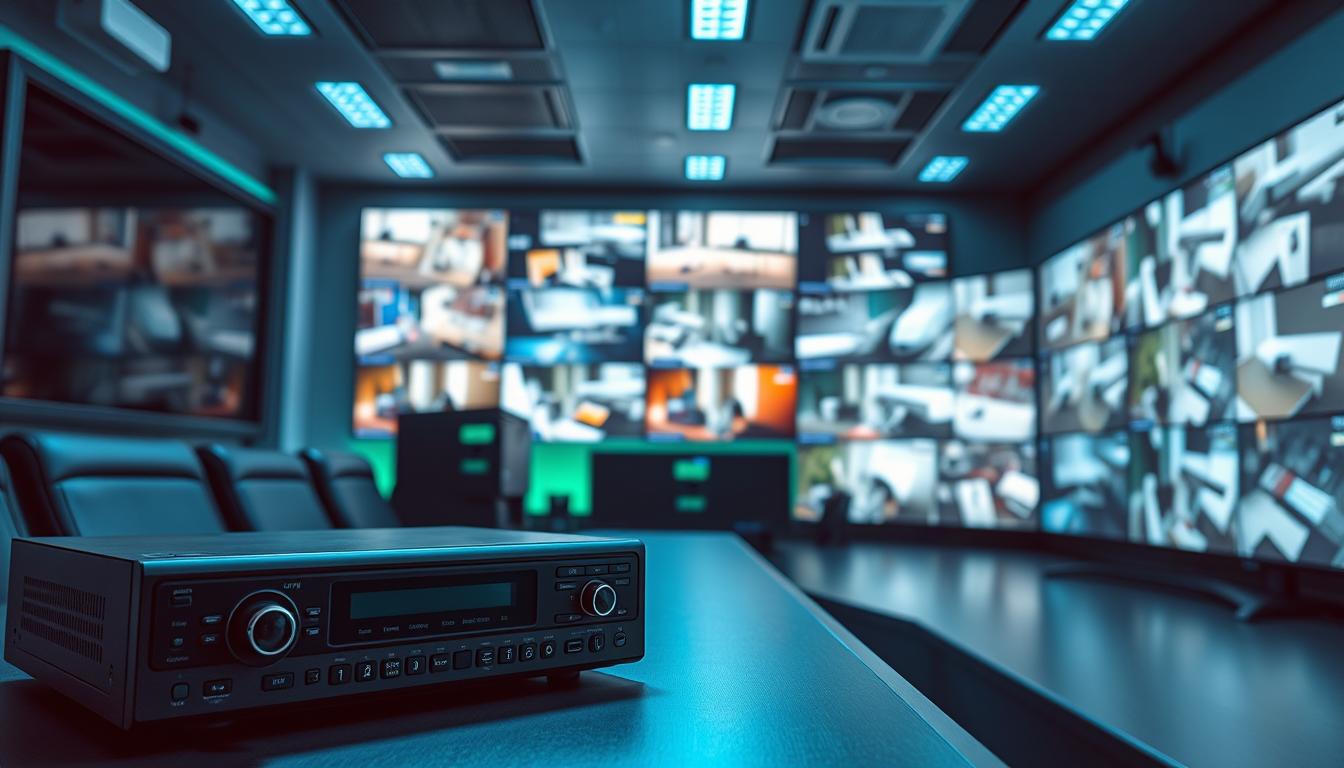
What is the difference between DVR and NVR?
In the world of surveillance systems, picking between a Digital Video Recorder (DVR) and a Network Video Recorder (NVR) is key. Both record video, but they handle data differently. DVRs work with analog cameras and use coaxial cables. NVRs, on the other hand, connect with IP cameras and Ethernet cables.
Knowing these differences is important for people in Singapore looking for the best security tech. For more details, check out this link.
Key Takeaways
- DVR and NVR play important roles in surveillance systems.
- DVR works with analog cameras; NVR uses IP cameras.
- Understanding these systems helps make better choices.
- The right choice depends on your security needs.
- Recording methods vary between DVR and NVR.
Understanding DVR: Digital Video Recorder
A digital video recorder, or DVR, is key in today’s surveillance systems. It records, processes, and stores video from analog cameras. This makes it easier to save and find footage.
These systems use coaxial cables to link the DVR to cameras. Coaxial cables send the video signal well, ensuring top-quality recordings. This setup is used in homes and businesses to improve security.
Users can watch recorded videos through the DVR’s interface. This makes it a great tool for boosting security. Knowing how a DVR works helps in using it to protect places better.
Understanding NVR: Network Video Recorder
A Network Video Recorder, or NVR, is key in today’s surveillance systems. It’s different from old digital video recorders (DVRs) because it uses digital video from IP cameras. This means the camera processes the video before sending it to the NVR, leading to better video quality.
Using an NVR has many benefits, like supporting advanced video analytics. This feature helps in detecting motion, recognizing faces, and spotting unusual activities. It lets security teams react quickly to any threats.
NVR systems also make it easy to connect with other network devices. They use Ethernet cables for strong and reliable connections. This is important for streaming high-quality video. So, organizations get not just better video recording but a full surveillance solution.
What is the difference between DVR and NVR?
Choosing between DVR and NVR means understanding their unique features. DVRs work with analog cameras and use coaxial cables. NVRs, on the other hand, connect with digital cameras and use Ethernet cables. This difference affects how each system handles video.
DVRs might struggle with high-definition video because of their older tech. NVRs, made for digital cameras, are better at streaming high-quality video. This makes NVRs great for today’s security needs. Setting up a DVR can be complex, but NVRs are easier to install because they use IP cameras.
Both systems have their pros and cons. DVRs might be cheaper for simple security needs. But NVRs offer better features for today’s surveillance needs, like in cities like Singapore.
DVR System Components
DVR systems have key parts that work together for good surveillance and video management. Knowing these parts helps users choose the right security setup.
Analog Cameras
Analog cameras are the main devices in a DVR setup. They capture video and send raw signals to the DVR. They are cheaper but have lower resolution than newer cameras.
Users might find it hard to get good audio because of the connection type. For simple surveillance needs, analog cameras are a good choice.
Coaxial Cables
Coaxial cables are essential for video transmission in DVR systems. They carry video signals from cameras to the DVR. The cable’s length affects the signal quality.
It’s important to install coaxial cables correctly to avoid poor video quality. While reliable, they can be tricky to install, mainly in big areas.
NVR System Components
An NVR system’s success relies on its key parts. Knowing about IP cameras and Ethernet cables shows why NVRs outperform old systems.
IP Cameras
IP cameras are vital for NVR systems. They capture video digitally, giving clearer images than analog cameras. This is great for detailed surveillance needs.
Many IP cameras also have extra features. These include audio recording and video analytics. These features make them even more useful.
Ethernet Cables
Ethernet cables are also essential for NVR systems. They carry data well and support Power over Ethernet (PoE). This lets devices get power and data through one cable.
This makes setting up surveillance easier and more flexible. Using Ethernet cables makes managing an NVR system simpler.
How DVR Systems Work
DVR technology uses analog video signals from security cameras. These signals travel through coaxial cables to the DVR unit. The DVR then processes the video for efficient storage.
The first step is converting analog signals to digital. This makes the video easier to store and view. The encoded video is saved on a hard drive for later use.
Power supply is key for DVR systems. Each camera needs enough power, often from the same cables as the video. This setup saves on cables but has limits. Cameras too far from the DVR can have poor video quality.
To sum up, DVR systems capture and encode analog video. They then store it digitally. This process supports security cameras, ensuring reliable surveillance.
How NVR Systems Work
NVR systems are built to handle video processing and camera transmission efficiently. They capture, process, and store video data in real-time. Unlike old DVR systems, NVRs use IP cameras for easy setup and growth.
Video from cameras travels over Ethernet cables or wirelessly through WiFi. This makes streaming data transfer high-quality and clear. Each camera also compresses the video stream to save bandwidth without losing video quality.
When the data reaches the NVR, it gets decoded, stored, and managed. This makes it easy for users to access their footage. This setup is a big plus in surveillance tech, allowing for easy system expansion without rewiring.
Pros and Cons of DVR Systems
When thinking about a DVR system, it’s key to look at both the advantages and the disadvantages. Knowing these helps you make a better choice. You can enjoy the benefits of a surveillance system while knowing its limits.
Advantages of DVR
DVR systems have many good points:
- They are cost-effective. DVR systems are often cheaper than NVR systems.
- They work well with old systems. Many people find it easy to add DVR systems to their current setups.
- They have lower cybersecurity risks. Some DVR functions are less likely to be hacked because they work offline.
Disadvantages of DVR
But, DVR systems also have some downsides:
- They can be hard to install. The need for bulky cabling makes setup tricky, mainly for big places.
- They offer less camera flexibility. DVR systems support fewer camera types than NVR systems, limiting customization.
- They might have lower image quality. Compared to NVR systems, DVR systems might not always have the best image quality.
Pros and Cons of NVR Systems
Network Video Recorder (NVR) systems have many benefits that fit today’s surveillance needs. Knowing these advantages and drawbacks helps users choose the right security system.
Advantages of NVR
NVR systems offer high-quality video and flexibility. They support high-definition resolutions, making images clearer. This helps identify people and events better.
They also come with easy installation, needing fewer cables. This makes the setup simpler and less messy.
Advanced features like video analytics and wireless networking are big pluses. These allow users to watch footage on different devices. NVR systems can grow easily, adding cameras as needed.
Disadvantages of NVR
While NVRs have many benefits, there are downsides to consider. They often cost more than traditional systems at first. There might be issues with compatibility, like with older parts.
Also, NVRs need a reliable internet connection to work well. This can be a problem in areas with poor or unstable internet.

Cost Comparison: DVR vs NVR
When looking at security systems, it’s key to know the cost differences between DVR and NVR. The initial cost of hardware is a big factor. DVRs are often cheaper, while NVRs offer more advanced features at a higher price.
Installation costs also differ. DVR setups are simpler and less expensive. NVR installations, on the other hand, might cost more because they need networking gear like switches and routers.
Long-term costs also vary. DVRs need less maintenance and updates, which can save money over time. NVRs, though more flexible, require regular updates and bandwidth management, increasing operational costs. This shows how the total cost of ownership changes based on the system chosen.
In Singapore, it’s important for businesses and individuals to weigh these costs. The choice between DVR and NVR affects both immediate and long-term costs, as well as the system’s effectiveness.
Choosing the Right System for Your Needs
When picking between DVR or NVR, knowing what you need is key. Start by looking at your current setup. If you have analog cameras, a DVR might be the way to go. But, if you want IP cameras and advanced features, an NVR could be better.
Don’t forget about your budget. NVR systems offer more features but cost more. Think about both the upfront and ongoing costs to make a smart choice.
Also, think about what you want, like remote access and growing your system. An NVR is great for adding new tech later. By matching the system’s features to your needs, you’ll find the right fit for your security.
FAQ
What are the key differences between DVR and NVR systems?
DVR systems handle video from analog cameras. NVR systems work with digital cameras. The main differences are in how they process video, which cameras they support, and how they’re installed.
Are DVR systems compatible with modern digital cameras?
No, DVR systems only work with analog cameras. For digital cameras, you need an NVR system. NVR systems offer better quality and more features.
How do installation requirements differ between DVRs and NVRs?
DVRs need coaxial cables and analog cameras. NVRs use Ethernet cables and can have Power over Ethernet (PoE). This makes NVRs easier to install.
What are the advantages of using an NVR system?
NVR systems have better video quality and advanced features. They also need fewer cables, making them great for detailed surveillance.
Are there any downsides to using DVR systems?
Yes, DVRs have lower video quality and need more cables. They also have limits when you need to expand your system.
What type of cables do DVR and NVR systems use?
DVRs use coaxial cables for analog cameras. NVRs use Ethernet cables for digital cameras. Ethernet cables also support Power over Ethernet.
Can I integrate wireless cameras with an NVR system?
Yes, NVR systems can work with wireless cameras. This makes installation easier and more flexible.
What should I consider when choosing between DVR and NVR?
Think about your current setup, budget, and what features you need. Consider the video quality and how easy it is to expand your system.
How do the costs of DVR and NVR systems compare?
DVRs are cheaper upfront. But NVRs might be better value over time. This is because NVRs offer better features and video quality.
What role do analog and IP cameras play in DVR and NVR systems, respectively?
Analog cameras send raw video to DVRs. IP cameras send processed video to NVRs. This makes NVRs perform better and offer higher quality.


