
How often should you clean CCTV cameras?
Keeping CCTV cameras clean is key to their good working order and security. If you don’t clean them, you might see fuzzy images and system crashes. This can really hurt your surveillance efforts.
Knowing how often to clean your CCTV cameras is important for keeping your place safe in Singapore. Sticking to a cleaning plan can make your cameras work better and last longer.
Key Takeaways
- Regular cleaning is vital for optimal CCTV performance.
- Neglected cameras can result in image blurriness and malfunction.
- Establishing a cleaning frequency is essential for effective CCTV maintenance.
- Regular upkeep can prolong the lifespan of surveillance equipment.
- Understanding local environmental factors can impact cleaning schedules.
Understanding the Importance of Regular CCTV Maintenance
Regular maintenance of CCTV systems is key to their reliability and efficiency. The CCTV maintenance importance is huge, as it affects how well security equipment works. Well-maintained cameras give better image quality, which is vital for good surveillance.
The impact of cleanliness on image quality
Keeping CCTV lenses clean is essential. Dust and dirt can block views and lower image quality over time. This makes it harder to see important details during incidents. A clean lens ensures clear footage, meeting security needs well.
Preventing malfunctions and unexpected failures
Regular checks are important for preventing failures. Regular care spots small problems before they get big. This approach also makes cameras last longer and saves on repair costs. Ignoring maintenance can lead to big security risks. For more on CCTV repair, check out CCTV camera repairability.
Factors Influencing Cleaning Frequency
Cleaning CCTV cameras depends on several factors. Knowing these can help keep systems working well and lasting longer. Environmental conditions and how often cameras are used are key.
Environmental conditions and their effects
Weather can really affect how often you need to clean your cameras. Rain, extreme temperatures, or strong winds can make the lens dirty. Places with lots of dust or high humidity need cameras cleaned more often to keep images clear.
Usage patterns that determine maintenance needs
How often cameras are used also matters. Cameras in busy areas get dirty faster. It’s important to check and clean them often to keep them working right.
How often should you clean CCTV cameras?
It’s important to set regular cleaning times for CCTV cameras to keep them working well. Cleaning them often helps get clear pictures and stops problems. Let’s explore the best ways to do this.
Recommended cleaning intervals for standard conditions
For most places, clean your CCTV cameras every three to six months. This keeps the images sharp and stops the cameras from breaking down. Checking them regularly makes sure they work their best, keeping your area safe.
Adjusting cleaning schedules for high-traffic areas
In busy areas or where dust builds up fast, you need to clean more often. Clean your cameras every one to two months in these spots. This makes sure your surveillance is always up to the task. It also helps your equipment last longer and work better.
Best Practices for Cleaning CCTV Cameras
Keeping CCTV cameras clean is key for their best performance. By following the right cleaning steps, cameras work well and capture clear images. This helps them last longer, keeping your security system reliable.
Step-by-step cleaning procedures
To clean CCTV cameras right, follow these steps:
- Turn off the camera first to avoid any electrical problems.
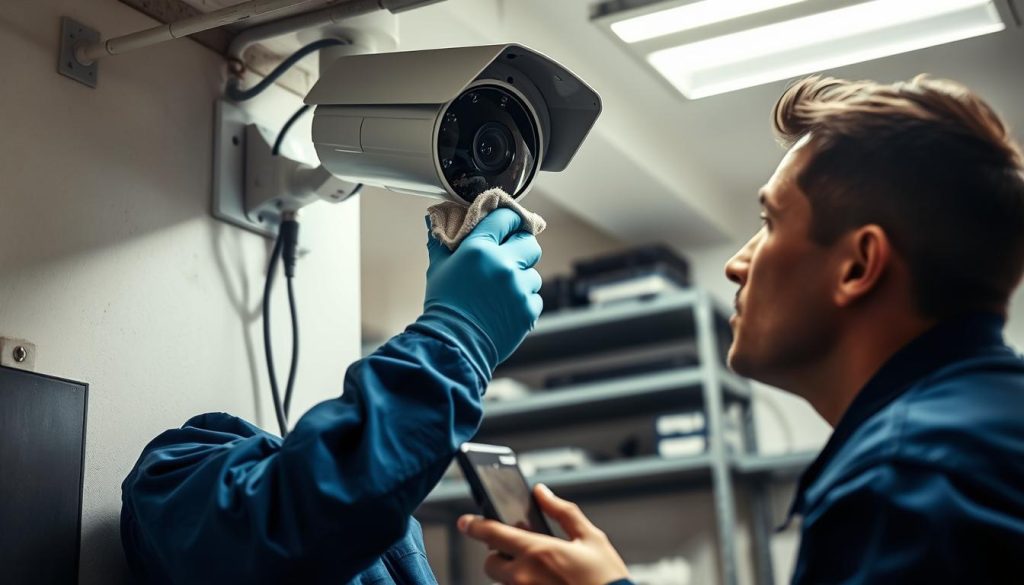
- Use a microfiber cloth to wipe the lens gently, avoiding scratches.
- Apply a suitable lens cleaner for electronics to remove tough dirt.
- Check the camera housing and clean off any dirt or grime.
Tools and materials needed for effective cleaning
The right tools make cleaning CCTV cameras easier. You’ll need:
- Microfiber cloths for gentle, scratch-free cleaning.
- Lens cleaning solution made for electronics to get rid of stubborn dirt.
- A soft brush to gently sweep away dust from small areas.
Signs that Indicate Your CCTV Cameras Need Cleaning
Keeping your CCTV cameras working well means knowing when they need cleaning. It’s important to spot the signs early. This ensures your security system stays effective.
Identifying blurred or fuzzy images
Blurred or fuzzy images are a clear sign of trouble. Dust or dirt on the lens usually causes this. Check your footage often to catch these problems early.
Recognizing signs of physical obstruction
Look out for anything blocking the camera’s view. This could be spider webs, leaves, or other debris. Regular checks can help you spot and fix these issues quickly.
Annual Maintenance vs. Regular Cleaning
It’s important to know the difference between annual maintenance and regular cleaning for your CCTV system. Each plays a key role in keeping your surveillance equipment working well for a long time.
Understanding the difference between servicing and cleaning
Annual maintenance checks the whole surveillance system, including hardware and software. This service includes:
- Routine checks on camera functionality
- Software updates to keep the system current
- Checking storage devices for any issues
On the other hand, regular cleaning focuses on the cameras’ physical parts. It involves:
- Cleaning lenses to prevent image quality issues
- Removing debris or obstructions that could affect camera performance
Knowing the difference in maintenance types is key. Both cleaning and servicing are important, but they need to be done at the right times. This ensures your surveillance system works efficiently.
Impact of Weather on Cleaning Schedule
Weather greatly affects CCTV cameras, making it important to plan cleaning carefully. Knowing how weather impacts CCTV cameras is key to their best performance. Rain and high humidity can cause fogging, while strong winds can bring dust that blocks clear images.
How rain, dust, and humidity affect CCTV performance
Rain can lead to fogging or even electrical problems. Dust from wind can coat cameras, reducing image quality. Watching for these issues helps in making a better maintenance plan to extend equipment life.
Scheduling maintenance based on seasonal changes
Seasonal maintenance means adjusting cleaning to match weather patterns. For example, dry seasons are good for inspections to avoid dust. After heavy rains, regular cleaning helps prevent moisture buildup. These steps ensure cameras work well all year.
Combining Remote Monitoring with Regular Maintenance
Using remote monitoring with regular maintenance makes CCTV systems last longer and work better. It gives property owners tools to make their surveillance more effective. As technology gets better, the benefits of using it become clearer.
Leveraging technology for optimal upkeep
Remote monitoring lets users watch their CCTV systems all the time. This helps spot problems like camera issues or blockages fast. It means maintenance can start right away, keeping everything running smoothly.
Also, real-time alerts can change cleaning schedules as needed. For example, if a camera gets too dirty, it sends a warning. This leads to cleanings that keep images clear. Combining these two approaches makes surveillance work its best.
The Role of Professional CCTV Maintenance Services
Investing in professional CCTV maintenance services is a smart move for property owners. Skilled technicians have the knowledge to check your system thoroughly. They make sure any big problems get fixed right away.
Regular cleaning might not catch everything, like software updates or camera alignment. Using these services boosts your system’s performance and effectiveness.
When to hire a professional for inspection
Knowing when to call in the experts is key. You should get regular checks under these conditions:
- After installation, to confirm everything functions correctly.
- Following severe weather events that could affect camera positioning.
- When experiencing recurring image quality issues.
Benefits of expert cleaning services
Expert services offer more than just cleaning. They use advanced methods to clean your system better. You get many benefits, including:
- Thorough evaluations that address possible weaknesses.
- Proactive maintenance to stop problems before they start.
- Peace of mind knowing your system is working at its best.
For more info on how often to service your CCTV, check out this resource. Regular maintenance by professionals keeps your system reliable and effective. This ensures top-notch surveillance for you.
Maintaining Equipment Lifespan through Regular Cleaning
Regular cleaning is key to making CCTV equipment last longer. Keeping cameras clean helps them work better. This means they don’t wear out as fast.
How cleaning affects overall equipment longevity
Cleaning your CCTV system regularly makes it last longer. It keeps lenses and housings clear, preventing overheating. This way, your equipment works well and lasts longer.
Cost-saving factors of proactive maintenance
Cleaning your CCTV system often saves you money. It stops small problems from becoming big, expensive ones. A regular maintenance plan keeps your system running smoothly and saves you money over time.
Conclusion and Resources for CCTV Maintenance
Keeping CCTV cameras clean and well-maintained is key to good security and long life. Knowing when to clean and how often helps a lot. Using both DIY methods and professional help can make your surveillance better.
There are many resources for CCTV maintenance out there. You can find guidelines from top security companies and advice from experts. Local CCTV providers can also give you the latest tech and solutions that fit your needs.
Looking after your CCTV cameras well keeps the images clear and the equipment working longer. Regular cleaning and professional help are important. This way, your surveillance system will work better and more efficiently.
FAQ
How often should I clean my CCTV cameras?
Clean your CCTV cameras every three to six months if conditions are normal. But, if your area is very dusty or has a lot of traffic, you might need to clean them every one to two months.
What are the best practices for cleaning CCTV cameras?
First, turn off the camera. Then, use a microfiber cloth to gently wipe the lens. Use a lens cleaner that’s right for the job. Check the camera’s housing and use soft brushes to remove dust. This keeps your cameras working well without damage.
What signs indicate that my CCTV cameras need cleaning?
Look for blurry images, dirt, spider webs, or anything else that might block the lens. These signs mean your cameras need a clean to work right.
What factors influence how often CCTV cameras should be cleaned?
Weather, like harsh conditions, and dust can make you clean your cameras more often. Also, if a lot of people pass by, dirt and debris can pile up faster.
How does regular cleaning affect CCTV camera performance?
Cleaning regularly keeps your footage clear and sharp. It also helps avoid problems and keeps your system running well. This helps protect your property better.
What is the difference between annual maintenance and regular cleaning for CCTV cameras?
Annual maintenance includes checks by experts and updates. Regular cleaning just makes sure the lenses are clear. Both are important for your cameras.
How does weather influence my CCTV camera cleaning schedule?
Weather like rain or strong winds can make your cameras dirty faster. Clean them more often before and after bad weather to keep them clear.
Should I hire professionals for CCTV maintenance?
Yes, getting professionals for maintenance is a good idea. They can do detailed checks and fix complex problems that you might miss. This keeps your system running smoothly.
What tools and materials do I need for effective CCTV camera cleaning?
You’ll need microfiber cloths, the right lens cleaner, and soft brushes. These tools help you clean without harming your cameras.
How does cleaning my CCTV cameras enhance their lifespan?
Cleaning removes dirt and keeps your cameras working well. This reduces wear and tear, making them last longer. It also saves you money on repairs or new cameras.


